
Moon at Enoshima Beach (Tsukiyo no Enoshima)
by Kawase Hasui
- Date:
- 1933
- Medium:
- Color woodblock print
- Format:
- Oban
- Publisher:
- Watanabe Shozaburo
- Edition:
- Published by Watanabe Shozaburo
- Source:
- Art Institute of Chicago
Description
Enoshima is a small island off Kamakura in Kanagawa Prefecture, accessible by a causeway and famous for its cave shrines and seafood restaurants. At night under a full moon the island's silhouette — its rocky profile, lighthouse, and shrine rooftops — reflects in the calm inner bay. This 1933 print shows the moonlit scene with the island's reflection in the water and its characteristic rocky outline against a lunar sky. The Tsukiyo no Enoshima title specifies moonlit night rather than moonrise.
More Prints by Kawase Hasui

More Seascapes Prints
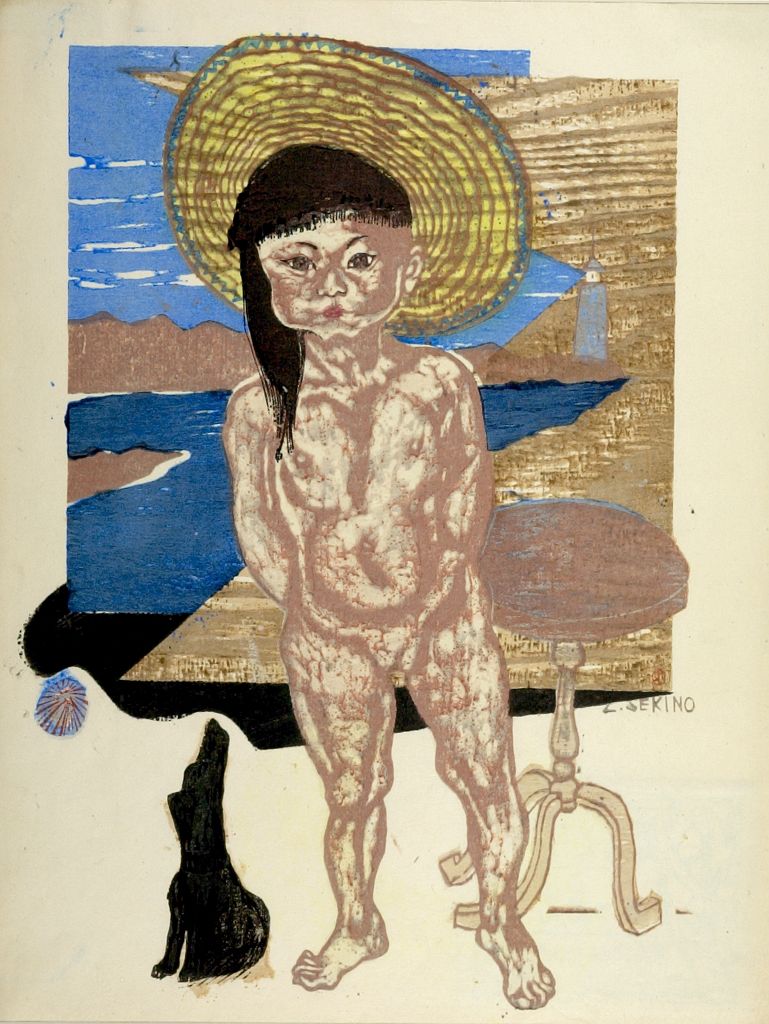
Child of the Sea
1940
Woodblock print

The Beach at Kaiganji in Sanuki Province (Sanuki Kaiganji no hama), from the series "Collection of Views of Japan II, Kansai Edition (Nihon fukei shu II Kansai hen)"
1934
Color woodblock print; oban

Pacific Ocean, Awa Province (Boshu Taikai), from the series "Souvenirs of Travel, Third Series (Tabi miyage dai sanshu)"
Boshu Taikai
1925
Color woodblock print; oban

Pine Beach at Miho (Miho no Matsubara), from the series "Selection of Views of the Tokaido (Tokaido fukei senshu)"
September 1931
Color woodblock print; oban
Featured in Collections
Curated cross-cuts that include this print.
Frequently Asked Questions
Moon at Enoshima Beach (Tsukiyo no Enoshima) was created by Kawase Hasui (川瀬巴水) in 1933.
Moon at Enoshima Beach (Tsukiyo no Enoshima) uses Bokashi, on color woodblock print.
Moon at Enoshima Beach (Tsukiyo no Enoshima) was published by Watanabe Shozaburo (1933).
Moon at Enoshima Beach (Tsukiyo no Enoshima) depicts seascapes and moonlight.