
Moon at Enoura Beach (Tsuki no Enoura)
by Kawase Hasui
- Date:
- January 1939
- Medium:
- Color woodblock print
- Format:
- Oban
- Publisher:
- Watanabe Shozaburo
- Edition:
- Published by Watanabe Shozaburo
- Source:
- Art Institute of Chicago
Description
Enoura Beach on the Izu Peninsula faces Suruga Bay, and a winter moon rising over the Pacific gave Hasui the opportunity for a cold, clear nocturnal composition in this January 1939 print. The Tsuki no Enoura title specifies the moon's presence as the organizing element — the beach in deep shadow, the bay surface catching the lunar reflection in long, shimmering bands. The Izu Pacific coast in winter had a stark, open quality suited to Hasui's cold moonlight palette.
More Prints by Kawase Hasui

More Seascapes Prints
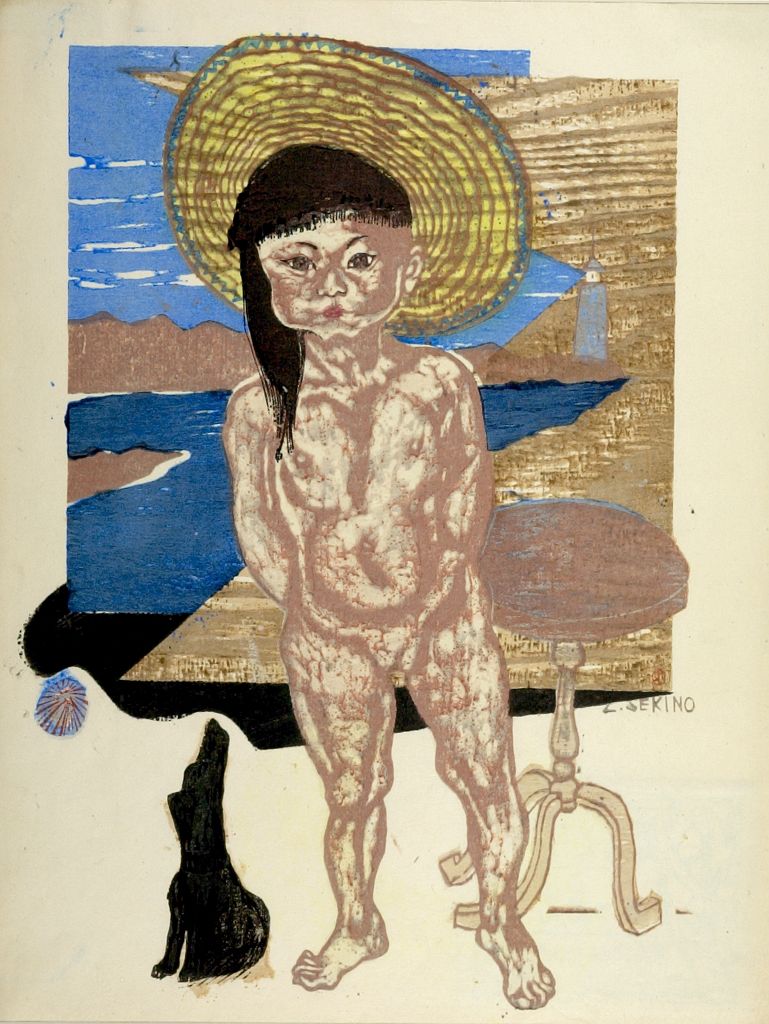
Child of the Sea
1940
Woodblock print

The Beach at Kaiganji in Sanuki Province (Sanuki Kaiganji no hama), from the series "Collection of Views of Japan II, Kansai Edition (Nihon fukei shu II Kansai hen)"
1934
Color woodblock print; oban

Pacific Ocean, Awa Province (Boshu Taikai), from the series "Souvenirs of Travel, Third Series (Tabi miyage dai sanshu)"
Boshu Taikai
1925
Color woodblock print; oban

Pine Beach at Miho (Miho no Matsubara), from the series "Selection of Views of the Tokaido (Tokaido fukei senshu)"
September 1931
Color woodblock print; oban
Featured in Collections
Curated cross-cuts that include this print.
Frequently Asked Questions
Moon at Enoura Beach (Tsuki no Enoura) was created by Kawase Hasui (川瀬巴水) in January 1939.
Moon at Enoura Beach (Tsuki no Enoura) uses Bokashi, on color woodblock print.
Moon at Enoura Beach (Tsuki no Enoura) was published by Watanabe Shozaburo (January 1939).
Moon at Enoura Beach (Tsuki no Enoura) depicts seascapes and moonlight.