
Hyakkaen Park at Mukojima
- Medium:
- Mokuhanga (Japanese woodblock)
- Image courtesy of
- Saru Gallery
Description
The Mukojima Hyakkaen, founded in 1804 on the east bank of the Sumida, is a flower garden assembled around the literary culture of late Edo: hagi, plum, and bamboo planted in dialogue with poetry inscribed on stones and trellises. Koizumi's view likely renders the park's seasonal planting and trellised pathways with the careful registration his self-cut blocks required, and bokashi passages typical of his treatment of foliage and sky. The Hyakkaen survived where many Edo-era gardens did not, and its inclusion in One Hundred Views of Great Tokyo reflects Koizumi's attention to the layered survivals of pre-Meiji Tokyo within the modern city. Carved and printed by the artist himself between 1928 and 1940, the print joins the documentary topographic impulse of meisho-e to the sosaku-hanga insistence on the artist as sole maker, a position that set him apart from publisher-led shin-hanga workshops covering similar Tokyo subjects.
More Prints by Kishio Koizumi
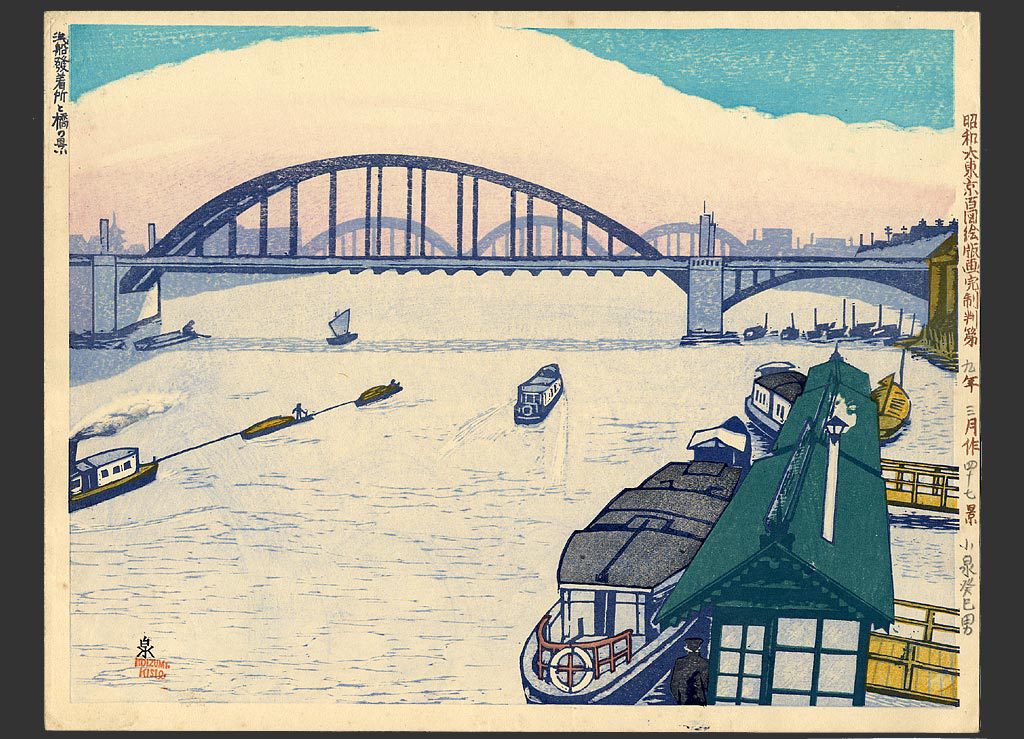
Untitled (kishio-koizumi)
Woodblock print
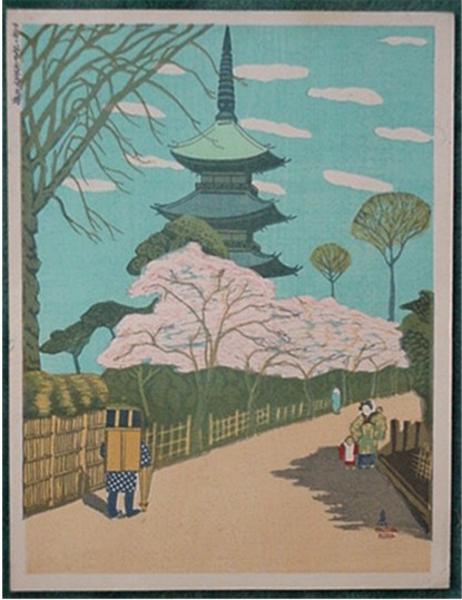
Unknown, spring scene
Woodblock print

Raft In Yoryoko River
Mokuhanga (Japanese woodblock)

Autumn Color along the Moat at Hanzo Gate (Hanzomon go-horihata no aki iro), from the series "One Hundred Views of Great Tokyo in the Showa Era (Showa dai Tokyo fukei hyaku zue hanga)"
1934
Color woodblock print; oban
More Gardens Prints
![[Garden of] Taj Mahal, No. 1 (Taji Maharu no niwa, dai ichi) by Hiroshi Yoshida](https://www.artic.edu/iiif/2/230993a7-d4f0-c979-c267-127d48e1ef1c/full/843,/0/default.jpg)
[Garden of] Taj Mahal, No. 1 (Taji Maharu no niwa, dai ichi)
Taji Maharu no niwa, dai ichi
1931
Color woodblock print; oban

Kiyozumi Garden in Moonlight
January 1938
Woodblock print, ink and color on paper

Moon over Kiyosumi Garden (Tsuki no Kiyosumien)
1938
Color woodblock print; oban
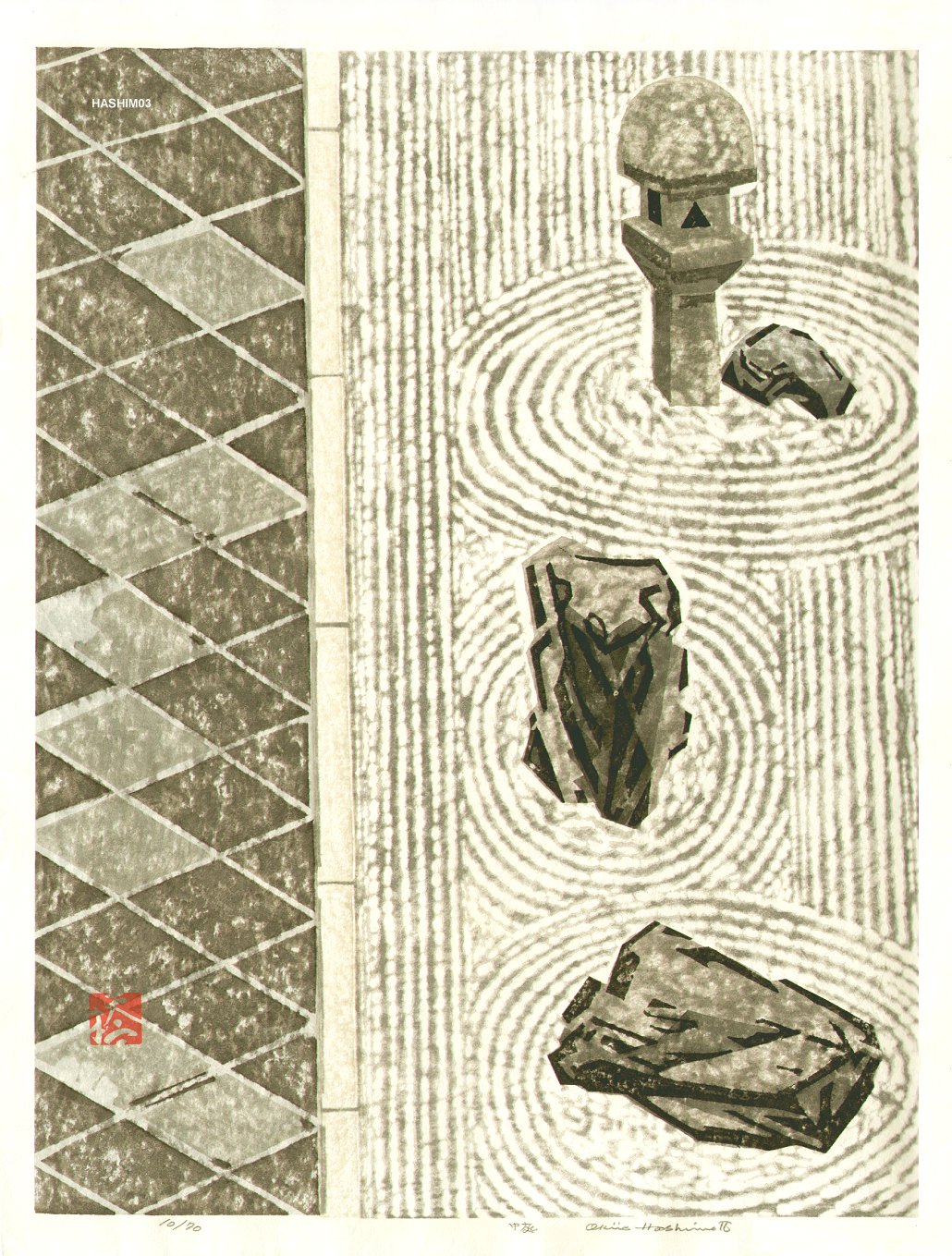
Rock garden
10/70, 1966
Woodblock print
Featured in Collections
Curated cross-cuts that include this print.
Frequently Asked Questions
Hyakkaen Park at Mukojima was created by Kishio Koizumi (小泉癸巳男).
Hyakkaen Park at Mukojima depicts gardens.