
Kototoi at Sumida Park
- Medium:
- Mokuhanga (Japanese woodblock)
- Image courtesy of
- Saru Gallery
Description
A second view of the Kototoi district along Sumida Park, focused on the Kototoi Bridge or the named riverside locality from which it took its name. The bridge — a steel-trussed structure rebuilt after the 1923 earthquake — exemplifies the modern infrastructure that Koizumi incorporated alongside older religious sites in One Hundred Views of Great Tokyo. The composition would set the bridge or riverbank against the broader Sumida River, the water rendered with bokashi gradations and the structural members carried by precise keyblock cutting. The pairing with the previous Sumida Park view reflects Koizumi's serial method: returning to the same district from multiple vantages, in the meisho tradition of recording a named place across seasons and viewpoints. He designed, carved, and printed every block himself, sustaining the sosaku-hanga ideal across the entire production sequence.
More Prints by Kishio Koizumi
Untitled (kishio-koizumi)
Woodblock print
Unknown, spring scene
Woodblock print

Raft In Yoryoko River
Mokuhanga (Japanese woodblock)

Autumn Color along the Moat at Hanzo Gate (Hanzomon go-horihata no aki iro), from the series "One Hundred Views of Great Tokyo in the Showa Era (Showa dai Tokyo fukei hyaku zue hanga)"
1934
Color woodblock print; oban
More Gardens Prints
![[Garden of] Taj Mahal, No. 1 (Taji Maharu no niwa, dai ichi) by Hiroshi Yoshida](https://www.artic.edu/iiif/2/230993a7-d4f0-c979-c267-127d48e1ef1c/full/843,/0/default.jpg)
[Garden of] Taj Mahal, No. 1 (Taji Maharu no niwa, dai ichi)
Taji Maharu no niwa, dai ichi
1931
Color woodblock print; oban

Kiyozumi Garden in Moonlight
January 1938
Woodblock print, ink and color on paper

Moon over Kiyosumi Garden (Tsuki no Kiyosumien)
1938
Color woodblock print; oban
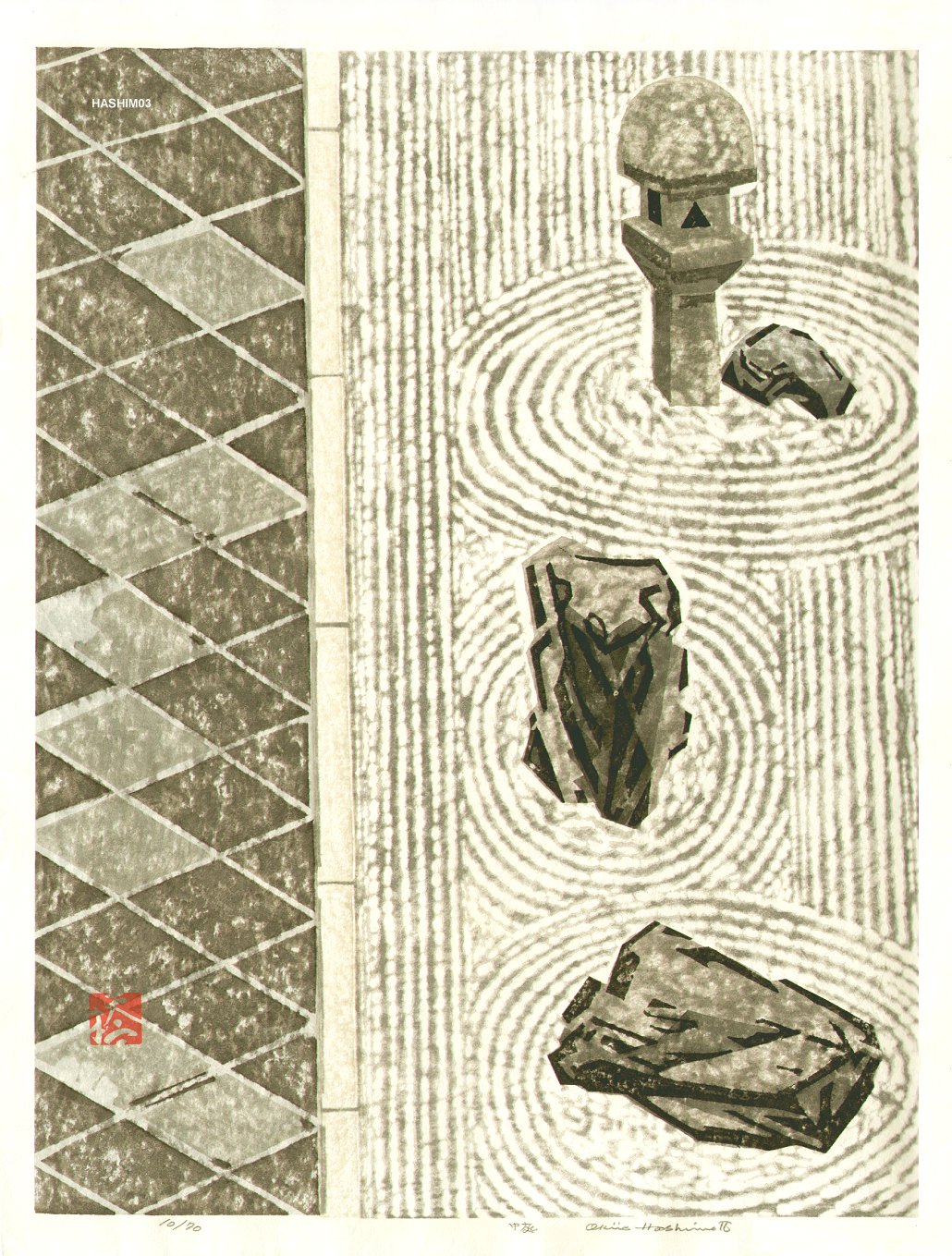
Rock garden
10/70, 1966
Woodblock print
Featured in Collections
Curated cross-cuts that include this print.
Frequently Asked Questions
Kototoi at Sumida Park was created by Kishio Koizumi (小泉癸巳男).
Kototoi at Sumida Park depicts gardens.