
Mt Fuji from Lake Suwa
- Medium:
- Mokuhanga (Japanese woodblock)
- Image courtesy of
- Saru Gallery
Description
A second treatment of the same Lake Suwa vantage, this version represents an alternate state, a different printing run, or a reworked color scheme of the subject. Variant impressions were not unusual in Koizumi's practice; because he carved and printed every block himself, he could revisit a composition with adjusted ink loads, modified bokashi transitions, or recut color blocks without involving a separate workshop. The lake provides a still horizontal plane against which the conical silhouette of Fuji asserts itself, and the print may register a seasonal or atmospheric shift between editions—perhaps a lighter morning palette versus a deeper evening one. This kind of dual production reflects the sosaku-hanga commitment to printmaking as ongoing investigation rather than fixed reproduction. Where shin-hanga publishers like Watanabe Shozaburo standardized editions for the export market, Koizumi's self-published output retained the looser, study-like quality of an artist working through a motif. The print belongs to his peripheral Fuji views rather than to One Hundred Views of Great Tokyo, his sustained 1928–1940 series of the capital.
More Prints by Kishio Koizumi
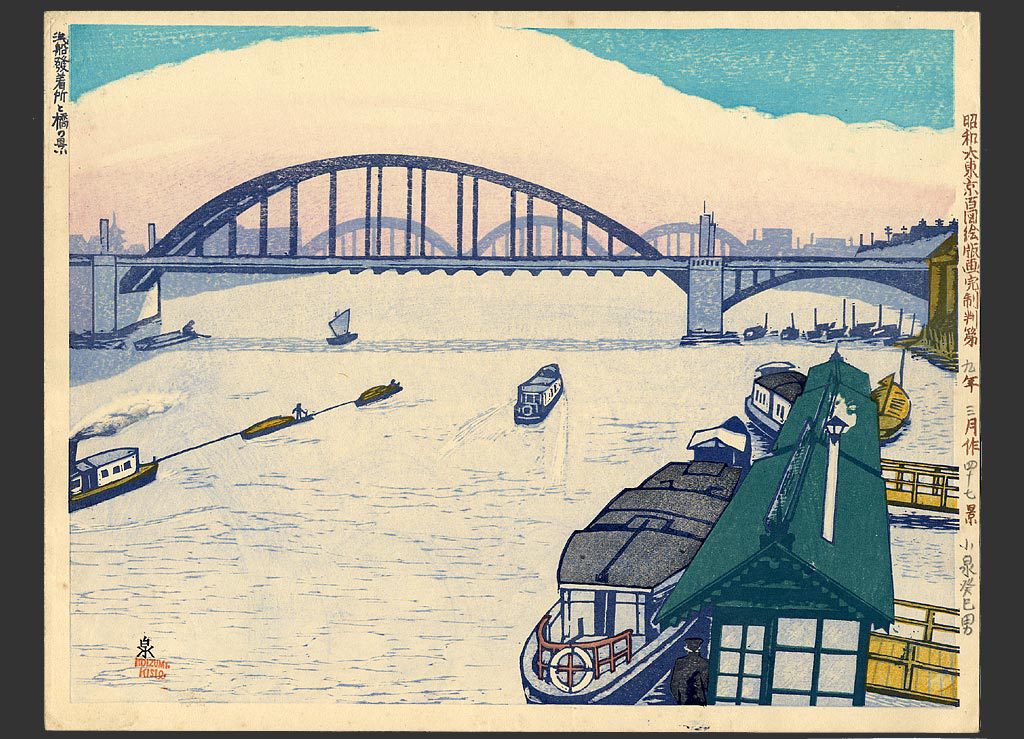
Untitled (kishio-koizumi)
Woodblock print
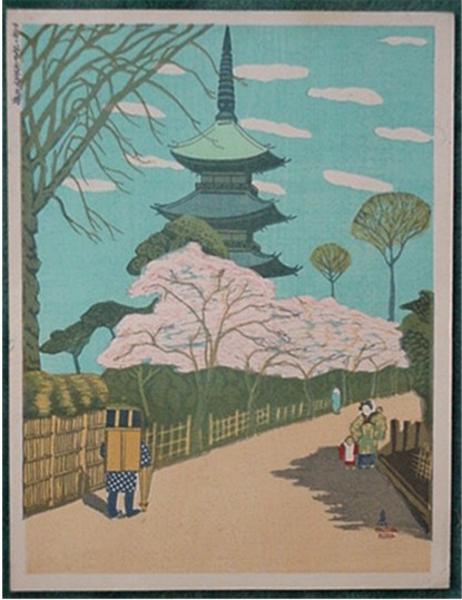
Unknown, spring scene
Woodblock print

Raft In Yoryoko River
Mokuhanga (Japanese woodblock)

Autumn Color along the Moat at Hanzo Gate (Hanzomon go-horihata no aki iro), from the series "One Hundred Views of Great Tokyo in the Showa Era (Showa dai Tokyo fukei hyaku zue hanga)"
1934
Color woodblock print; oban
More Rivers & Lakes Prints

Lake Chuzenji, Nikko (Nikko Chuzenjiko)
Nikko Chuzenjiko
1930
Color woodblock print; oban

Lake Kugushi in Wakasa Province (Wakasa Kugushiko), from the series Souvenirs of Travel I (Tabi miyage dai isshu)"
Wakasa Kugushiko
1920
Color woodblock print; oban

Gosai Canal in Niigata (Niigata Gosaibori), from the series "Souvenirs of Travel, Second Series (Tabi miyage dai nishu)"
Niigata Gosaibori
1921
Color woodblock print; oban

The Hori River at Obama (Obama Horikawa), from the series "Souvenirs of Travel, First Series (Tabi miyage dai isshu)"
Obama Horikawa
1920
Color woodblock print; oban
Featured in Collections
Curated cross-cuts that include this print.
Frequently Asked Questions
Mt Fuji from Lake Suwa was created by Kishio Koizumi (小泉癸巳男).
Mt Fuji from Lake Suwa depicts rivers & lakes and mount fuji.