
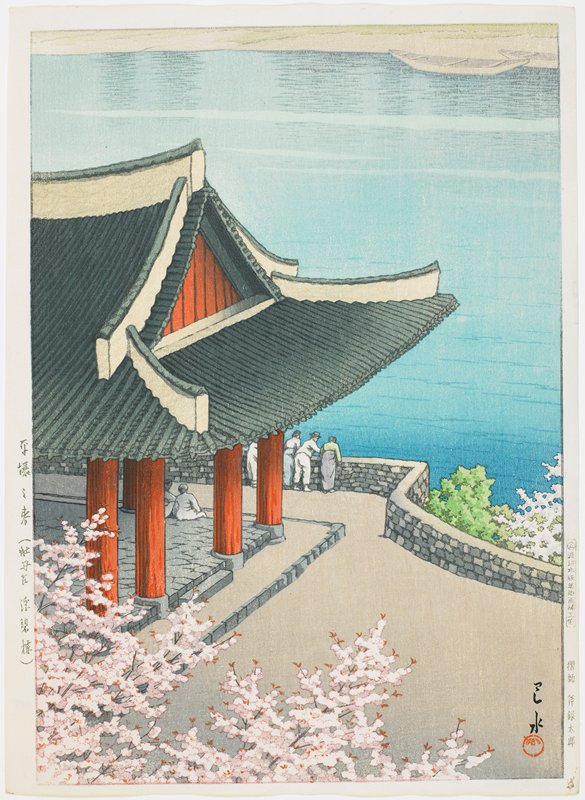
Shinobazu Pond in spring rain
- Medium:
- Mokuhanga (Japanese woodblock)
- Image courtesy of
- Saru Gallery
Description
Shinobazu Pond, the lotus-filled body of water at the foot of Ueno Park, was a recurrent subject in Edo and Meiji prints. Koizumi's spring-rain (harusame) treatment emphasizes the pond's still surface stippled with rainfall, weeping willows along the embankment, and the distant Bentendō pavilion on its central island. The print belongs to the One Hundred Views of Great Tokyo (Dai Tokyo Hyakkei) project, where seasonal weather effects -- snow, rain, mist -- differentiated views of the same well-known meisho. Rendering rain in mokuhanga traditionally relied on diagonal incised lines printed in pale grey, sometimes overlaid in two passes to vary intensity; Koizumi, carving and printing every block himself, could calibrate that effect across the run. The subject ties his work to the broader meisho-e tradition while replacing its commercial-publisher origins with the sōsaku-hanga ideal of single-artist authorship.
More Prints by Kishio Koizumi
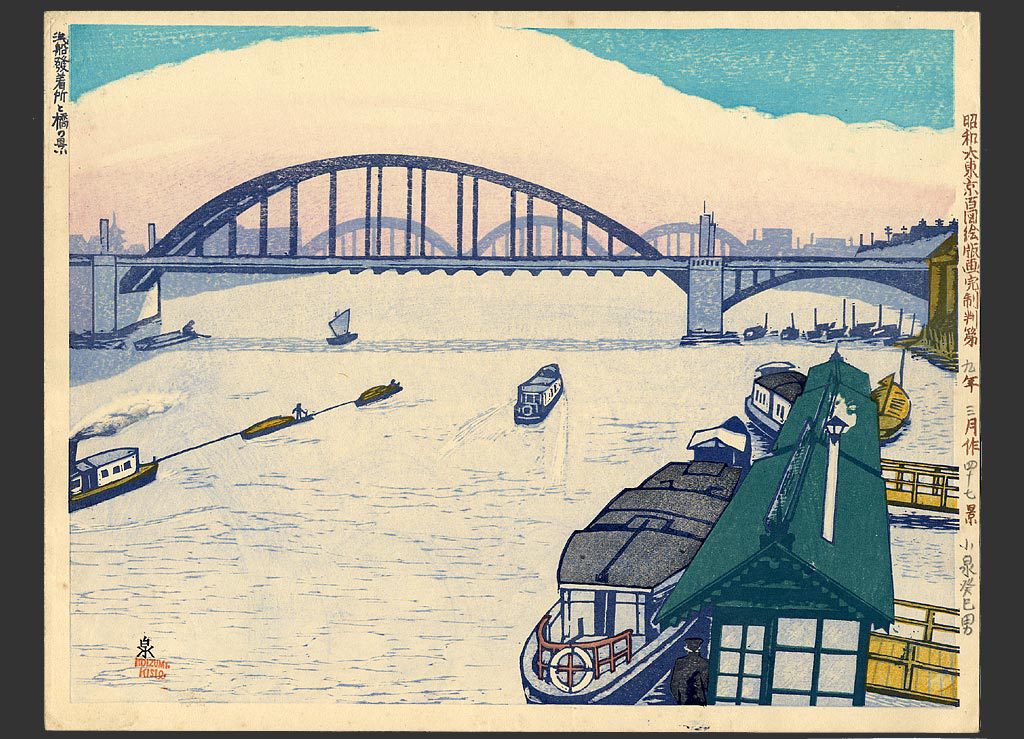
Untitled (kishio-koizumi)
Woodblock print
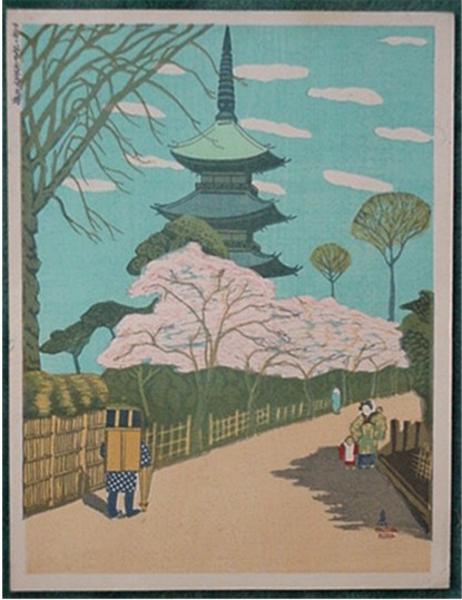
Unknown, spring scene
Woodblock print

Raft In Yoryoko River
Mokuhanga (Japanese woodblock)

Autumn Color along the Moat at Hanzo Gate (Hanzomon go-horihata no aki iro), from the series "One Hundred Views of Great Tokyo in the Showa Era (Showa dai Tokyo fukei hyaku zue hanga)"
1934
Color woodblock print; oban
More Spring Prints

Featured in Collections
Curated cross-cuts that include this print.
Frequently Asked Questions
Shinobazu Pond in spring rain was created by Kishio Koizumi (小泉癸巳男).
Shinobazu Pond in spring rain depicts spring, rivers & lakes, and rain.