
View in Ueno Park; the Hyokeikan and Bijutsukan buildings, 90th view (Ueno Fukei; Hyokeikan to Bijutsukan Dai Kuju Kei), from the series Prints of a Hundred Views of Great Tokyo in the Showa Era (Shôwa dai Tôkyô fûkei hyaku zue hanga)
- Source:
- ukiyo-e.org
Description
View in Ueno Park; the Hyokeikan and Bijutsukan Buildings, 90th view (Ueno Fukei; Hyokeikan to Bijutsukan Dai Kuju Kei), comes from Kishio Koizumi's series Prints of a Hundred Views of Great Tokyo in the Showa Era (Showa dai Tokyo fukei hyaku zue hanga). The impression is catalogued in the Museum of Fine Arts, Boston and recorded here through ukiyo-e.org. As the title makes explicit, this is the ninetieth view in Koizumi's cycle, late in his ten-plus-year sosaku-hanga undertaking. The composition shows two of the major museum buildings within Ueno Park: the Hyokeikan, a Western-style stone pavilion built in 1909 to commemorate the wedding of the crown prince and later attached to the Tokyo National Museum, and the adjacent Bijutsukan (art gallery) building. Koizumi sets the masonry facades, balustrades, and ornamental detail of the Hyokeikan against the surrounding park's plantings, with figures suggesting visitors enjoying the cultural district. As with the rest of One Hundred Views of New Tokyo, this print is fully sosaku-hanga in execution — designed, carved, and printed by Koizumi himself — and reflects the movement's preference for treating modern public architecture and everyday urban experience as worthy print subjects. The choice of Ueno's museum complex is highly characteristic: by the 1930s Ueno Park was the principal locus of state-supported art and natural history exhibition in Japan, and Koizumi's inclusion of these institutions among his hundred views places the city's cultural infrastructure on the same level as its temples, parks, and bridges in his overall portrait of Showa Tokyo.
More Prints by Kishio Koizumi
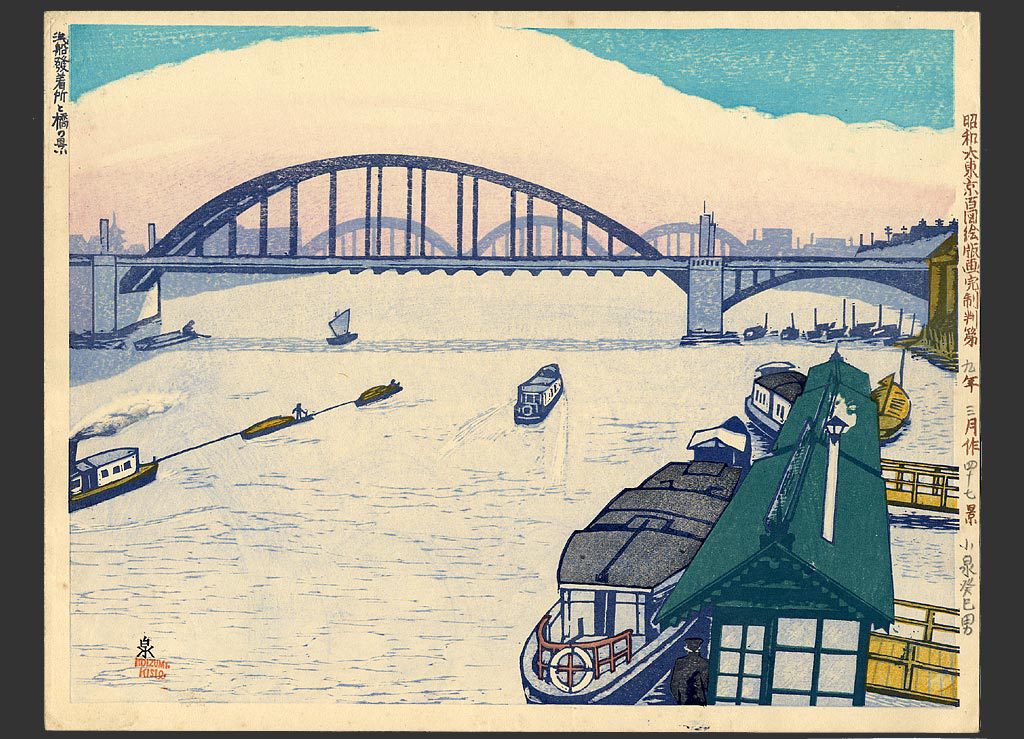
Untitled (kishio-koizumi)
Woodblock print
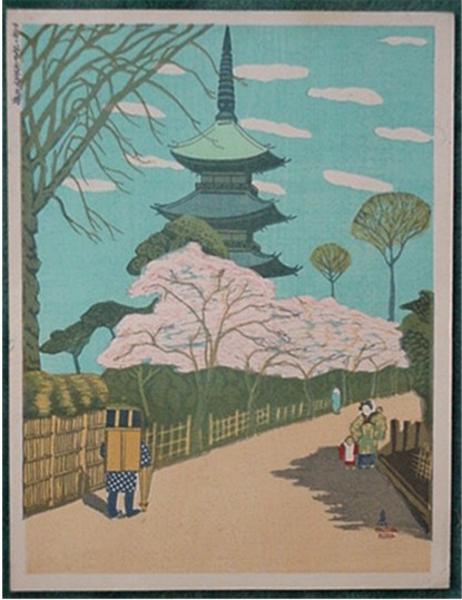
Unknown, spring scene
Woodblock print

Raft In Yoryoko River
Mokuhanga (Japanese woodblock)

Autumn Color along the Moat at Hanzo Gate (Hanzomon go-horihata no aki iro), from the series "One Hundred Views of Great Tokyo in the Showa Era (Showa dai Tokyo fukei hyaku zue hanga)"
1934
Color woodblock print; oban
More Gardens Prints
![[Garden of] Taj Mahal, No. 1 (Taji Maharu no niwa, dai ichi) by Hiroshi Yoshida](https://www.artic.edu/iiif/2/230993a7-d4f0-c979-c267-127d48e1ef1c/full/843,/0/default.jpg)
[Garden of] Taj Mahal, No. 1 (Taji Maharu no niwa, dai ichi)
Taji Maharu no niwa, dai ichi
1931
Color woodblock print; oban

Kiyozumi Garden in Moonlight
January 1938
Woodblock print, ink and color on paper

Moon over Kiyosumi Garden (Tsuki no Kiyosumien)
1938
Color woodblock print; oban
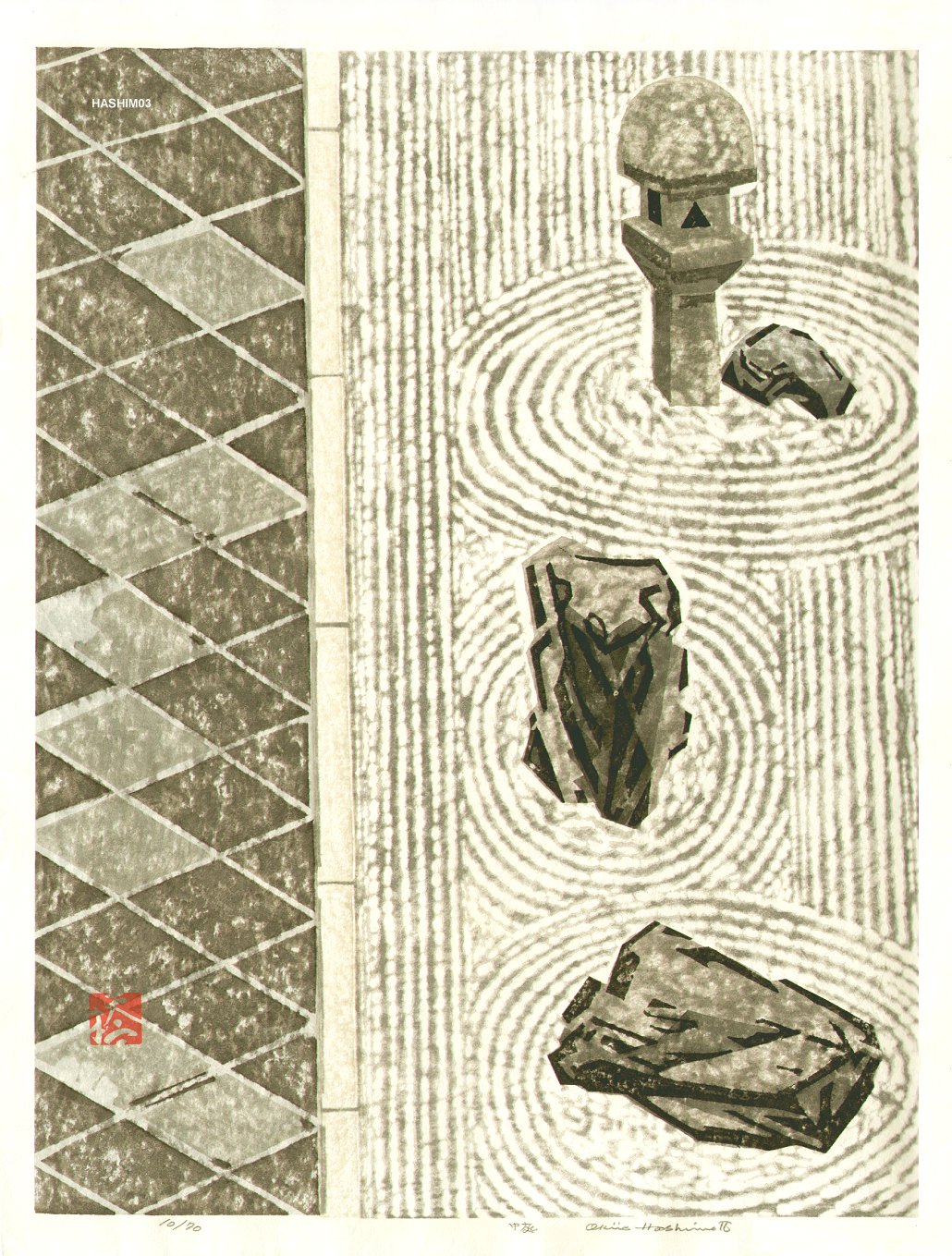
Rock garden
10/70, 1966
Woodblock print
Featured in Collections
Curated cross-cuts that include this print.
Frequently Asked Questions
View in Ueno Park; the Hyokeikan and Bijutsukan buildings, 90th view (Ueno Fukei; Hyokeikan to Bijutsukan Dai Kuju Kei), from the series Prints of a Hundred Views of Great Tokyo in the Showa Era (Shôwa dai Tôkyô fûkei hyaku zue hanga) was created by Kishio Koizumi (小泉癸巳男).
View in Ueno Park; the Hyokeikan and Bijutsukan buildings, 90th view (Ueno Fukei; Hyokeikan to Bijutsukan Dai Kuju Kei), from the series Prints of a Hundred Views of Great Tokyo in the Showa Era (Shôwa dai Tôkyô fûkei hyaku zue hanga) depicts gardens.