
The Geisha Ichimaru
- Medium:
- Mokuhanga (Japanese woodblock)
- Image courtesy of
- Saru Gallery
Description
Ichimaru (1906-1997) was a celebrated geisha turned recording artist whose ko-uta and folk-song recordings made her one of the most widely heard female performers of pre-war Japan. Kobayakawa's portrait would depict the singer in formal kimono, possibly with shamisen or in a performance attitude, rendered with the close attention to contemporary fashion and physiognomy that characterizes his work. As a portrait of an identifiable public figure rather than a generalized bijin, the print sits at the intersection of bijin-ga and the older yakusha-e tradition of identified-likeness portraiture — an image intended to be recognized. Production would follow standard Watanabe shin-hanga practice: precise keyblock drawing, multiple color impressions, and bokashi for atmospheric gradation. The subject reflects the moment when traditional geisha culture and modern mass-media celebrity overlapped: Ichimaru's records sold widely, her image circulated in magazines, and her appearance in a shin-hanga print confirmed her cultural standing within the visible women of 1930s Tokyo that Kobayakawa documented throughout his career.
More Prints by Kobayakawa Kiyoshi
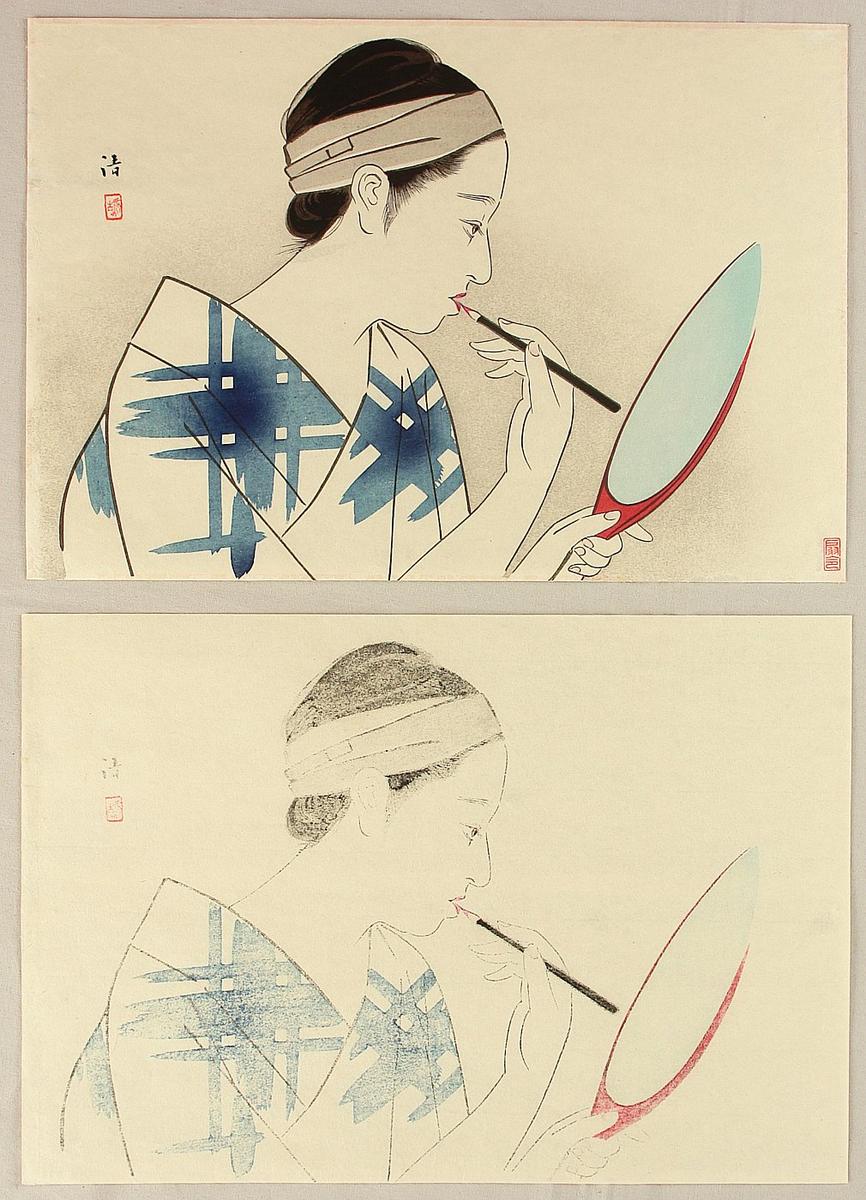
Applying Make-up (Keshô), from the series Two Views of Modern Fashions (Kindai jisei yosooi no uchi ni)
Not set
Woodblock print
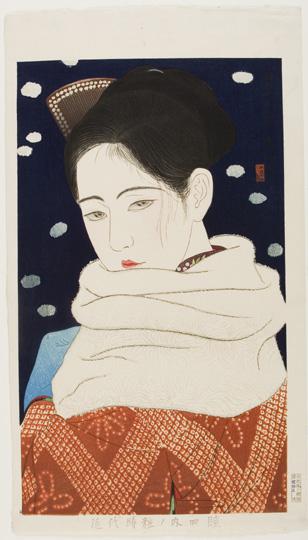
Eyes, Hitomi, no. 4 from the series Modern Styles of Makeup
1/1931
Woodblock print
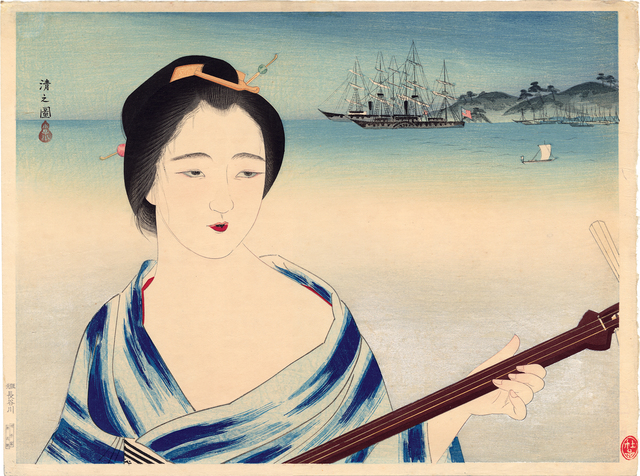
The Mistress Okichi
1932
Japanese Color Woodblock Print on handmade paper
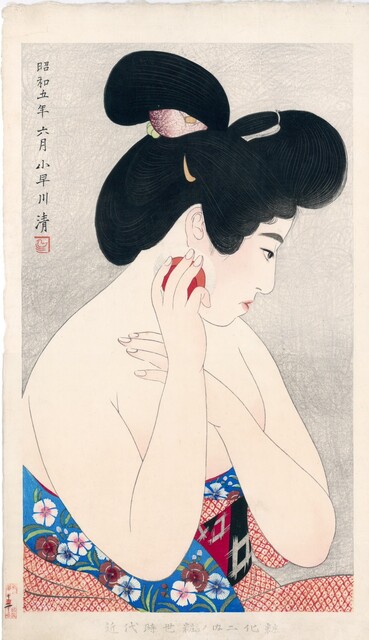
Makeup in Modern Times
1930
Woodblock Print
More Bijin-ga Prints

Featured in Collections
Curated cross-cuts that include this print.
Frequently Asked Questions
The Geisha Ichimaru was created by Kobayakawa Kiyoshi (小早川清).
The Geisha Ichimaru depicts bijin-ga.