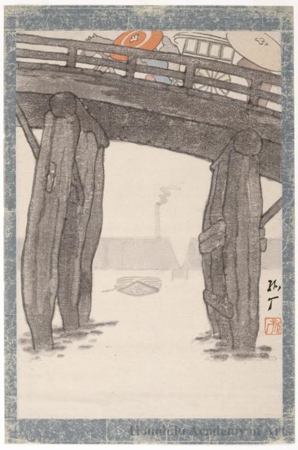
Bridge
by Kogan Tobari
- Date:
- c. 1920
- Medium:
- Woodblock print
- Source:
- Honolulu Museum of Art
Description
Bridge, printed around 1920, turns Tobari's attention from human performers to engineered structure. The bridge as subject allowed him to explore the formal qualities of repeated structural elements, the rhythm of piers, cables, or arches marching across water. Sosaku-hanga artists were frequently drawn to modern infrastructure as a subject that distinguished their work from the traditional landscapes of ukiyo-e. Tobari's woodblock renders the bridge with the same directness he applied to his figure studies, the knife carving clean lines that echo the bridge's own functional geometry. The water beneath serves as a field of contrasting texture against the structure's hard edges.
More Prints by Kogan Tobari


More Landscapes Prints

Lake Kugushi in Wakasa Province (Wakasa Kugushiko), from the series Souvenirs of Travel I (Tabi miyage dai isshu)"
Wakasa Kugushiko
1920
Color woodblock print; oban
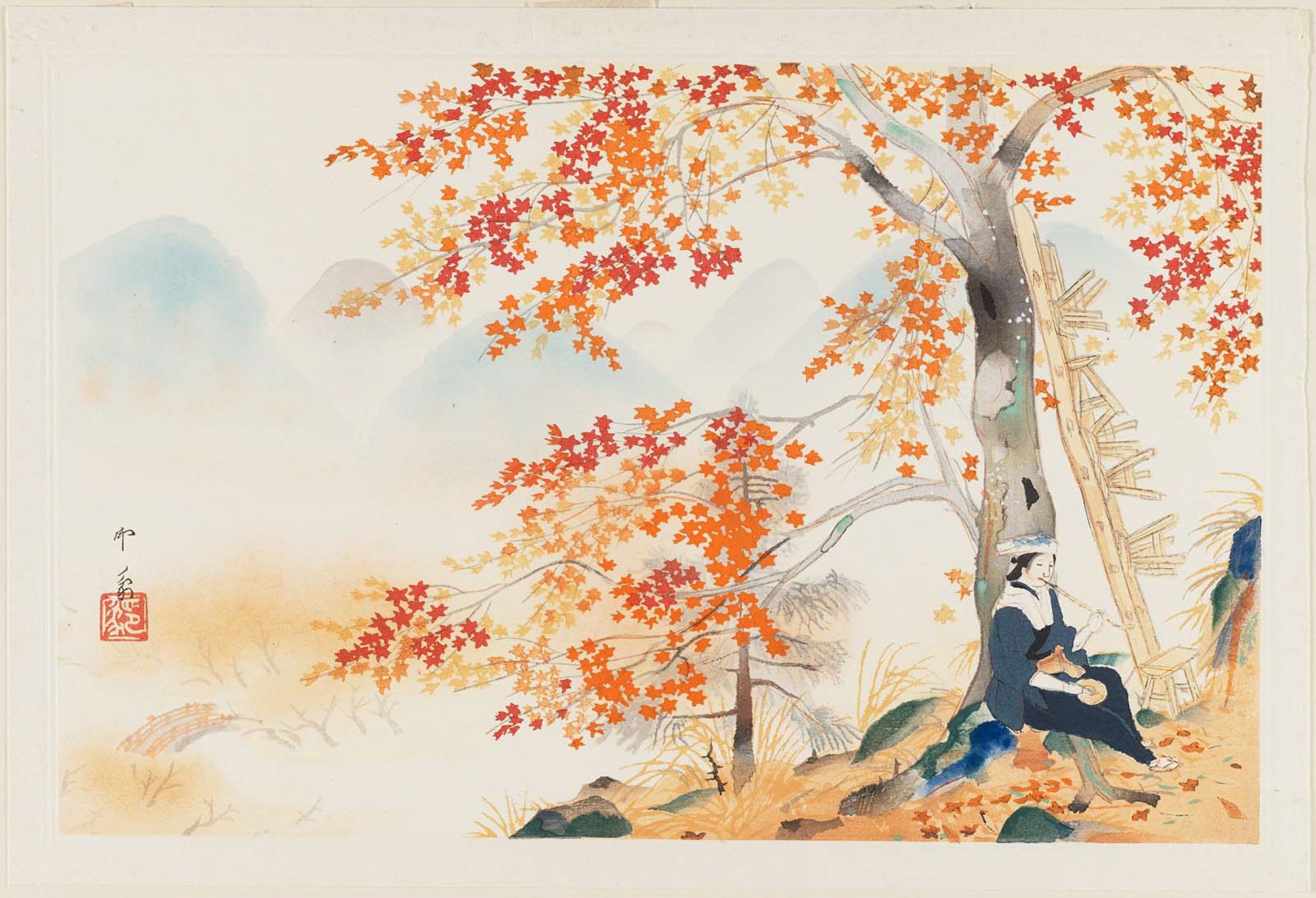
Autumn Maple Leaves at Takao, from the album Eight Views of Kyoto (Kyôto hakkei)
Woodblock print

The Beach at Kaiganji in Sanuki Province (Sanuki Kaiganji no hama), from the series "Collection of Views of Japan II, Kansai Edition (Nihon fukei shu II Kansai hen)"
1934
Color woodblock print; oban

Tea Kettle, section of a sheet from the series "Mirror of Stone Rubbings of Views of the Provinces" (Kohon meihitsu ishizuri kagami)
n.d.
Woodblock print; ishizuri-e, section of harimaze sheet
Featured in Collections
Curated cross-cuts that include this print.
Frequently Asked Questions
Bridge was created by Kogan Tobari (戸張孤雁) in c. 1920.
Bridge depicts landscapes and bridges.