
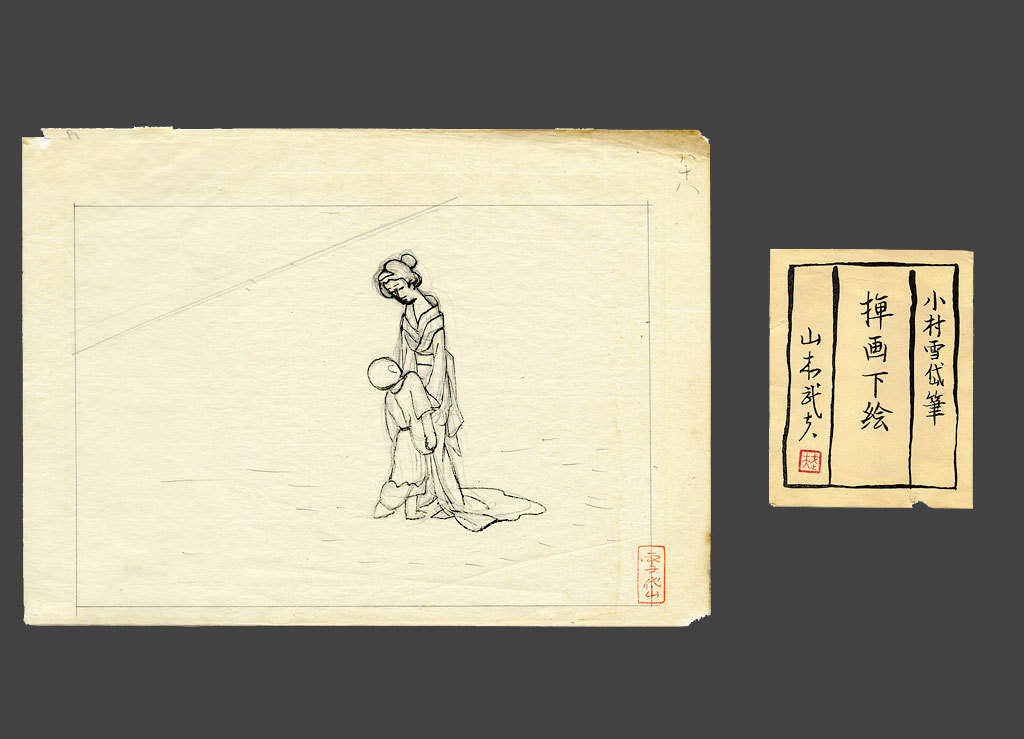
Girl Holding a snow hare
- Medium:
- Mokuhanga (Japanese woodblock)
- Image courtesy of
- Saru Gallery
Description
This print depicts a young girl cradling a small hare fashioned from snow, a seasonal motif rooted in Japanese winter play traditions where children sculpted yuki-usagi using bamboo leaves for ears and nandina berries for eyes. Settai's treatment likely emphasizes the quiet stillness of a winter moment, with the figure rendered in his characteristic spare linework derived from his nihonga training and his deep study of Edo-period ukiyo-e masters such as Suzuki Harunobu. The composition probably uses the unprinted washi to suggest snow, a restraint typical of Settai's approach in which negative space carries as much weight as the printed areas. Subtle bokashi gradations would model the kimono fabric without disrupting the flat, decorative surface. Within Settai's oeuvre, child subjects appear less frequently than his bijin-ga, but they share the same hushed, melancholic atmosphere that distinguishes his work from the more sentimental shin-hanga depictions of children produced in the same decades.
More Prints by Komura Settai

More Snow Scenes Prints
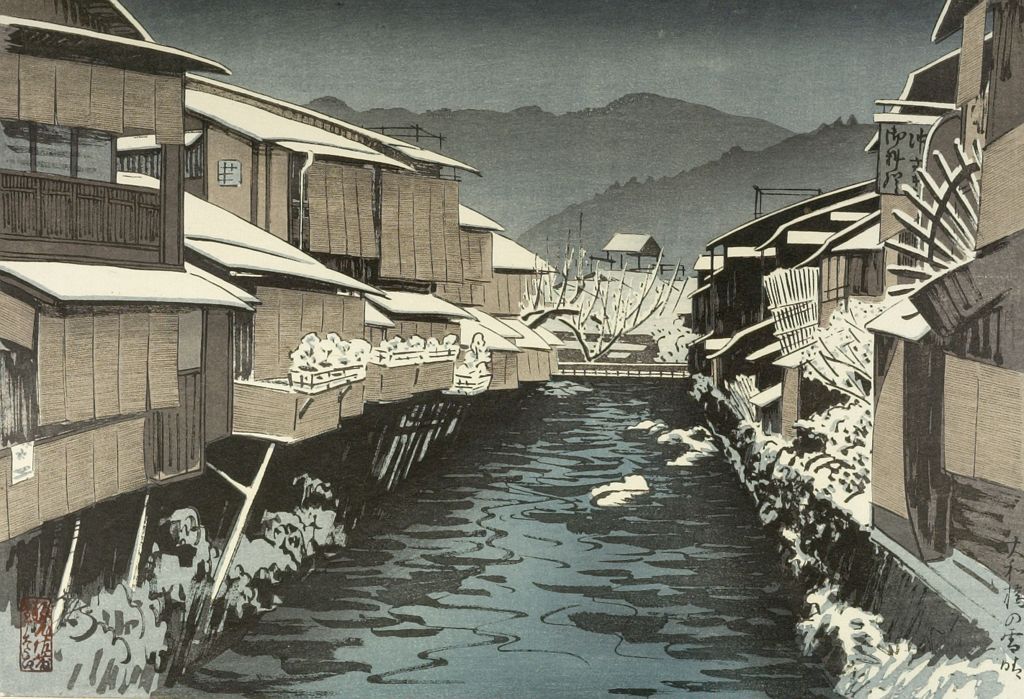
Fair Weather After Snow at Yamato Bridge, Kyoto (Yamato bashi no yukibare), Taishô period, dated 1924
Woodblock print

The Compound of the Tenman Shrine at Kameido in the Snow (Kameido Tenmangu keidai no yuki), from the series "Famous Places in the Eastern Capital (Toto meisho)"
c. 1832/38
Color woodblock print; oban

Miyajima in Snow (Yuki no Miyajima)
Yuki no Miyajima
1929
Color woodblock print; oban
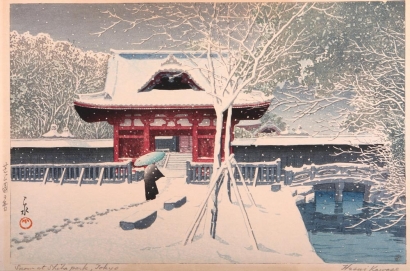
Evening Snow at Shiha Park, Tokyo
1932
Woodblock print
Featured in Collections
Curated cross-cuts that include this print.
Frequently Asked Questions
Girl Holding a snow hare was created by Komura Settai (小村雪岱).
Girl Holding a snow hare depicts snow scenes, children, and animals.