
Lake Toya is a caldera lake in southwestern Hokkaido, ringed by the active Usu volcano and the perfectly conical Showa-shinzan, and Maeda returned to it repeatedly throughout his career — a subject rooted in the landscape of his native island. This first treatment of the motif likely emphasizes the lake's broad, calm surface and the encircling volcanic silhouettes, with [bokashi](/glossary/bokashi) gradations carrying the transition from water to mountain to sky. The choice of Hokkaido scenery places Maeda outside the Honshu [meisho-e](/glossary/meisho-e) canon that dominated [shin-hanga](/glossary/shin-hanga) publishing, where Mount Fuji, Kyoto temples, and Tokaido stations supplied the bulk of the imagery. By insisting on his own region's volcanic geology and northern light, Maeda extended the meisho-e idea into territory shin-hanga had largely ignored. The print is consistent with his [sosaku-hanga](/glossary/sosaku-hanga) practice of carving and printing his own blocks, where the carving rhythm itself contributes to the texture of stone and water rather than being concealed beneath color.

Nikko Chuzenjiko
1930
Color woodblock print; oban

Wakasa Kugushiko
1920
Color woodblock print; oban

Niigata Gosaibori
1921
Color woodblock print; oban
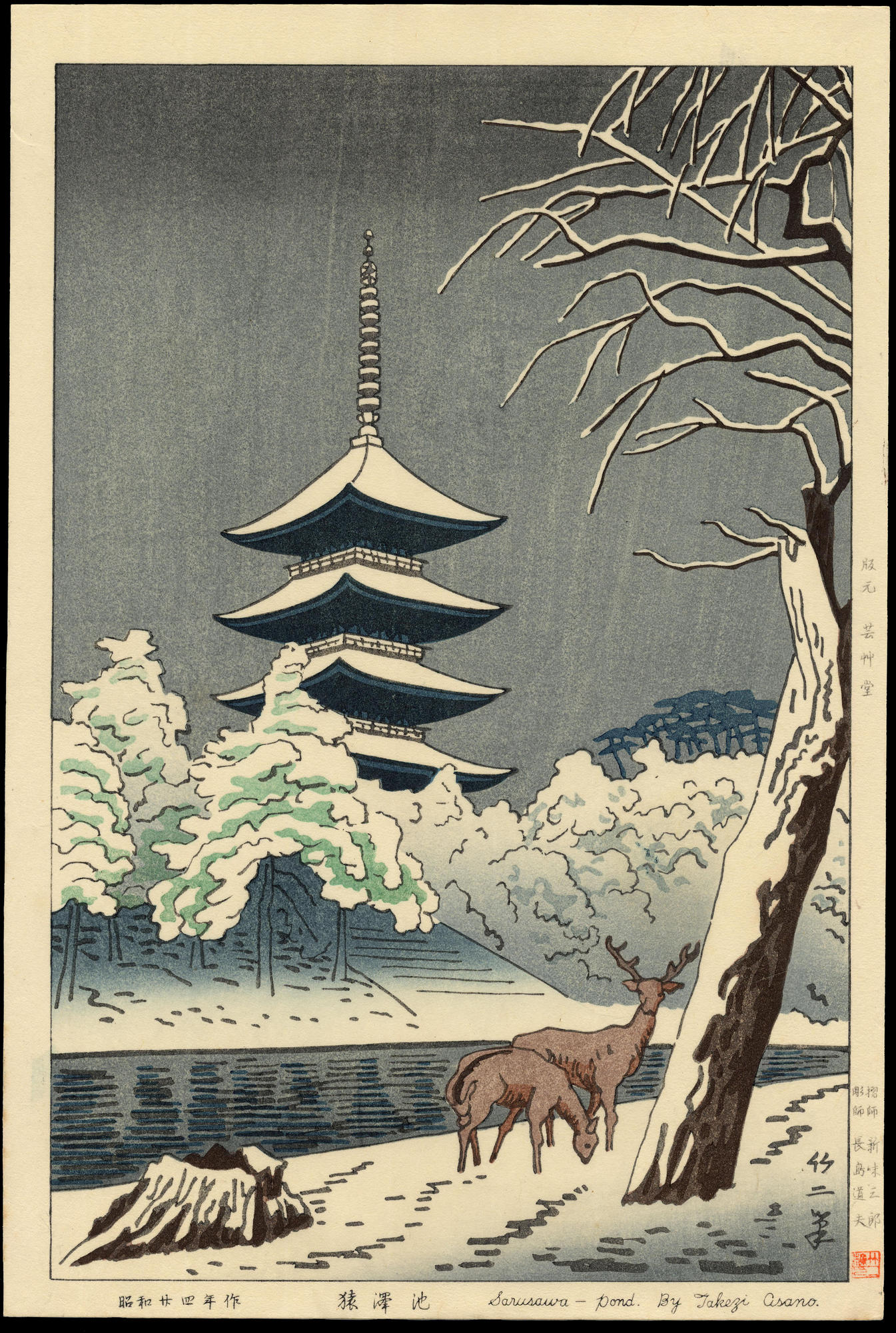
Woodblock print
Curated cross-cuts that include this print.
Lake Toya was created by Maeda Masao (前田政雄).
Lake Toya depicts rivers & lakes.


