
Hibiya Park
by Maeda Masao
- Medium:
- Mokuhanga (Japanese woodblock)
- Image courtesy of
- Saru Gallery
Description
A cluster of tall, slender palm trees with dark brown trunks and fan-shaped green fronds dominates a park lawn, framed by a low wooden fence and a hedge of round-clipped shrubs in the foreground. Behind the palms, rounded masses of foliage rendered in stippled yellow-green and dark green fill the background under a pale blue sky, with a low red-brown structure visible at the right edge. The palette is limited to muted greens, ochre yellow, brown, and blue-gray, giving the scene a flat, quiet daytime mood; a red artist's seal appears in the lower right corner. Mokuhanga (Japanese woodblock print), "Hibiya Park" by Maeda Masao.
More Prints by Maeda Masao
More Gardens Prints
![[Garden of] Taj Mahal, No. 1 (Taji Maharu no niwa, dai ichi) by Hiroshi Yoshida](https://www.artic.edu/iiif/2/230993a7-d4f0-c979-c267-127d48e1ef1c/full/843,/0/default.jpg)
[Garden of] Taj Mahal, No. 1 (Taji Maharu no niwa, dai ichi)
Taji Maharu no niwa, dai ichi
1931
Color woodblock print; oban

Kiyozumi Garden in Moonlight
January 1938
Woodblock print, ink and color on paper

Moon over Kiyosumi Garden (Tsuki no Kiyosumien)
1938
Color woodblock print; oban
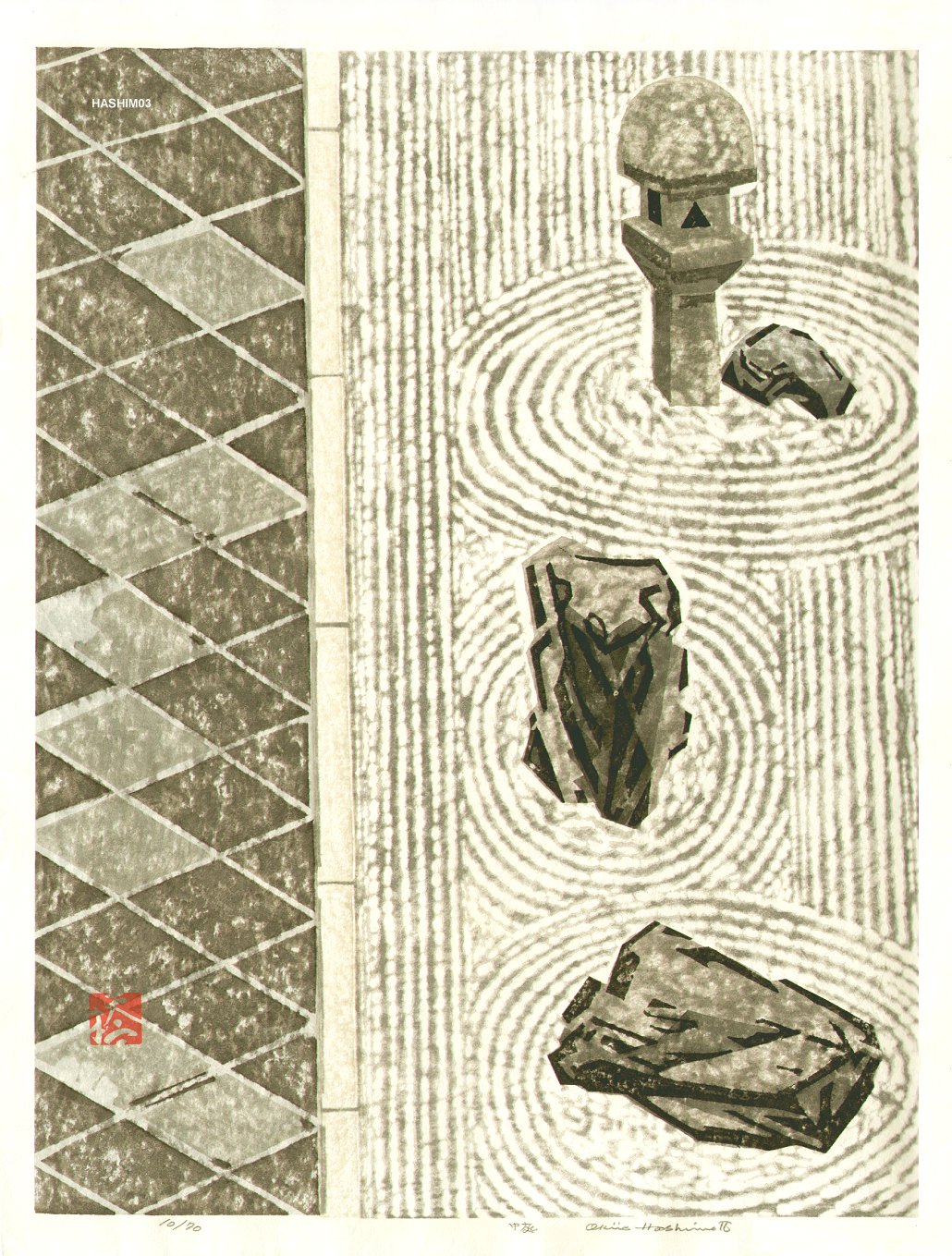
Rock garden
10/70, 1966
Woodblock print
Featured in Collections
Curated cross-cuts that include this print.
Frequently Asked Questions
Hibiya Park was created by Maeda Masao (前田政雄).
Hibiya Park depicts gardens.