
Biography
Maeda Masao (前田政雄, 1904-1974) was a printmaker of the sōsaku-hanga, or creative-print, movement — an artist who designed, carved, and printed his own blocks and who held to that self-reliant practice throughout his career. Born in December 1904 in Hakodate, on the northern island of Hokkaido, he came to printmaking by an indirect route and matured into one of the committed members of the creative-print circle that gathered around Onchi Kōshirō in prewar Tokyo.
Maeda began as a painter rather than a printmaker. After moving to Tokyo he enrolled at the Kawabata Painting School and studied Western-style (yōga) oil painting under Umehara Ryūzaburō. His turn toward woodblock came through his association with Hiratsuka Un'ichi, a leader of the creative-print movement whom he met in 1923, and through the Yoyogi group of print artists who gathered at Hiratsuka's home in the 1930s. By 1940 he had set aside oils and was working solely as a printmaker.
Unlike the shin-hanga designers who handed their drawings to a publisher's professional carvers and printers, Maeda worked in the sōsaku-hanga manner, cutting and pulling his own blocks so that every stage of a print bore the mark of his own hand. He joined the Ichimoku-kai (First Thursday Society), the circle led by Onchi Kōshirō, and contributed to the collaborative portfolios of the movement, among them the series One Hundred New Views of Japan (1940).
Landscape was the heart of his art. His prints of his native Hokkaido and its snow-bound northern scenery are among his most admired works, though he was not confined to the north: he also depicted the gates and scenery of old Edo and produced accomplished mountain views. Across these subjects his prints carry a quiet, contemplative mood, and his landscapes in particular are widely regarded as his strongest achievement.
Maeda died on 27 March 1974. His prints are held in Japanese museum collections and continue to circulate among collectors drawn to the sōsaku-hanga landscape tradition, where his Hokkaido and mountain compositions attract particular attention.
Key Facts
- Active Period
- 1904–1974
- Nationality
- 🇯🇵Japan
- Movements
- Shin-hangaSōsaku-hanga
- Works Indexed
- 125
Frequently Asked Questions
Maeda Masao (前田政雄, 1904-1974) was a printmaker of the sōsaku-hanga, or creative-print, movement — an artist who designed, carved, and printed his own blocks and who held to that self-reliant practice throughout his career. Born in December 1904 in Hakodate, on the northern island of Hokkaido, he came to printmaking by an indirect route and matured into one of the committed members of the creative-print circle that gathered around Onchi Kōshirō in prewar Tokyo.
Maeda Masao was active from 1904 to 1974. They were associated with the Shin-hanga and Sōsaku-hanga movements.
Maeda Masao's work was shaped by the Shin-hanga and Sōsaku-hanga traditions in Japanese woodblock printmaking. Shin-hanga: ## What is Shin-hanga? Shin-hanga (新版画), literally "new prints," is the early twentieth-century revival of the collaborative Japanese woodblock workshop, organized between roughly 1915 and 1960 by the Tokyo publisher Watanabe Shōzaburō (1885–1962) and a handful of competing houses. Sōsaku-hanga: ## What is sōsaku-hanga? Sōsaku-hanga (創作版画, "creative prints") was a twentieth-century Japanese print movement defined by a single commitment: the artist must design, carve, and print every work alone.
Maeda Masao's prints frequently feature landscapes, rivers & lakes, gardens, mountains, animals, seascapes.
Original prints by Maeda Masao can be found in collections including wbp, Minneapolis Institute of Art, Art of Japan, Harvard Art Museums.
Based on 37 recorded auction sales from 2011–2025, most Maeda Masao prints sold in the $75–$175 range, with a median around $150. Top results exceeded $200. Actual prices vary widely with edition, condition, and subject.
Series by Maeda Masao
Woodblock Prints by Maeda Masao (125)

Mountain Peak
20th century
Color woodblock print

Temple Gate
20th century
Color woodblock print

View of Mount Fuji from Lake Ashi
20th century
Color woodblock print

Rain at Mount Moiwa (Ame no Moiwayama), from the series "Eight Views of Sapporo (Sapporo hakkei)"
1932
Color woodblock print

Snow at Shiba Park (Yuki no Shiba koen)
1934
Color woodblock print

Black Cat in Tree
1940
Color woodblock print

The Red Gate of the Imperial University, from the series Recollections of Tokyo
1945
Color woodblock print

Sketch for "Early Spring in Togakushi"
1955
Charcoal on paper with translulent overlay (woodblock print: 1957.6b)
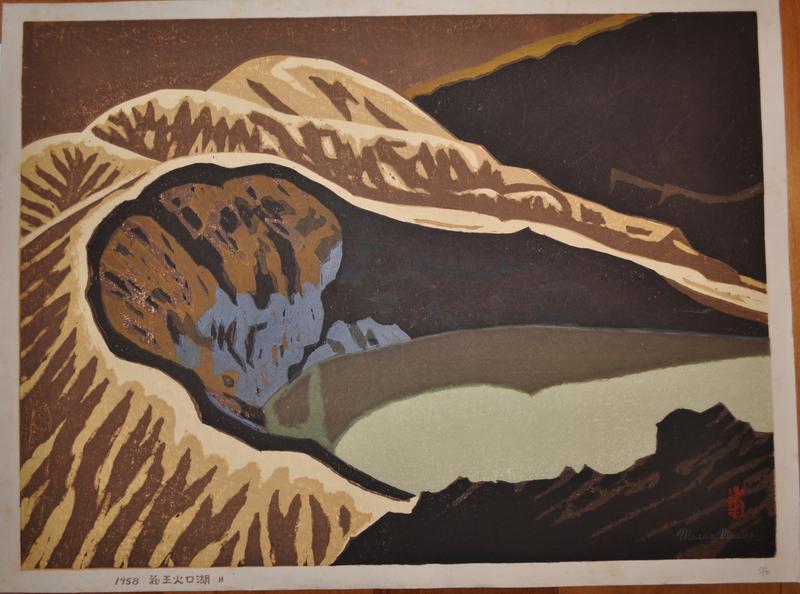
Crater Lake at Mount Zaō H
1958
Woodblock print, ink and color on paper

Lake Okotanpe (Okotanpe-ko)
1963
Color woodblock print
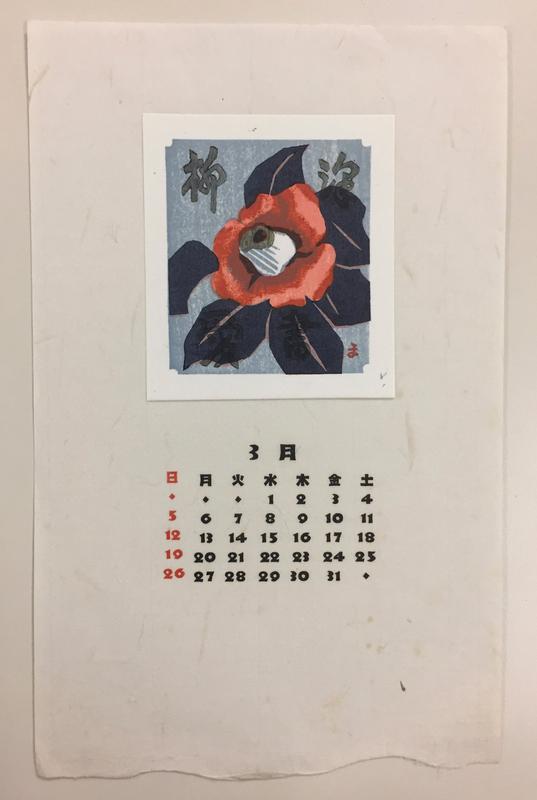
March 1967 calendar page with image of red flower
c. 1967
Woodblock print, ink and color on paper

January 1970 calendar page with image of rubbing pad (baren)
c. 1970
Woodblock print, ink and color on paper
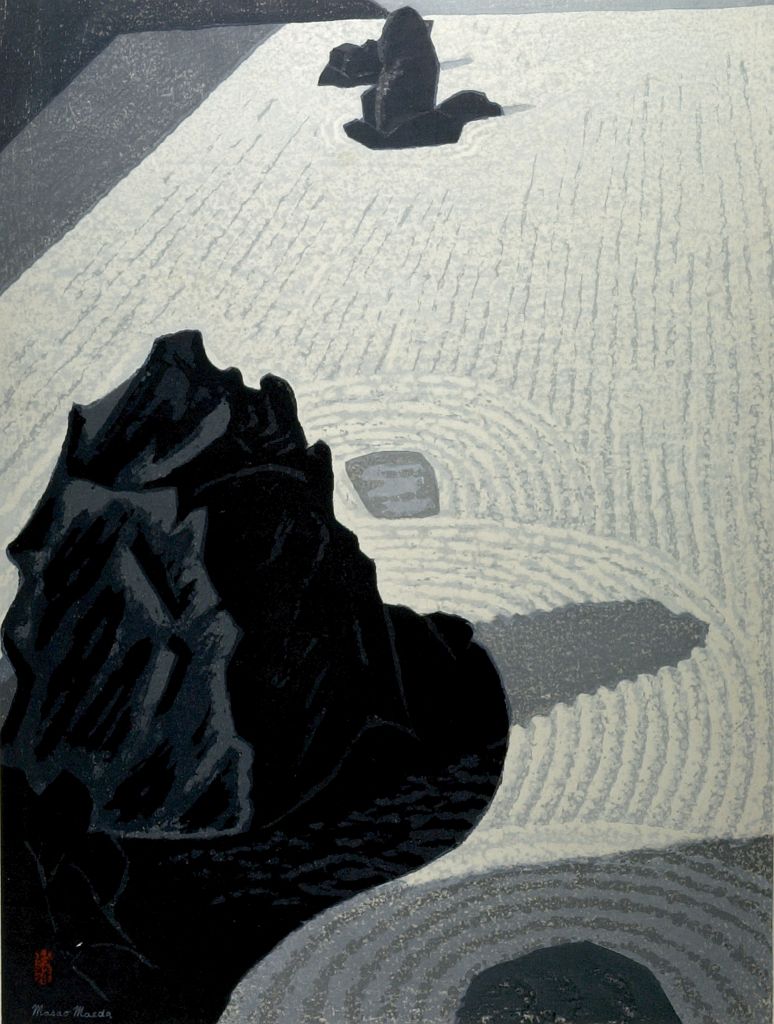
Sekitei, Ryôan-ji, Shôwa period, dated 1960
Woodblock print
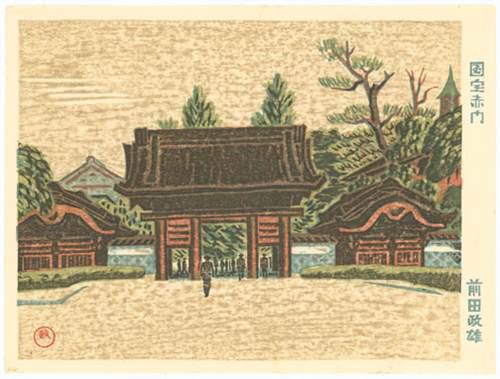
Red Gate of Imperial University
Woodblock print
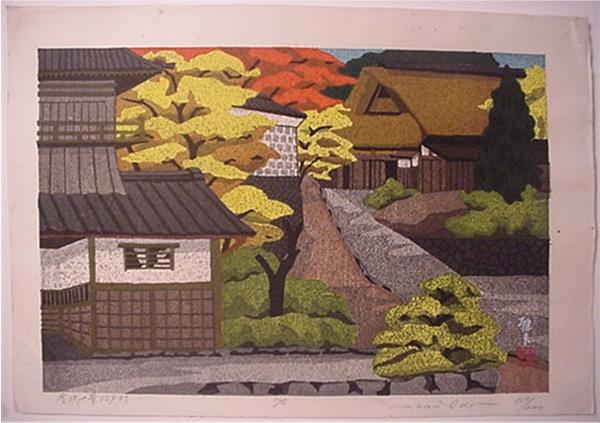
Unknown- traditional Japanese houses amid autumn trees
Woodblock print

Lake Shore in the Morning — 湖畔の朝
Woodblock print
SANSUI (landscape)
Woodblock print
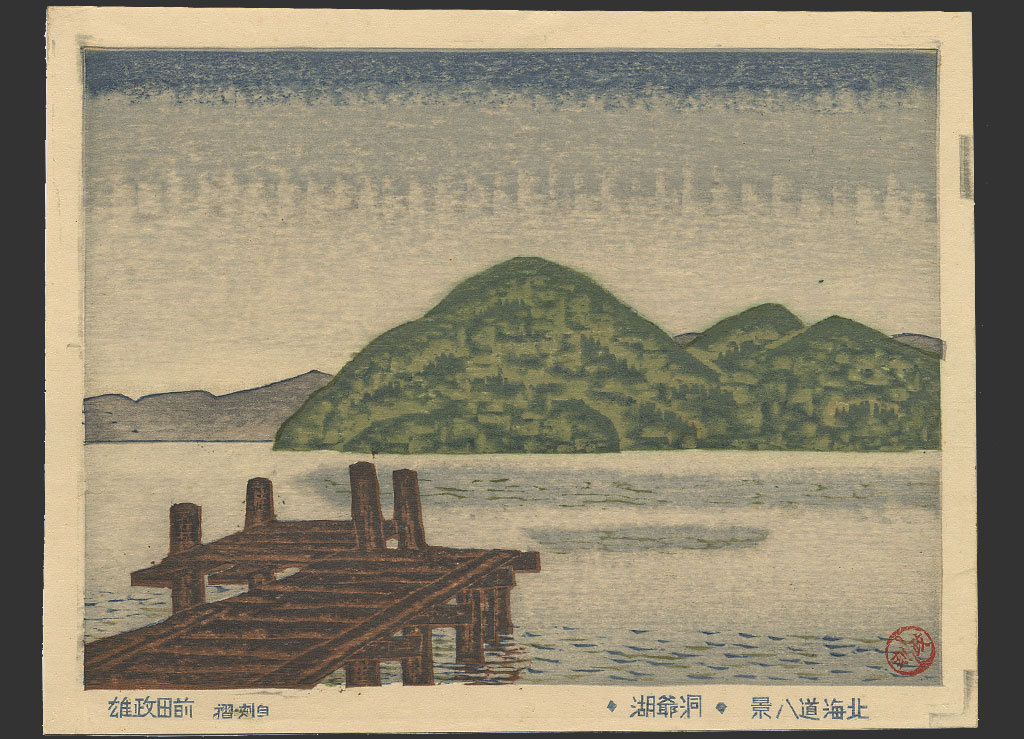
Lake Toya
Woodblock print
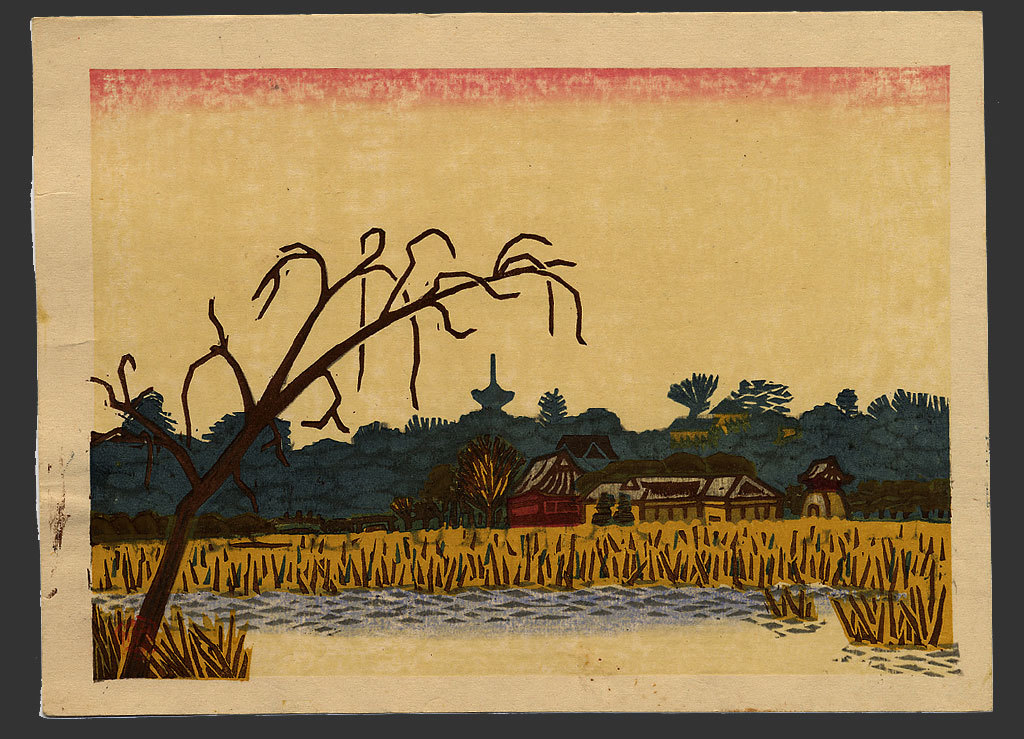
ArtOfJapan
Woodblock print
Album
Woodblock print
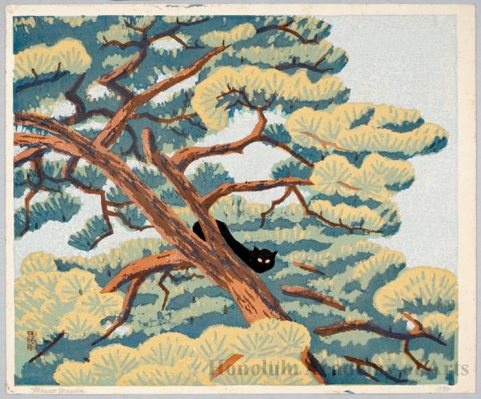
Black Cat In Green And Yellow Tree
Woodblock print
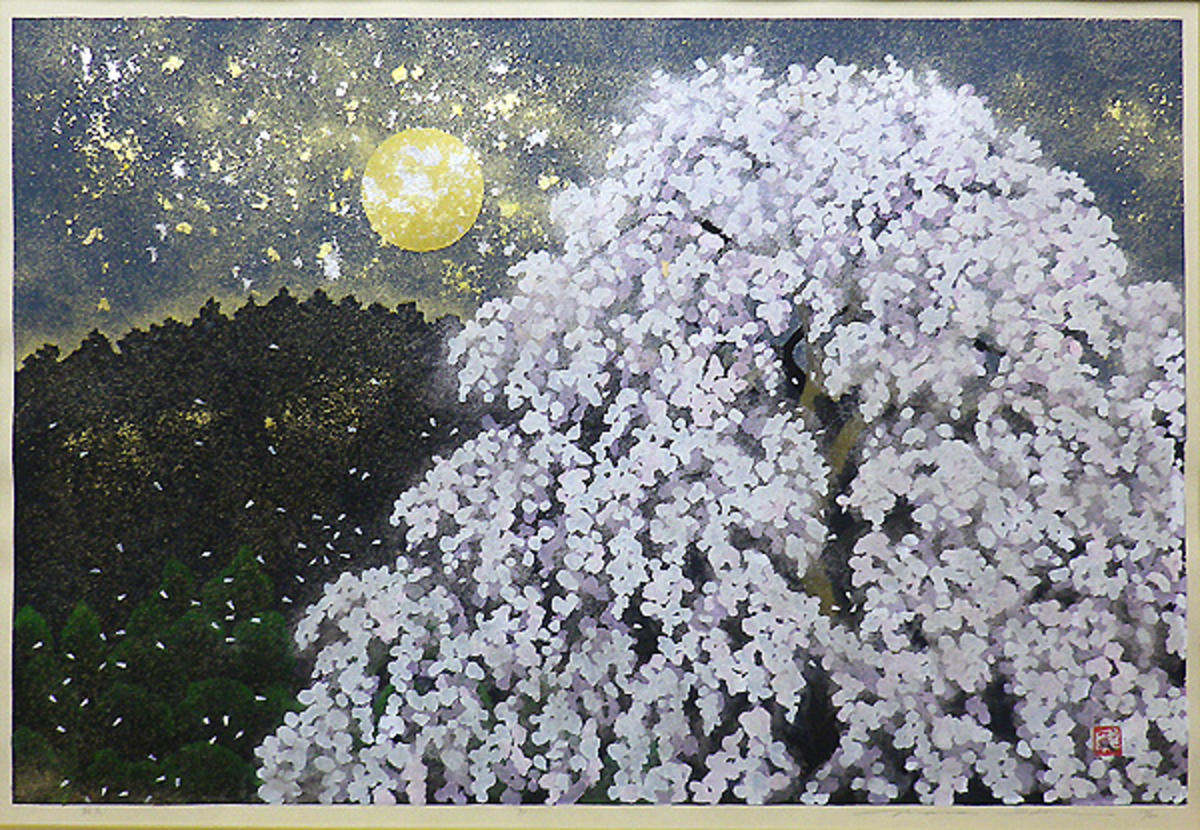
Sakura Flowers — 桜花
Woodblock print
Illustrations for Genji Monogatari (54)
Woodblock print
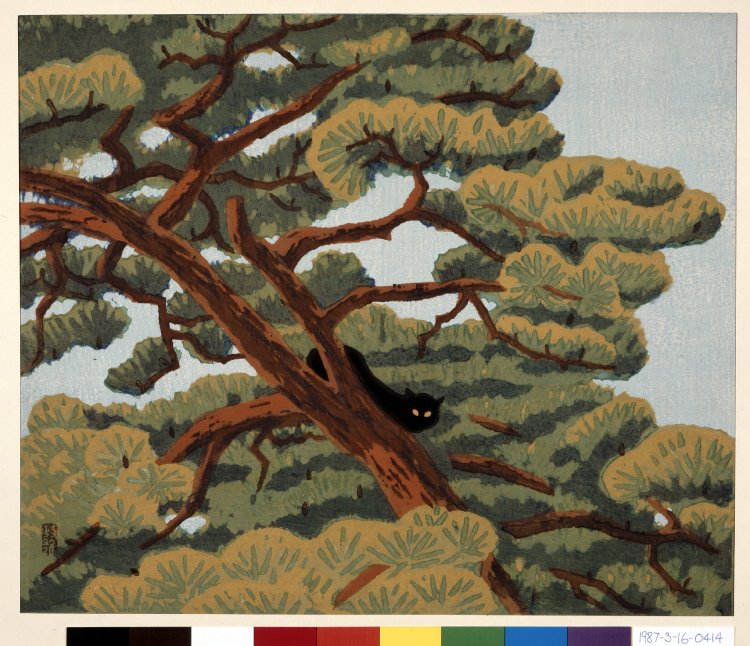
Black Cat
Woodblock print