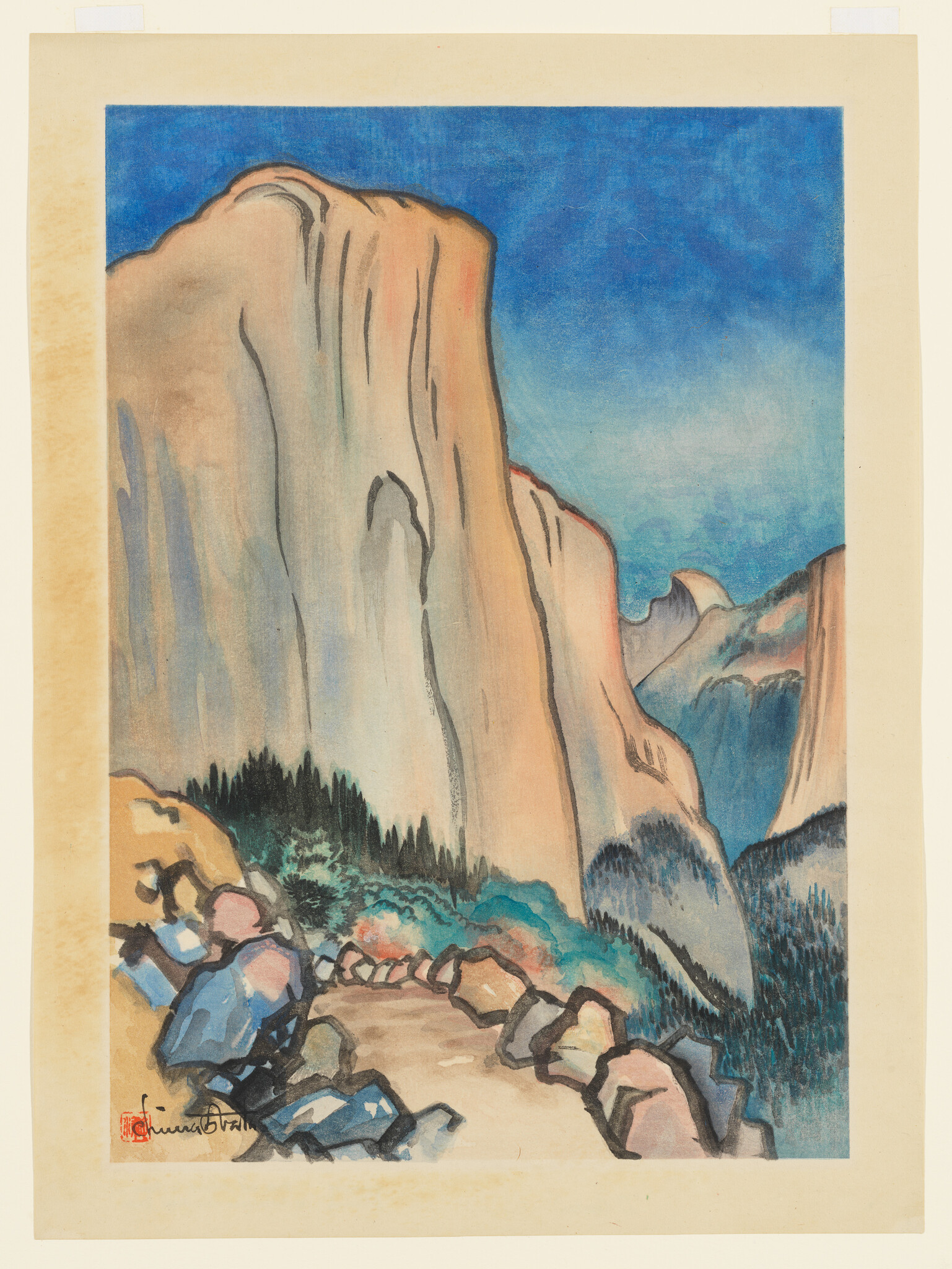
El Capitan
by Obata Chiura
- Date:
- 1930
- Medium:
- Color woodblock print
- Source:
- Whitney Museum of American Art
Description
El Capitan, completed by Obata Chiura in 1930, is one of the iconic sheets in his portfolio World Landscape Series 'America,' the artist's ambitious project to translate his 1927 Yosemite watercolors into the language of Japanese color woodblock. The composition rises vertically with the unmistakable granite monolith of El Capitan at its center, the cliff face rendered through layers of pale grays and warm sienna passages that suggest morning light raking across the rock, while dark stands of conifer anchor the foreground. Obata, who had emigrated from Japan to San Francisco in 1903 and would later teach at the University of California, Berkeley, returned to Tokyo between 1928 and 1930 to oversee the production of the series at the Takamizawa Print Works, where he employed thirty-two carvers and eighteen printers and approved between 120 and 205 progressive proofs for each image. The result is a print that reads almost like watercolor — the lines mimic the velocity of his brush, and the layered color holds the atmospheric softness of the original on-site sketch — yet is built entirely from carved cherry blocks and water-based pigments on washi paper. Obata's work occupies a unique position between Japanese print traditions and American landscape art: the World Landscape Series adapts the meisho-e (famous views) lineage of Hokusai and Hiroshige to the unfamiliar geography of the American West, making Yosemite legible through a Japanese visual grammar of layered ink and reserved white. The Whitney Museum of American Art, which holds this impression as part of a substantial gift from Gyo Obata (accession 2015.16, https://whitney.org/collection/works/46357), preserves El Capitan among the Whitney's twenty-plus Obata holdings that document the series in depth. For collectors and students of Japanese-American printmaking, El Capitan stands as perhaps the most direct meeting point in Obata's work between the technical apparatus of Edo-period color woodblock and the monumental scale of the American national park, and as a foundational example of how diasporic Japanese artists in the early twentieth century reshaped the print medium to address new landscapes.
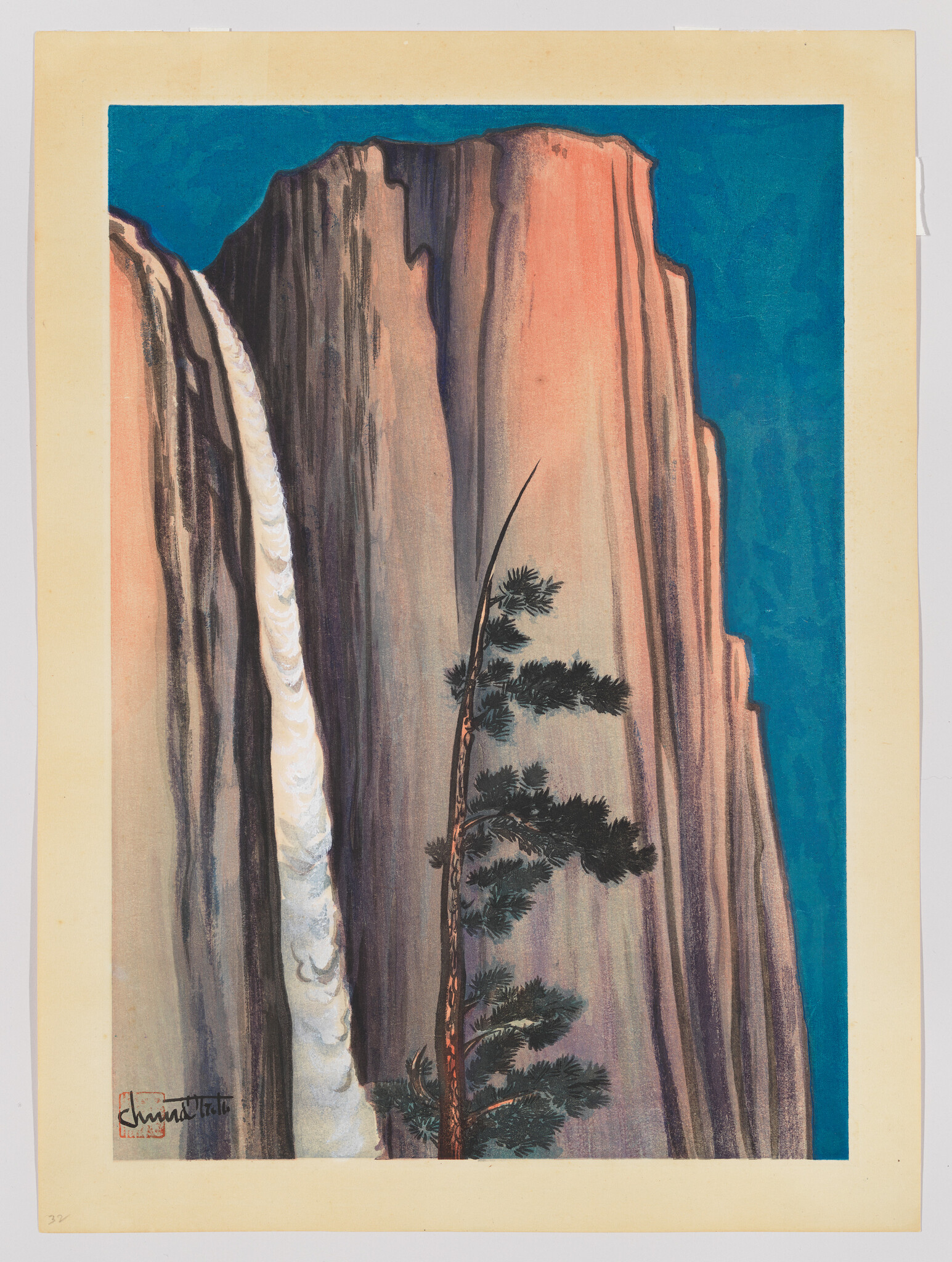
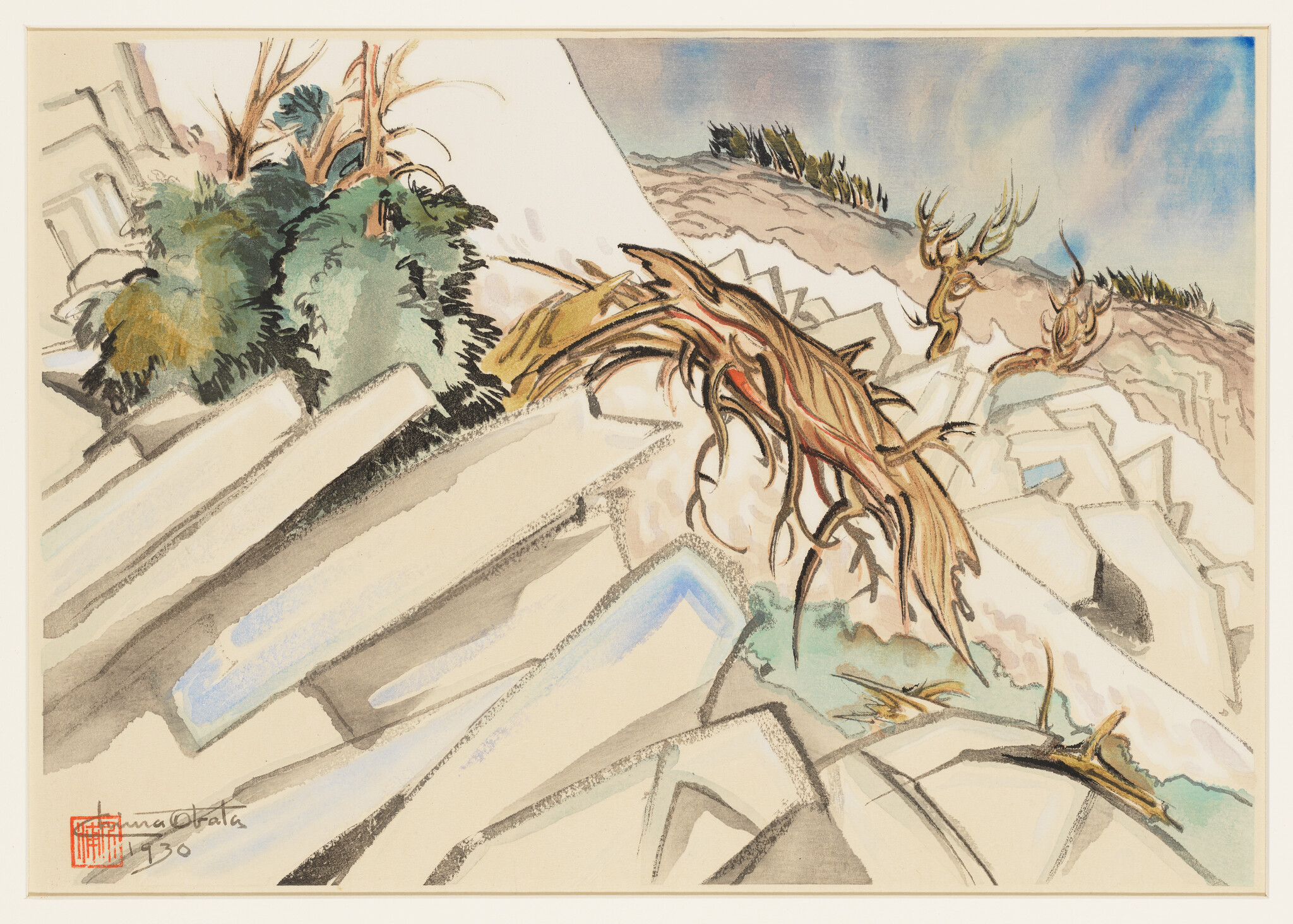
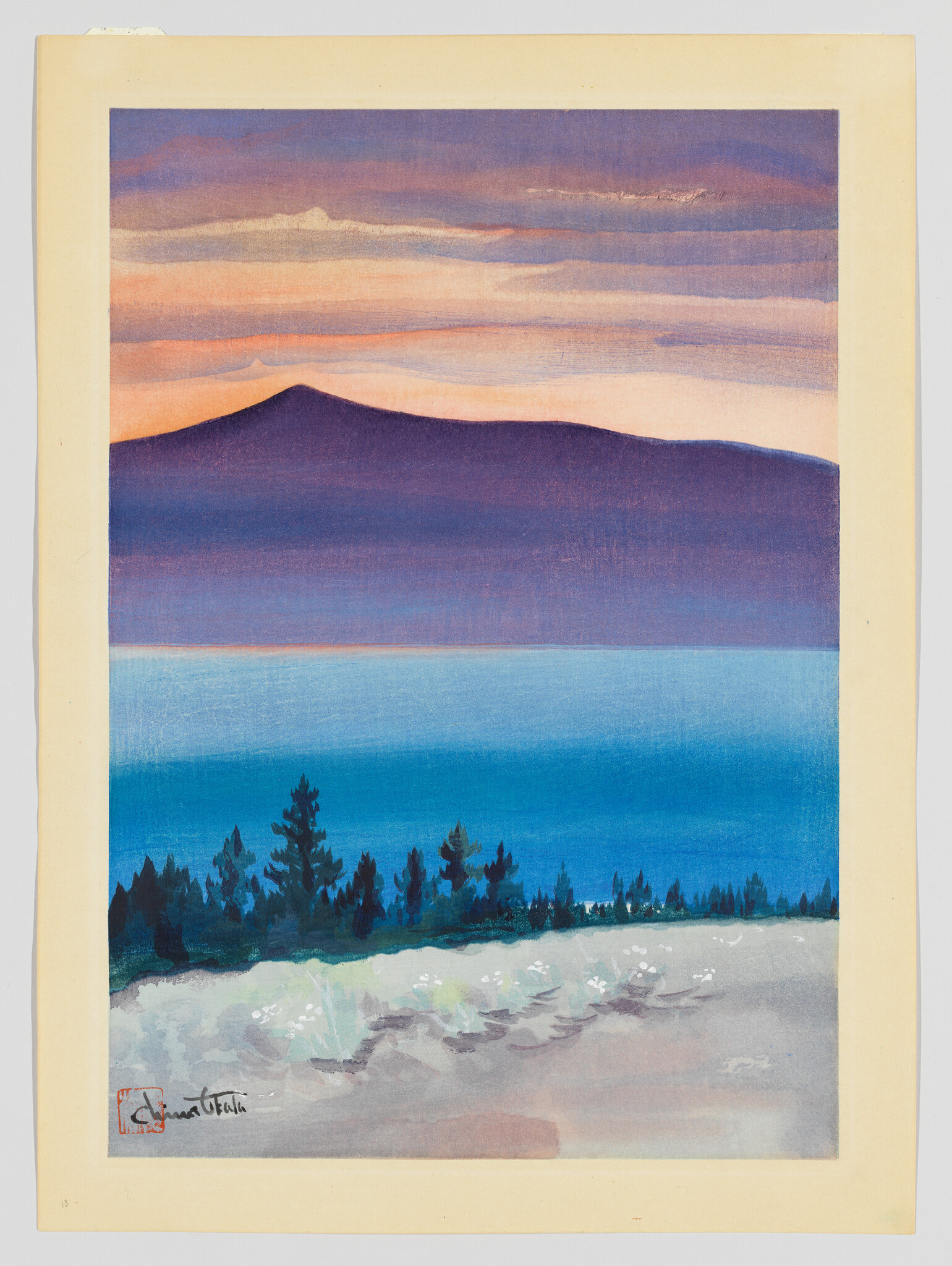
More Prints by Obata Chiura
Featured in Collections
Curated cross-cuts that include this print.
Frequently Asked Questions
El Capitan was created by Obata Chiura (小圃千浦) in 1930.