Biography
Obata Chiura (小圃千浦, 1885-1975) was one of the earliest and most significant Japanese-born artists to make a career in the United States, and a pivotal figure in the early twentieth-century transmission of Japanese painting and printmaking to American audiences. Born on November 18, 1885 in Okayama Prefecture, Japan, and raised by his older brother Rokuichi Obata, an artist who instilled in him a lifelong commitment to drawing from nature, Chiura took up sumi-e brush painting as a child in Sendai and, at the age of fourteen, apprenticed to the painter Tanryo Murata in Tokyo, training within the broad lineage of nihonga, the modern Japanese-style painting movement that sought to renew classical Japanese pictorial traditions in the late Meiji period.
Obata emigrated to the United States in 1903 at the age of seventeen, arriving in Seattle and soon settling in San Francisco, where he worked at first as a commercial illustrator and book designer before establishing himself as a painter, teacher, and community leader. He documented the immediate aftermath of the 1906 San Francisco earthquake in a series of sketches and watercolors that remain important visual records of the disaster. Over the following two decades he built a distinctive practice that combined Japanese ink and watercolor techniques — sumi-e brushwork, restrained color, careful composition derived from nihonga — with American landscape subject matter, and he became a central figure in the East West Art Society and other Asian-American artist organizations on the West Coast.
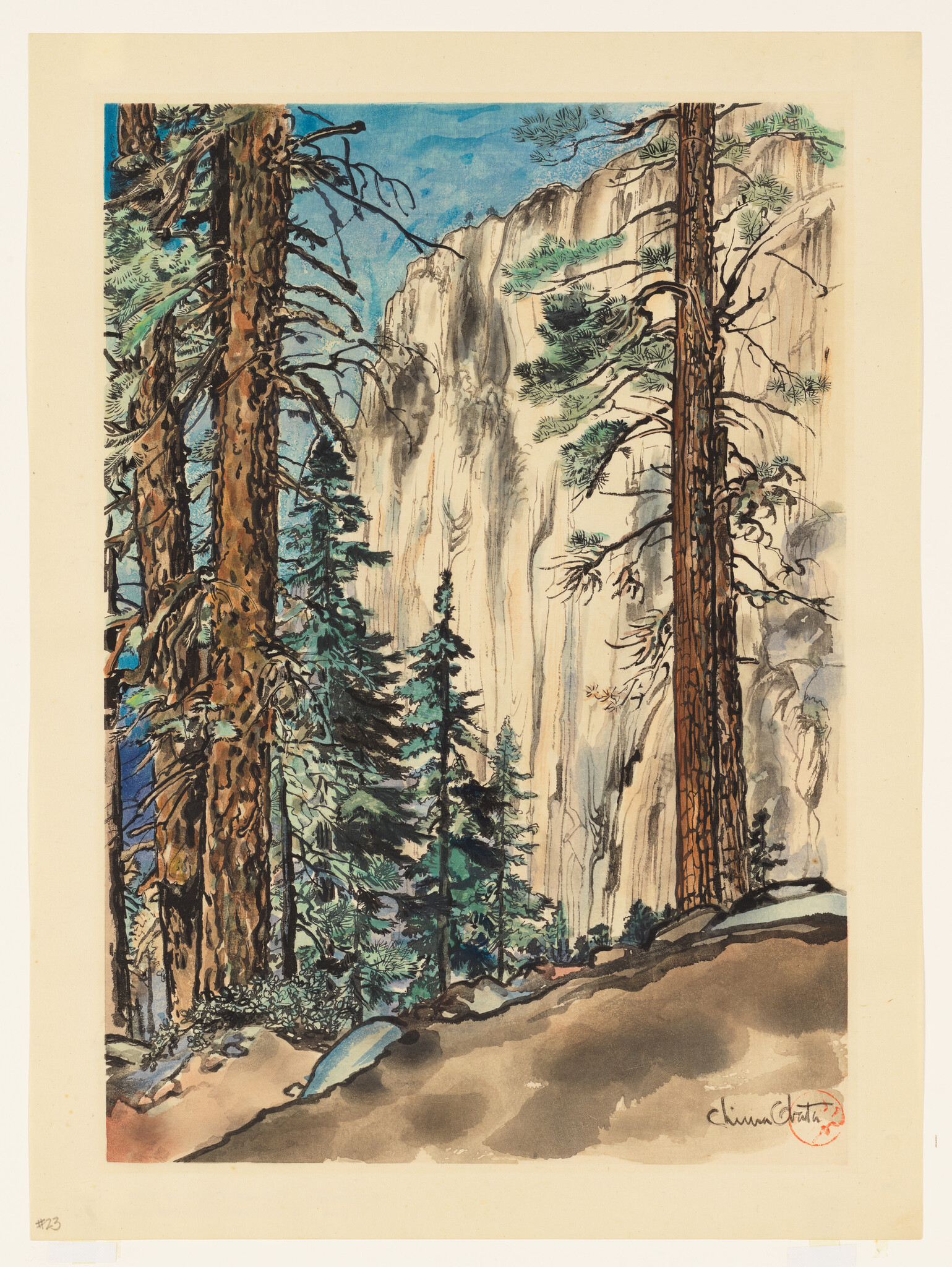
The turning point of Obata's career came in the summer of 1927, when at the invitation of the painter and University of California, Berkeley, professor Worth Ryder, he traveled with a small party through Yosemite National Park and the High Sierra, hiking, camping, and sketching for roughly six weeks. He produced approximately one hundred watercolors and sumi drawings on the trip, and described the expedition as 'the greatest harvest for my whole life and future in painting.' In 1928 Obata returned to Tokyo and selected thirty-five of these images for translation into color woodblock prints; at the Takamizawa Print Works he supervised the production of the portfolio World Landscape Series 'America' (1928-1930), working with thirty-two carvers and eighteen printers and approving between 120 and 205 progressive proofs for each image. The resulting prints, characterized by an unprecedented level of detail in which the marks of individual brushstrokes were faithfully preserved, fused Japanese woodblock technique with American Sierra subject matter and remain among the most ambitious twentieth-century examples of bicultural printmaking.
In 1932 Obata joined the faculty of the University of California, Berkeley, as an instructor in the Department of Art, where he taught generations of students Japanese-style painting and printmaking. His career was interrupted in 1942 when, in the aftermath of Pearl Harbor, he and his family were forcibly relocated under Executive Order 9066, first to the Tanforan Assembly Center and then to the Topaz War Relocation Center in Utah. Inside both camps Obata organized art schools that served hundreds of students of all ages, producing watercolors and drawings that document camp life and the surrounding desert landscape; these works are now considered some of the most important Japanese-American visual records of incarceration. He was reinstated at Berkeley after the war and retired as professor emeritus in 1953, continuing to paint, teach privately, and lecture across the United States and Japan.
Late in life Obata received the Order of the Sacred Treasure from the Emperor of Japan and continued to work in sumi ink and watercolor until shortly before his death on October 6, 1975 in Berkeley, California. His work is held in major collections including the Smithsonian American Art Museum, the Whitney Museum of American Art, the Fine Arts Museums of San Francisco (de Young), the Japanese American National Museum, the Oakland Museum of California, and the National Park Service collection at Yosemite. Major retrospectives — Obata's Yosemite (Smithsonian American Art Museum, 2008) and the traveling Chiura Obata: American Modern (2018-2020) — reestablished his standing as a defining figure in twentieth-century Japanese-American art and as one of the most important artists to bring the Japanese print tradition into sustained dialogue with the landscapes of the American West.
Key Facts
- Active Period
- 1885–1975
- Nationality
- 🇯🇵Japan
- Movement
- Sōsaku-hanga
- Subjects
- Autumn Foliage
- Works Indexed
- 8
Frequently Asked Questions
Obata Chiura (小圃千浦, 1885-1975) was one of the earliest and most significant Japanese-born artists to make a career in the United States, and a pivotal figure in the early twentieth-century transmission of Japanese painting and printmaking to American audiences. Born on November 18, 1885 in Okayama Prefecture, Japan, and raised by his older brother Rokuichi Obata, an artist who instilled in him a lifelong commitment to drawing from nature, Chiura took up sumi-e brush painting as a child in Sendai and, at the age of fourteen, apprenticed to the painter Tanryo Murata in Tokyo, training within the broad lineage of nihonga, the modern Japanese-style painting movement that sought to renew classical Japanese pictorial traditions in the late Meiji period.
Obata Chiura was active from 1885 to 1975. They were associated with the Sōsaku-hanga movement.
Obata Chiura's work was shaped by the Sōsaku-hanga tradition in Japanese woodblock printmaking. Sōsaku-hanga: ## What is sōsaku-hanga? Sōsaku-hanga (創作版画, "creative prints") was a twentieth-century Japanese print movement defined by a single commitment: the artist must design, carve, and print every work alone.
Obata Chiura's prints frequently feature autumn foliage.
Original prints by Obata Chiura can be found in collections including Smithsonian American Art Museum, Whitney Museum of American Art.
Woodblock Prints by Obata Chiura (8)
Lake Basin in the High Sierra
1930
Color woodblock print
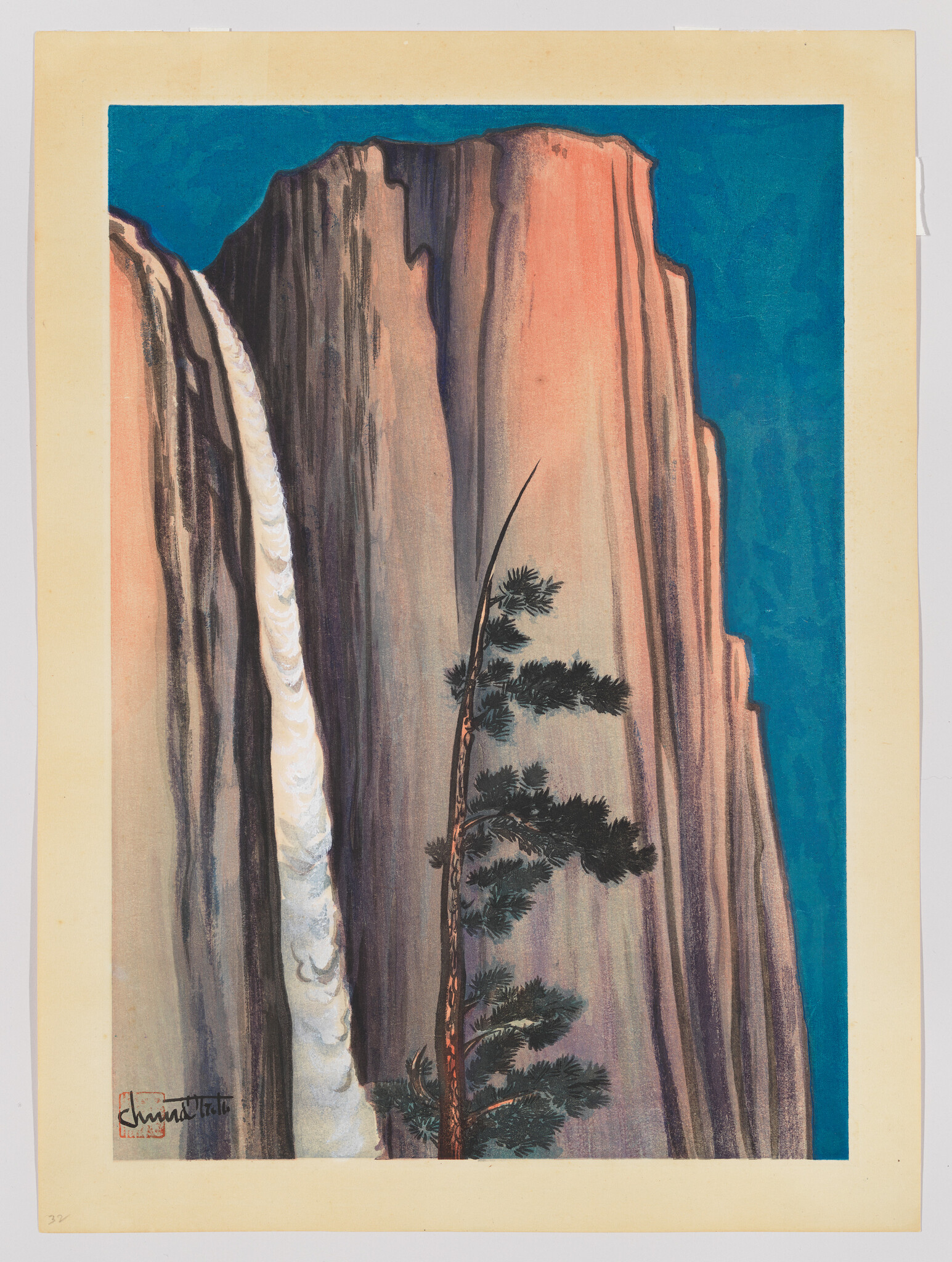
Evening Glow of Yosemite Fall
1930
Color woodblock print
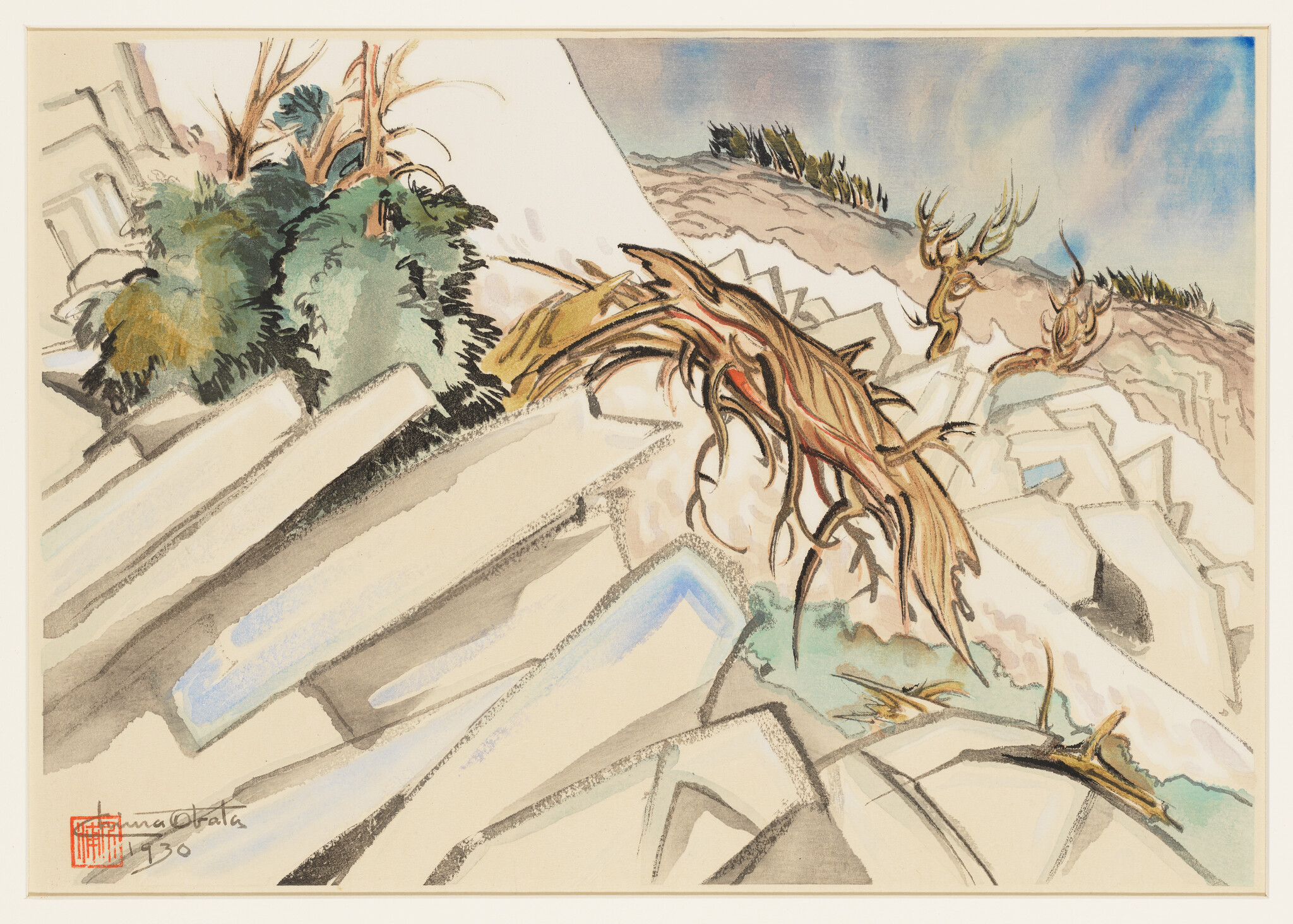
Struggle, Trail to Johnson Peak
1930
Color woodblock print
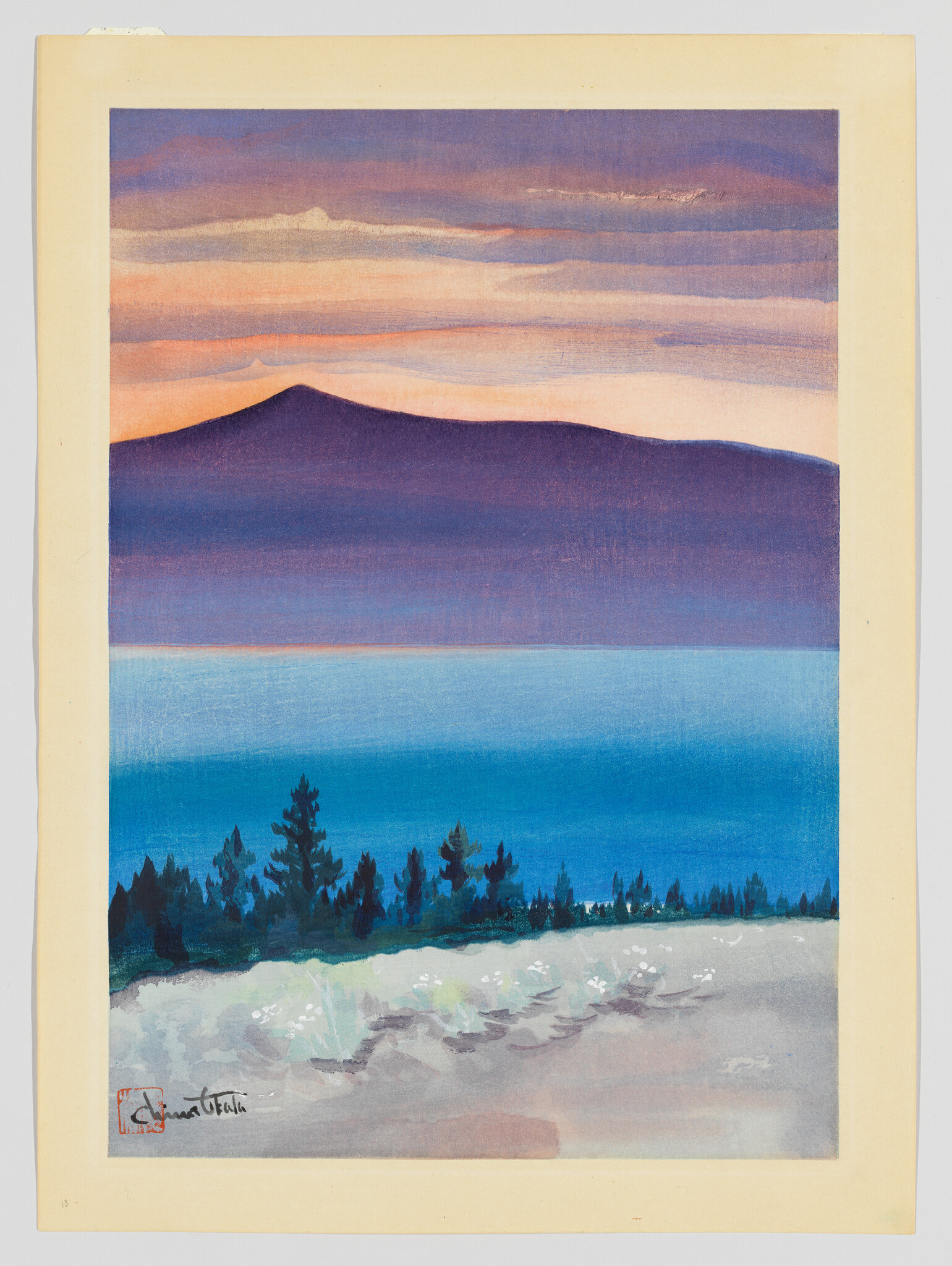
Evening Glow at Mono Lake, from Mono Mills
1930
Color woodblock print
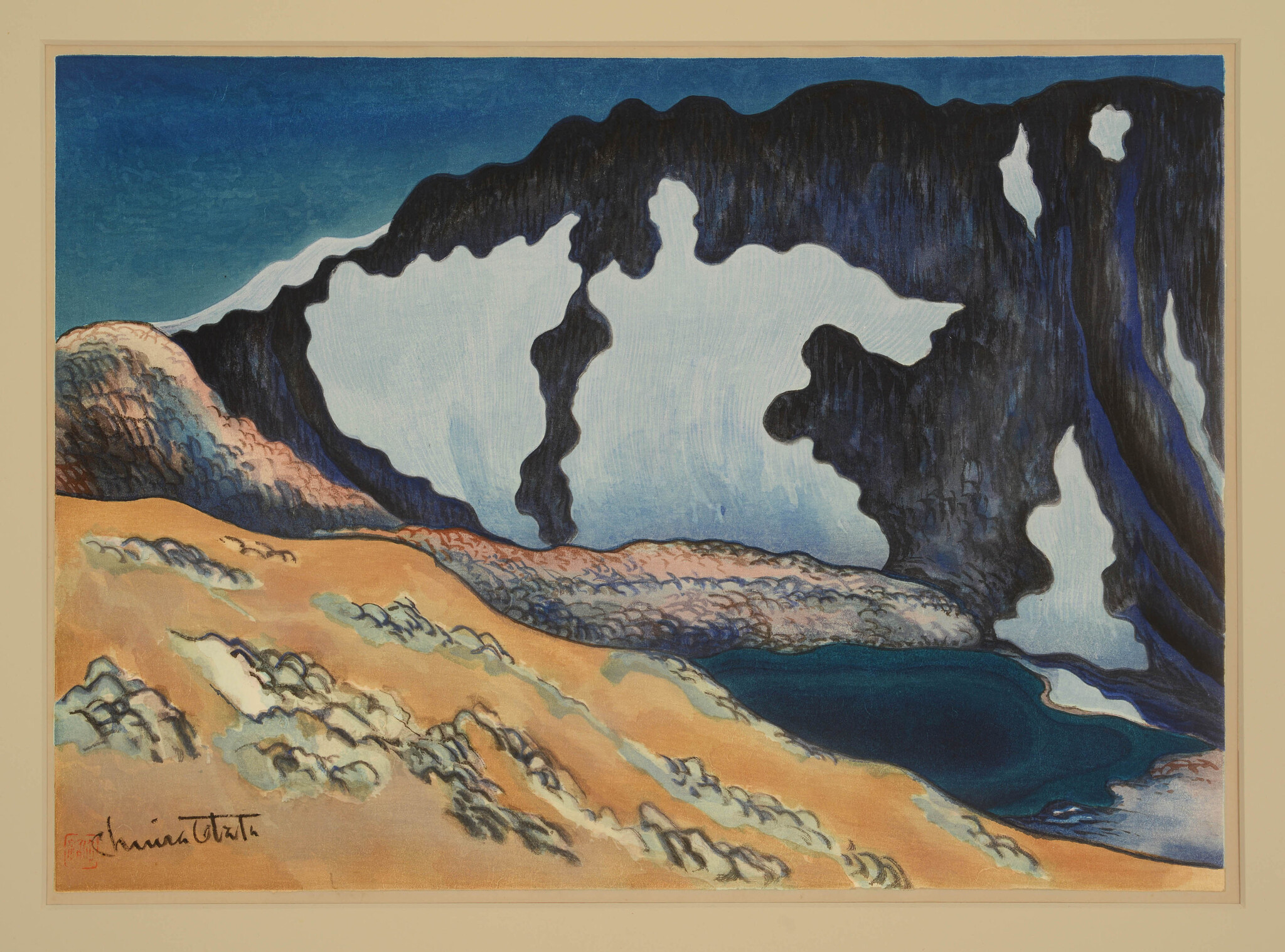
Silence, Last Twilight on an Unknown Lake, Johnson Peak
1930
Color woodblock print
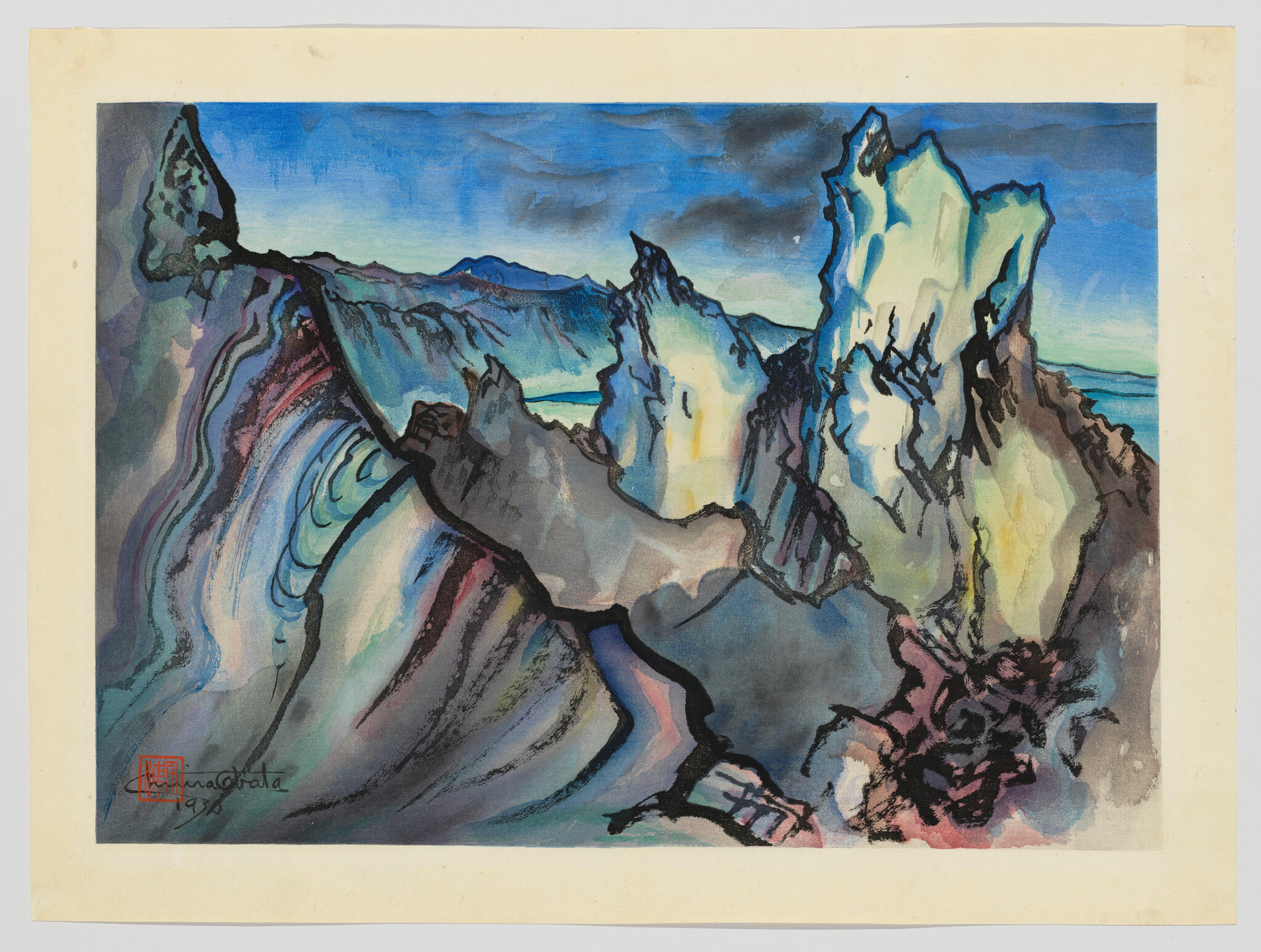
Mono Crater
1930
Color woodblock print
Eagle Peak Trail
1930
Color woodblock print
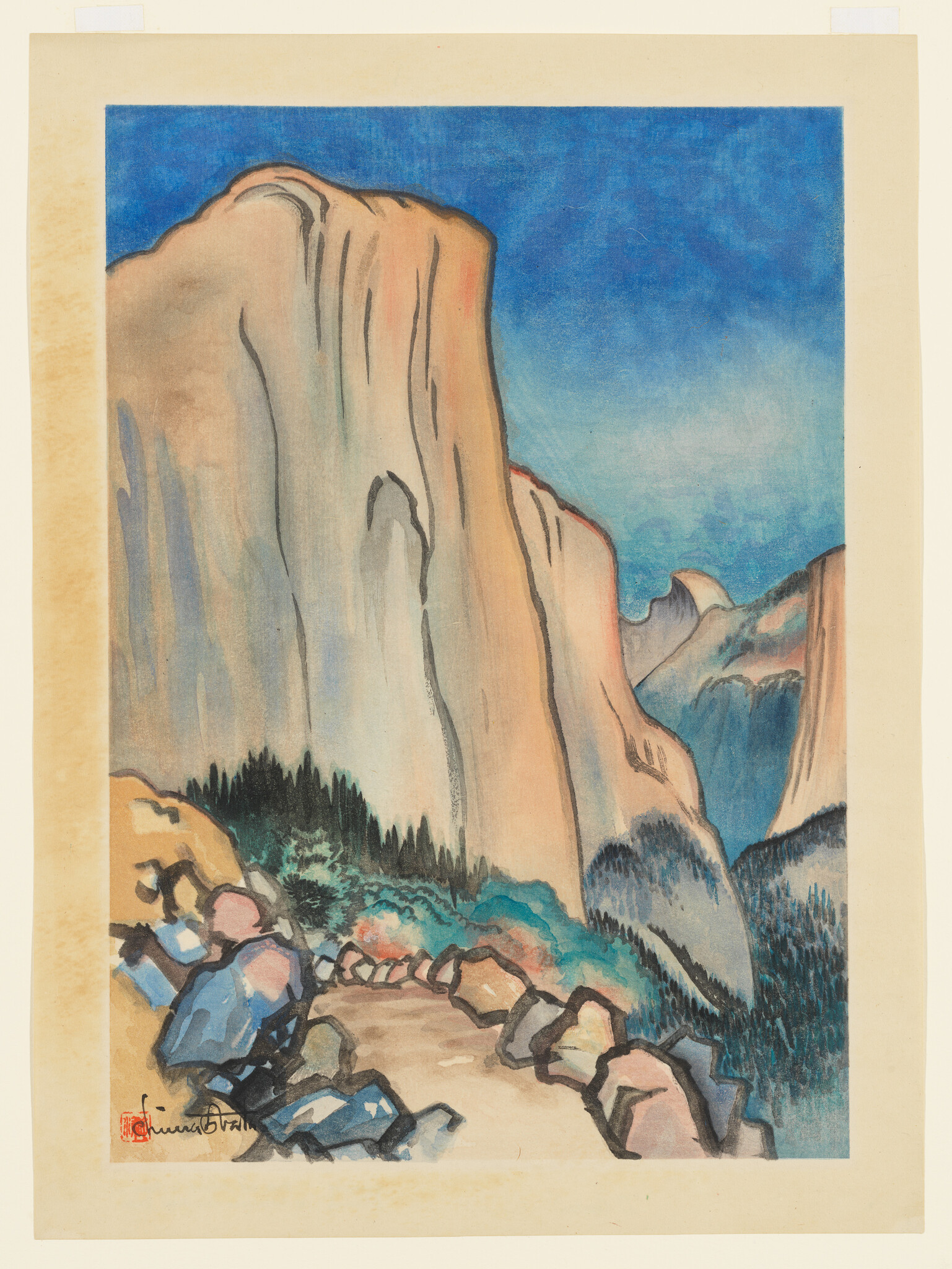
El Capitan
1930
Color woodblock print