Mount Fuji from Behind, Shôwa period, dated 1939
- Medium:
- Woodblock print
- Source:
- Harvard Art Museums
Description
Dated 1939, this woodblock print presents Mount Fuji from its rear aspect, offering a perspective that departs from the familiar southern view celebrated by centuries of Japanese artists. Seeing Fuji from behind strips the mountain of some of its iconic symmetry, revealing irregular ridgelines and slopes that the canonical viewpoint conceals. Fukazawa treats this less-visited angle with the same care that shin-hanga publishers brought to their front-facing Fuji prints, suggesting that the mountain's grandeur does not depend on a single privileged vantage point. The Showa-period dating places this print in the years just before the Pacific War, a time when Japanese artists were actively reinterpreting national symbols. The woodblock medium connects Fukazawa's modern observation to the long history of Fuji imagery in Japanese art.
More Prints by Sakuichi Fukazawa

More Landscapes Prints

Lake Kugushi in Wakasa Province (Wakasa Kugushiko), from the series Souvenirs of Travel I (Tabi miyage dai isshu)"
Wakasa Kugushiko
1920
Color woodblock print; oban
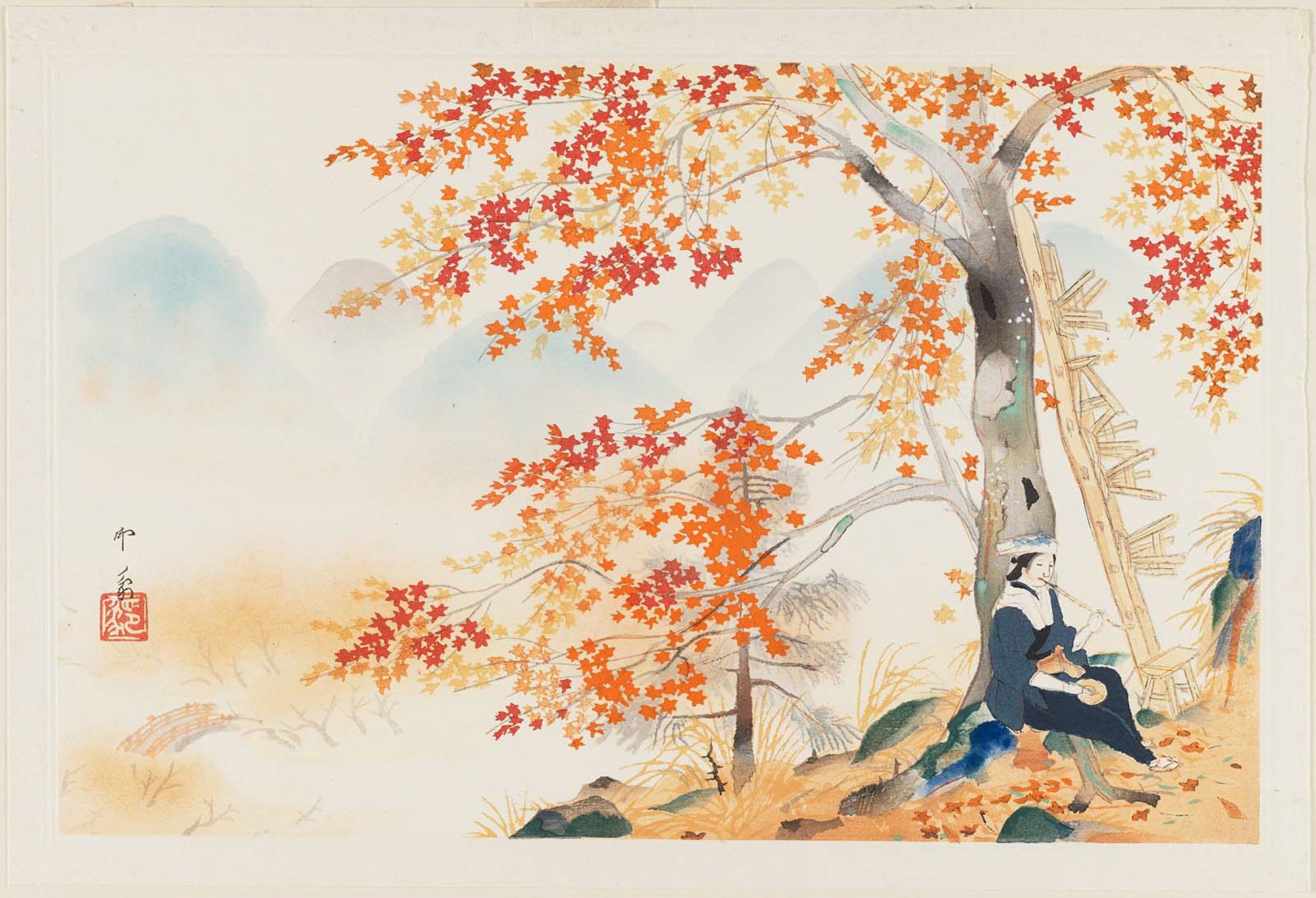
Autumn Maple Leaves at Takao, from the album Eight Views of Kyoto (Kyôto hakkei)
Woodblock print

The Beach at Kaiganji in Sanuki Province (Sanuki Kaiganji no hama), from the series "Collection of Views of Japan II, Kansai Edition (Nihon fukei shu II Kansai hen)"
1934
Color woodblock print; oban

Tea Kettle, section of a sheet from the series "Mirror of Stone Rubbings of Views of the Provinces" (Kohon meihitsu ishizuri kagami)
n.d.
Woodblock print; ishizuri-e, section of harimaze sheet
Featured in Collections
Curated cross-cuts that include this print.
Frequently Asked Questions
Mount Fuji from Behind, Shôwa period, dated 1939 was created by Sakuichi Fukazawa (深沢索一).
Mount Fuji from Behind, Shôwa period, dated 1939 depicts landscapes and mount fuji, set at Mount Fuji.