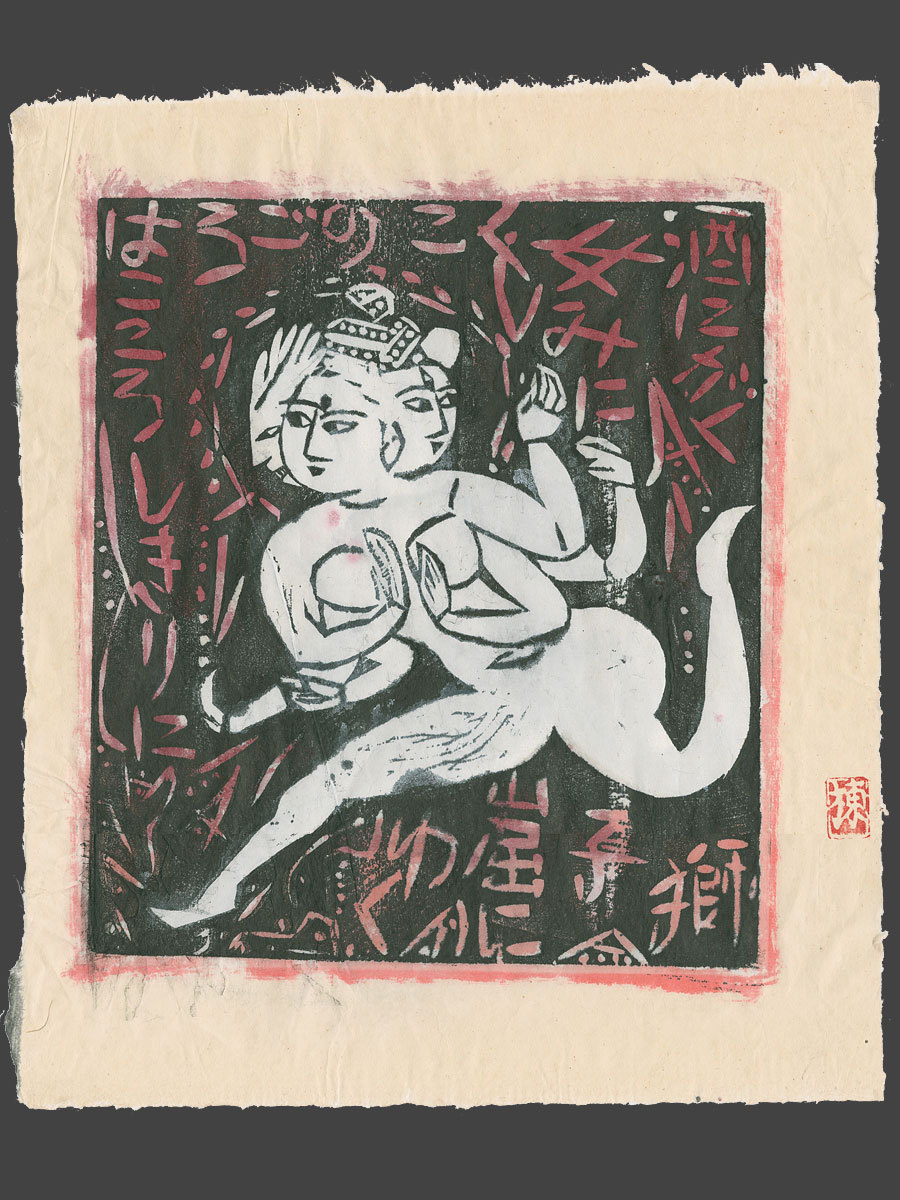
Shishikutsu (In the Cave)
- Date:
- 1953
- Medium:
- Woodblock print
- Edition:
- Self-printed
- Source:
- Art of Japan
Description
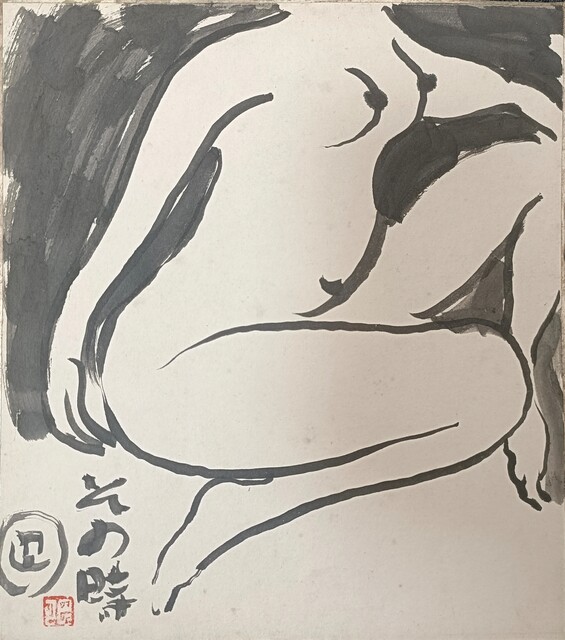
"Shishikutsu (In the Cave)" from 1953 depicts a scene of cave-dwelling or cave encounter — the cave being in both world mythology and Japanese tradition a liminal space: the threshold between the human world and the underworld, between the profane and the sacred. In Japanese mythology, the cave is associated with Amaterasu's withdrawal and the Kagura dance that drew her out. For Munakata, the cave as subject may have carried both this mythological resonance and the visual interest of an enclosed, dark space from which figures emerge or into which they retreat — a metaphor for the creative act of drawing forms from the darkness of the woodblock.
More Prints by Shiko Munakata
More Landscapes Prints

Lake Kugushi in Wakasa Province (Wakasa Kugushiko), from the series Souvenirs of Travel I (Tabi miyage dai isshu)"
Wakasa Kugushiko
1920
Color woodblock print; oban
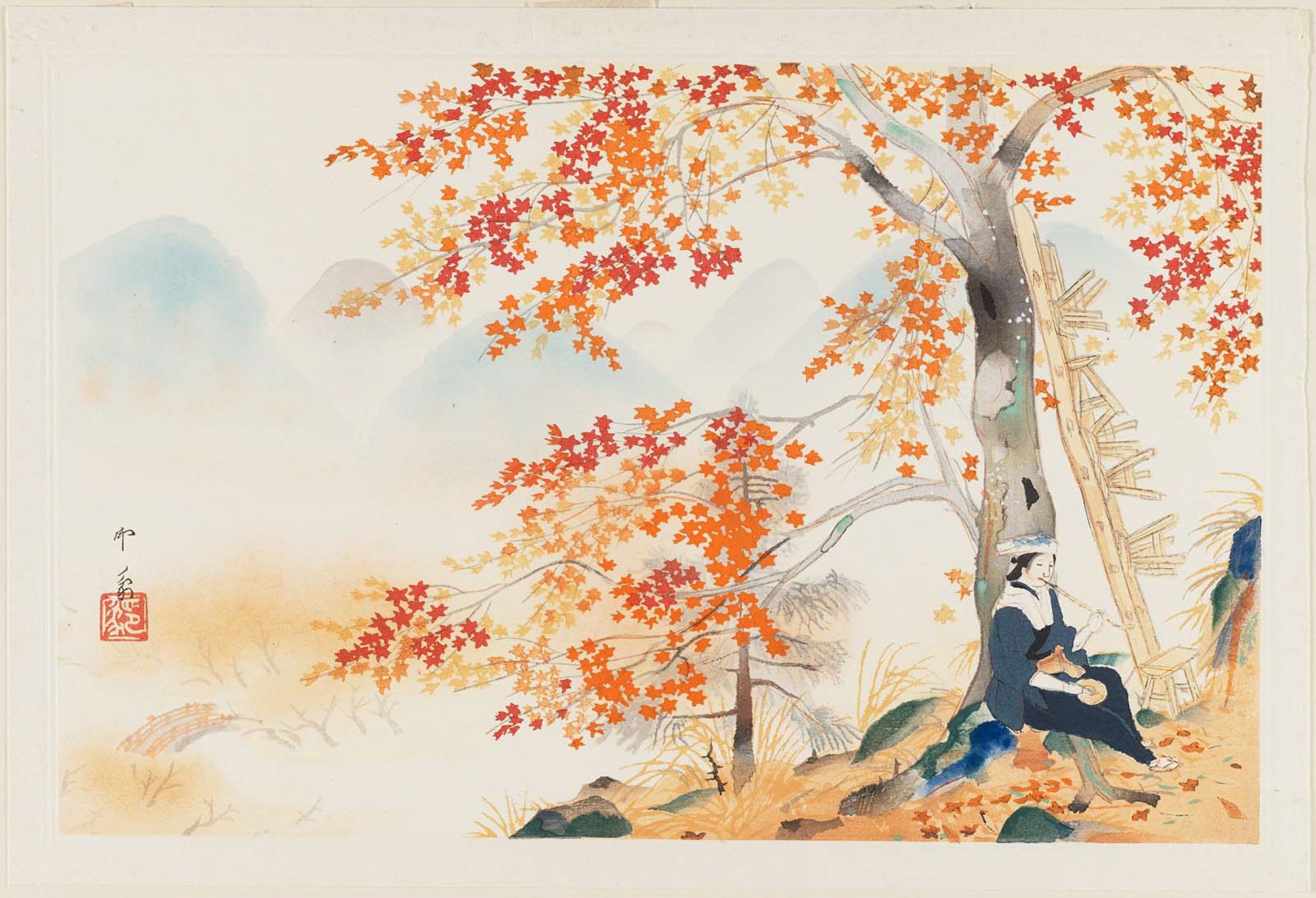
Autumn Maple Leaves at Takao, from the album Eight Views of Kyoto (Kyôto hakkei)
Woodblock print

The Beach at Kaiganji in Sanuki Province (Sanuki Kaiganji no hama), from the series "Collection of Views of Japan II, Kansai Edition (Nihon fukei shu II Kansai hen)"
1934
Color woodblock print; oban

Tea Kettle, section of a sheet from the series "Mirror of Stone Rubbings of Views of the Provinces" (Kohon meihitsu ishizuri kagami)
n.d.
Woodblock print; ishizuri-e, section of harimaze sheet
Featured in Collections
Curated cross-cuts that include this print.
Frequently Asked Questions
Shishikutsu (In the Cave) was created by Shiko Munakata (棟方志功) in 1953.
Shishikutsu (In the Cave) depicts landscapes, figures, and mythology.