
Yoshino plum park
- Medium:
- Mokuhanga (Japanese woodblock)
- Image courtesy of
- Saru Gallery
Description
Two gnarled plum trees in white blossom rise in front of a thatched-roof farmhouse, their dark branches silhouetted against the pale flowers and a deep black background of distant trees. The palette is muted and largely monochrome — cream, brown, and charcoal tones with a faint touch of green in the low shrubs at the base of the trunk — and no human figures appear in the scene. Title text and the artist's seal appear at the left margin, with "Shiro Kasamatsu" signed in the lower right; this mokuhanga print is titled *Yoshino Plum Park*.
More Prints by Shiro Kasamatsu
More Gardens Prints
![[Garden of] Taj Mahal, No. 1 (Taji Maharu no niwa, dai ichi) by Hiroshi Yoshida](https://www.artic.edu/iiif/2/230993a7-d4f0-c979-c267-127d48e1ef1c/full/843,/0/default.jpg)
[Garden of] Taj Mahal, No. 1 (Taji Maharu no niwa, dai ichi)
Taji Maharu no niwa, dai ichi
1931
Color woodblock print; oban

Kiyozumi Garden in Moonlight
January 1938
Woodblock print, ink and color on paper

Moon over Kiyosumi Garden (Tsuki no Kiyosumien)
1938
Color woodblock print; oban
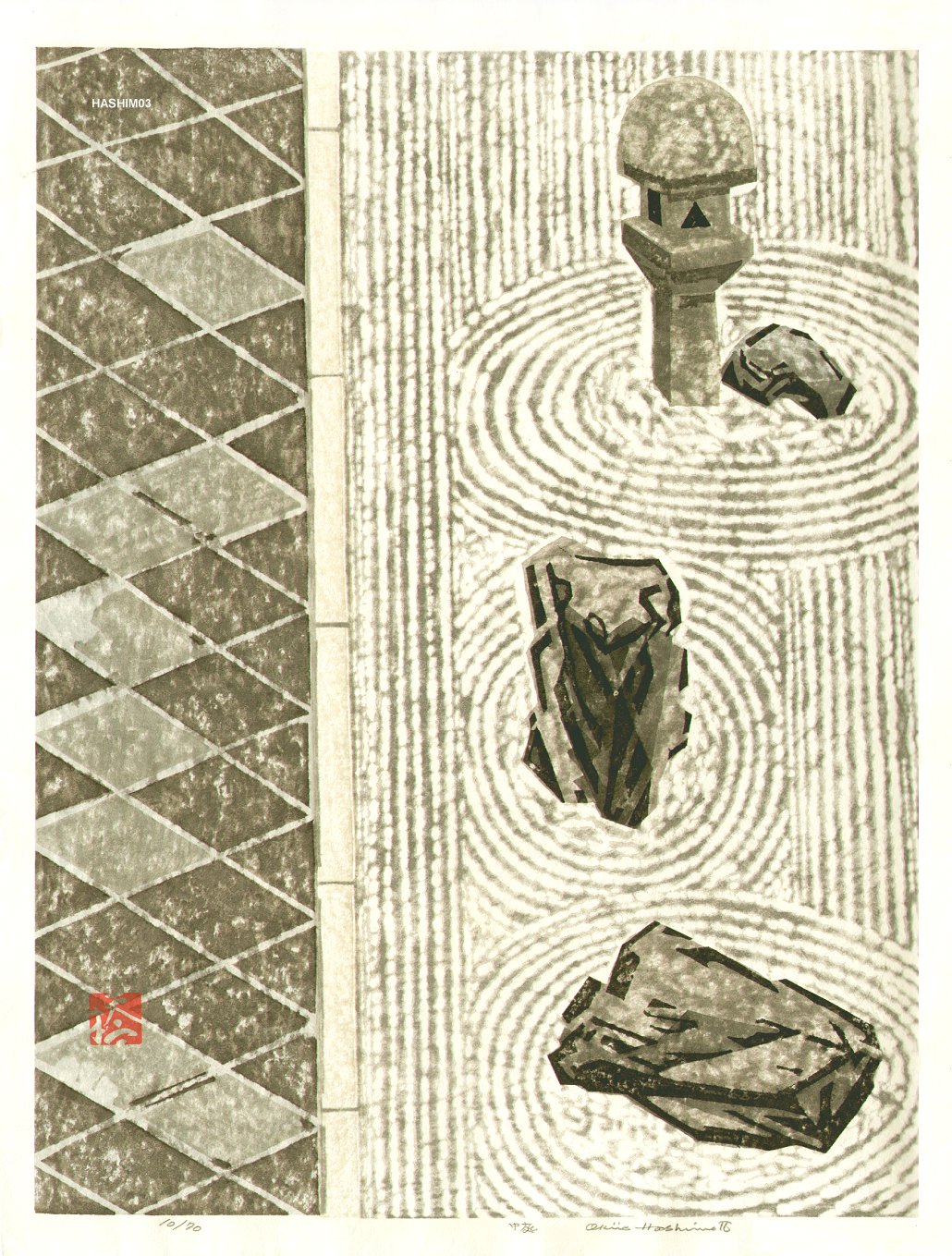
Rock garden
10/70, 1966
Woodblock print
Featured in Collections
Curated cross-cuts that include this print.
Frequently Asked Questions
Yoshino plum park was created by Shiro Kasamatsu (笠松紫浪).
Yoshino plum park depicts gardens.