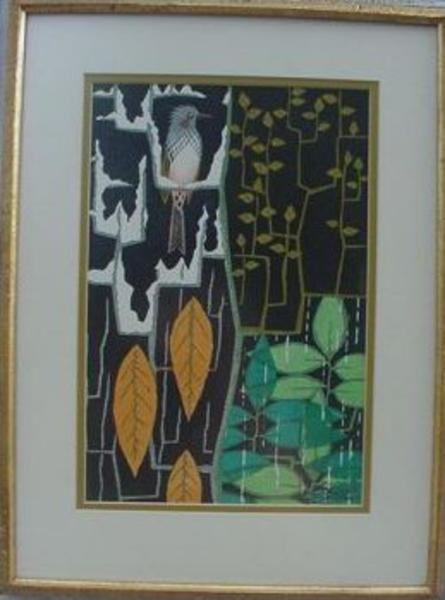
Tree in the Four Seasons
- Medium:
- Woodblock print
- Format:
- Oban
- Publisher:
- Watanabe Shozaburo
- Edition:
- Published by Watanabe Shozaburo
- Source:
- ukiyo-e.org
Description
Tree in the Four Seasons is a woodblock print by Shiro Kasamatsu that takes a single tree as its subject across the full cycle of the year. The seasonal progression, from the bare branches of winter through spring blossoms, summer foliage, and autumn color, is one of the most deeply rooted themes in Japanese art, appearing in painted screens, poetry, garden design, and printmaking for centuries. Kasamatsu's choice to focus on a single tree rather than a panoramic landscape concentrates the viewer's attention on the specific changes that mark each season: budding, leafing, fruiting, and shedding. The oban format gives the composition sufficient scale to render botanical detail while maintaining the intimacy that Kasamatsu preferred in his mature landscape work.
More Prints by Shiro Kasamatsu
More Seascapes Prints
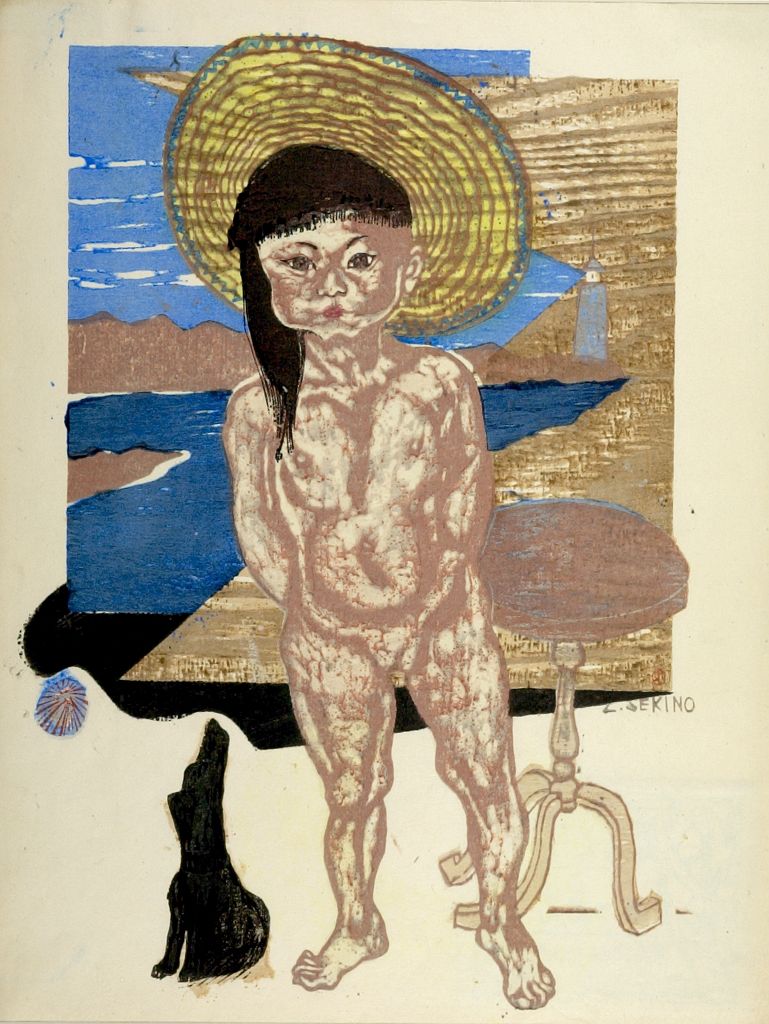
Child of the Sea
1940
Woodblock print

The Beach at Kaiganji in Sanuki Province (Sanuki Kaiganji no hama), from the series "Collection of Views of Japan II, Kansai Edition (Nihon fukei shu II Kansai hen)"
1934
Color woodblock print; oban

Pacific Ocean, Awa Province (Boshu Taikai), from the series "Souvenirs of Travel, Third Series (Tabi miyage dai sanshu)"
Boshu Taikai
1925
Color woodblock print; oban

Pine Beach at Miho (Miho no Matsubara), from the series "Selection of Views of the Tokaido (Tokaido fukei senshu)"
September 1931
Color woodblock print; oban
Featured in Collections
Curated cross-cuts that include this print.
Frequently Asked Questions
Tree in the Four Seasons was created by Shiro Kasamatsu (笠松紫浪).
Tree in the Four Seasons uses Bokashi, Nishiki-e, and Moku-hanga, on woodblock print.
Tree in the Four Seasons was published by Watanabe Shozaburo.
Tree in the Four Seasons depicts seascapes and trees.