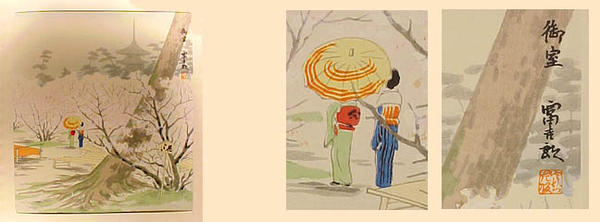
Cherry Blossoms at Omuro
- Medium:
- Woodblock print
- Format:
- Oban
- Publisher:
- Unsodo
- Source:
- ukiyo-e.org
Description
Cherry blossoms crowd the branches of ancient trees at Omuro — the temple of Ninna-ji in the western hills of Kyoto, famous for its late-blooming "Omuro cherry" variety — in this spring composition by Tokuriki. The Omuro cherries are distinguished from Kyoto's more famous blossoms by their low stature — the trees rarely exceed two meters, giving the blossoms an intimate, ground-level accessibility that sets them apart from the tall weeping cherries and yamabuki of other famous sites. Tokuriki captures the particular character of this beloved late-blooming variety.
More Prints by Tomikichiro Tokuriki
Heian Shrine in the Spring
Woodblock print
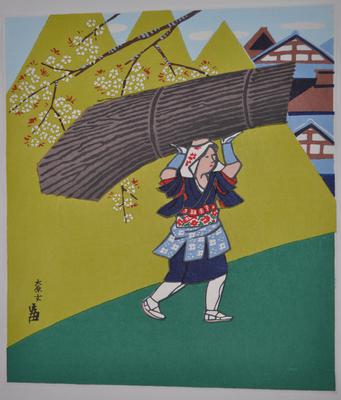
An Oharame Girl Carrying Firewood on Her Head
20th century
Woodblock print, ink and color on paper

April (Arashiyama Park, a Famous Scenic Resort)
四月 (嵐山)
second half 20th century
Woodblock print, ink and color on paper

June (Rainy Scene of the Sen-ke, Japanese Tea Ceremony Founder's House)
六月 (千家雨景)
second half 20th century
Woodblock print, ink and color on paper
More Cherry Blossoms Prints

Kumoi Cherry Trees (Kumoi sakura)
Kumoi sakura
1926
Color woodblock print

Hirosaki Castle, from the series "Eight Views of Cherry Blossoms"
1935
Color woodblock print

Chion-in Temple Gate (Romon), from the series Eight Scenes of Cherry Blossoms (Sakura hachidai)
Romon
1935
Color woodblock print
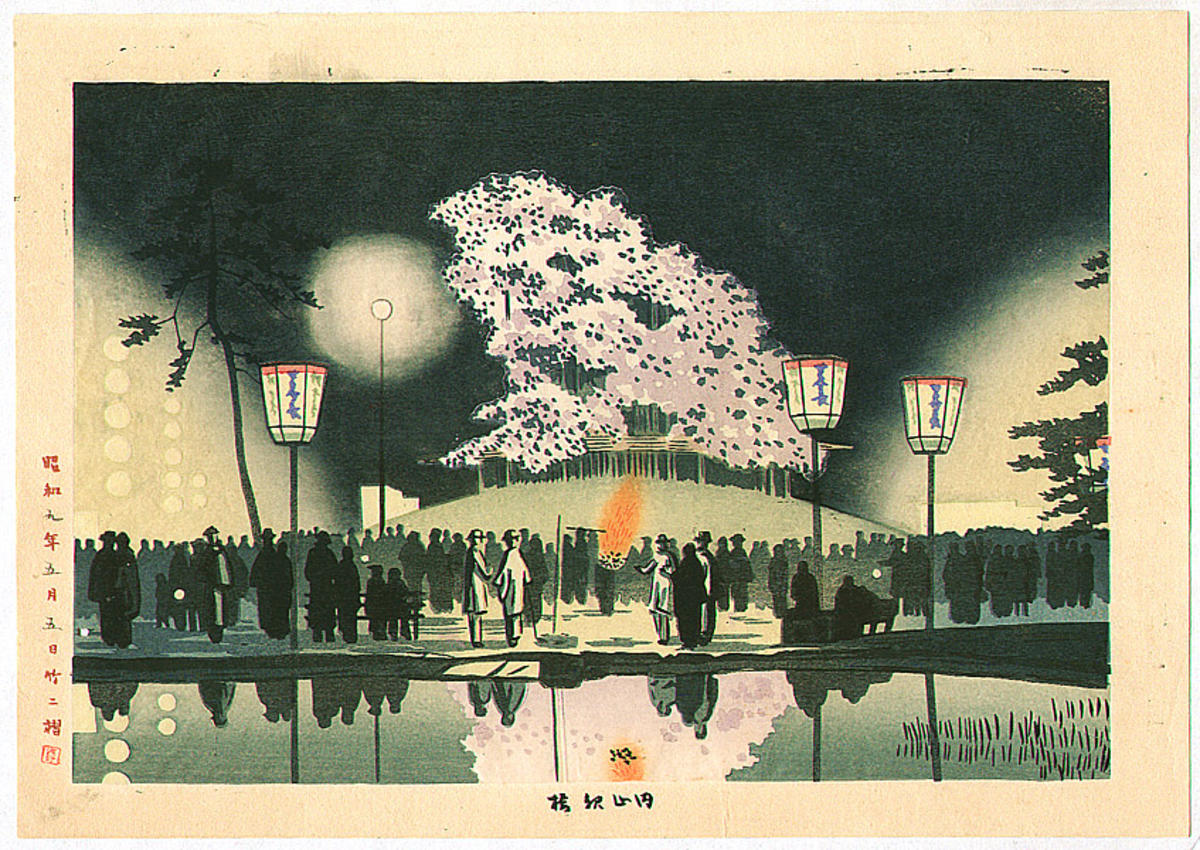
Cherry Blossoms at Maruyama Park
円山公園桜
Woodblock print
Featured in Collections
Curated cross-cuts that include this print.
Frequently Asked Questions
Cherry Blossoms at Omuro was created by Tomikichiro Tokuriki (徳力富吉郎).
Cherry Blossoms at Omuro uses Moku-hanga, Nishiki-e, and Sumi, on woodblock print.
Cherry Blossoms at Omuro was published by Unsodo.
Cherry Blossoms at Omuro depicts cherry blossoms.