
Boathouses And Ine bay (Tokyo)
- Medium:
- Mokuhanga (Japanese woodblock)
- Image courtesy of
- Saru Gallery
Description
Ine Bay sits on the Tango Peninsula in northern Kyoto Prefecture — not Tokyo, despite the parenthetical in the title — and is known for its funaya, the row of two-story wooden boathouses whose ground floors open directly onto the water to shelter fishing vessels. The composition almost certainly uses the bay as a horizontal stage, with the linked roofline of the funaya arcing along the shore and the still water of the bay reflecting the structures back. Tokuriki's seascape prints typically deploy bokashi across the water to register reflection and depth, while the boathouses themselves carry the weight of the image in keyblock line and flat color fields. The funaya have served as a recurring subject for shin-hanga and sosaku-hanga artists drawn to vernacular architecture sited in working Japanese landscapes. Within Tokuriki's wider body of work, the print belongs to his coastal and harbor compositions, distinct from his Kyoto temple subjects but sharing the same interest in built form set in landscape.
More Prints by Tomikichiro Tokuriki
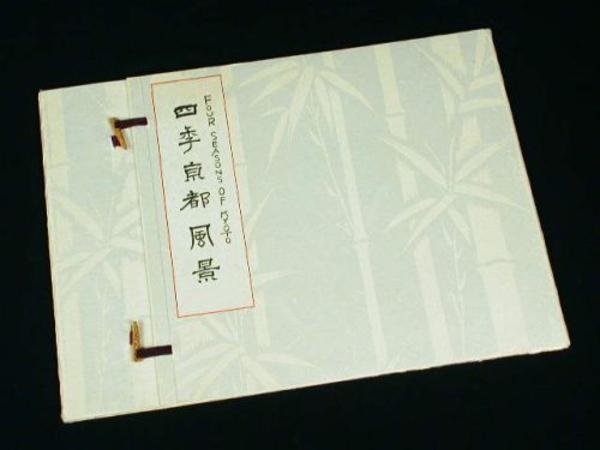
Heian Shrine in the Spring
Woodblock print
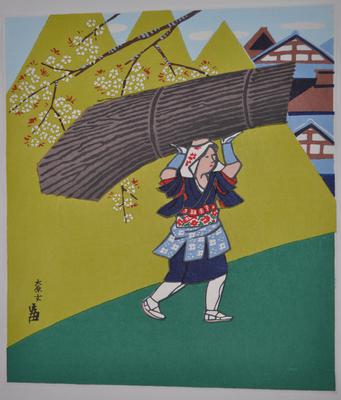
An Oharame Girl Carrying Firewood on Her Head
20th century
Woodblock print, ink and color on paper

April (Arashiyama Park, a Famous Scenic Resort)
四月 (嵐山)
second half 20th century
Woodblock print, ink and color on paper

June (Rainy Scene of the Sen-ke, Japanese Tea Ceremony Founder's House)
六月 (千家雨景)
second half 20th century
Woodblock print, ink and color on paper
More Seascapes Prints
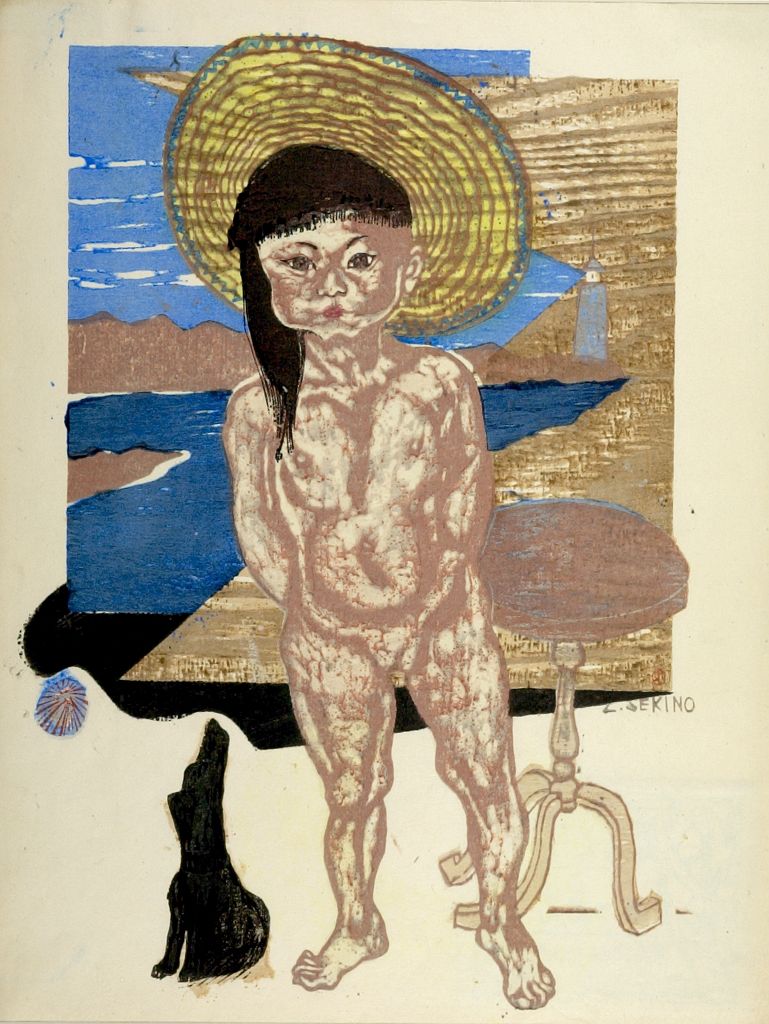
Child of the Sea
1940
Woodblock print

The Beach at Kaiganji in Sanuki Province (Sanuki Kaiganji no hama), from the series "Collection of Views of Japan II, Kansai Edition (Nihon fukei shu II Kansai hen)"
1934
Color woodblock print; oban

Pacific Ocean, Awa Province (Boshu Taikai), from the series "Souvenirs of Travel, Third Series (Tabi miyage dai sanshu)"
Boshu Taikai
1925
Color woodblock print; oban

Pine Beach at Miho (Miho no Matsubara), from the series "Selection of Views of the Tokaido (Tokaido fukei senshu)"
September 1931
Color woodblock print; oban
Featured in Collections
Curated cross-cuts that include this print.
Frequently Asked Questions
Boathouses And Ine bay (Tokyo) was created by Tomikichiro Tokuriki (徳力富吉郎).
Boathouses And Ine bay (Tokyo) depicts seascapes.