
Autumn Maples with Poem Slips
- Date:
- c. 1675
- Medium:
- Six-panel screen (one of pair); ink, colors, gold leaf, and gold powder on silk
- Source:
- Art Institute of Chicago
Description
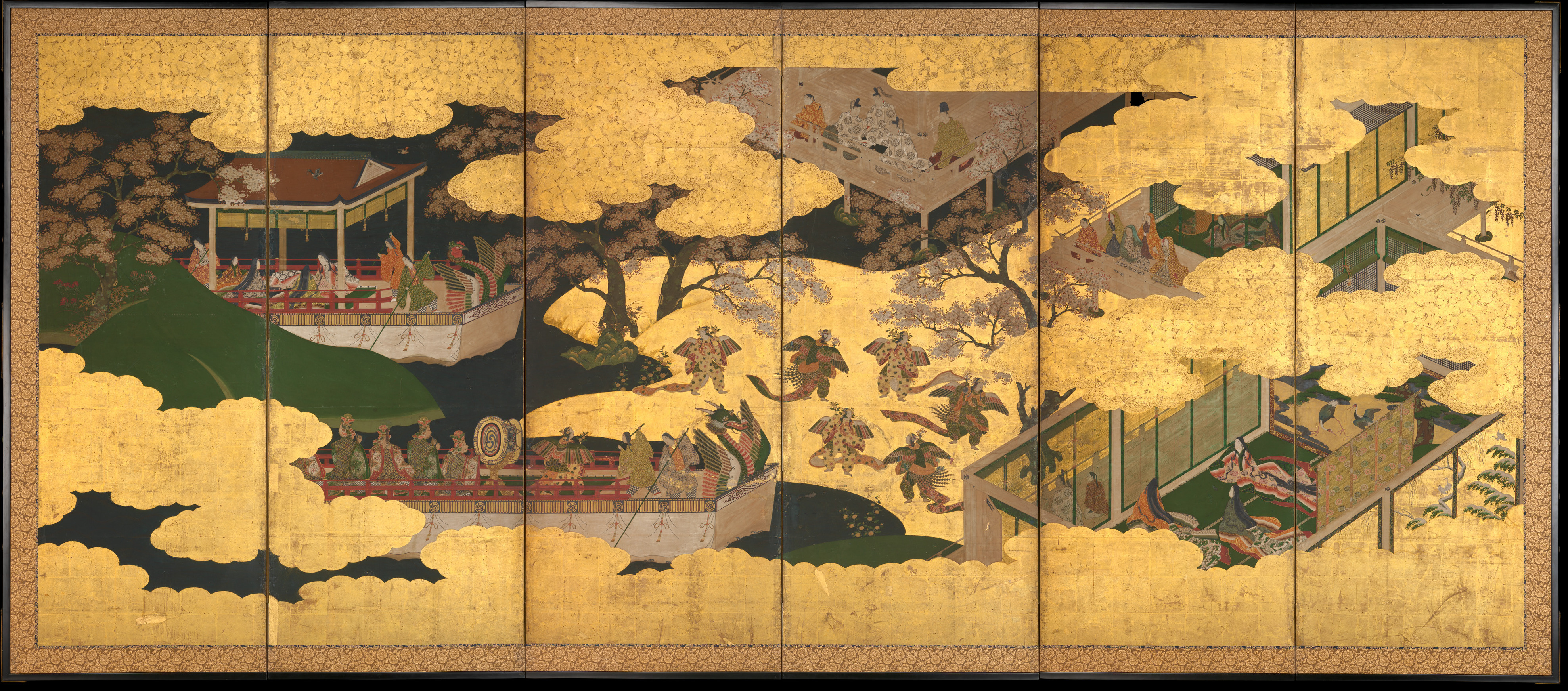
One of a pair of six-panel folding screens by Tosa Mitsuoki, depicting an autumn maple tree against a ground of gold leaf, the branches densely hung with paper poem slips (tanzaku) on which classical waka have been inscribed. The composition belongs to the period after 1654, when Mitsuoki was appointed edokoro azukari (head of the imperial Office of Painting), restoring the Tosa school to its historic position as the painters of the Kyoto imperial court. The motif of poem slips suspended from blossoming branches drew on the courtly practice of hanging waka compositions from trees during seasonal poetry gatherings, an activity recorded in Heian-period literary sources and codified into a recognised yamato-e subject. The composition pairs with a companion screen of flowering cherry, the two together standing for the canonical poetic seasons of spring and autumn around which the classical Japanese literary calendar was organised. The Art Institute of Chicago dates the screen to circa 1675 and preserves it within its substantial Japanese painting collection. The use of ink, mineral colours, gold leaf, and gold powder on silk is entirely characteristic of mature Tosa-school screen painting under Mitsuoki's leadership: the gold ground provides both atmospheric depth and the literal display surface for the calligraphic poem slips, while the dense decorative arrangement of branches and leaves achieves a balance of natural observation and pictorial pattern-making that defines the Tosa-school revival of the seventeenth century.
More Prints by Tosa Mitsuoki

Quail and Autumn Flowers
second half of 17th century
Hanging scroll; ink and color on silk

Portrait-Icon of Murasaki Shikibu
17th century
Hanging scroll; ink, color, and gold on silk
Butterflies
second half of 17th century
Pair of six-panel folding screens; ink, color, and gold on silk

Heron
second half of 17th century
Hanging scroll; ink and color on silk
More Autumn Foliage Prints

A Farmhouse in Autumn, Ayashi, Miyagi Prefecture (Noka no aki (Miyagi ken Ayashi)
Noka no aki (Miyagi ken Ayashi
1946
Color woodblock print
Yoro Waterfall in Mino Province (Mino no kuni Yoro no taki), from the series Tour of the Waterfalls in Various Provinces (Shokoku Takimeguri)
Woodblock print

Tengui Rock, Autumn in Shiobara (Shiobara no aki (Tenguiwa))
1950
Color woodblock print

Autumn at the Arayu Hot Spring, Shiobara
Autumn 1920
Woodblock print, ink and color on paper
Frequently Asked Questions
Autumn Maples with Poem Slips was created by Tosa Mitsuoki (土佐光起) in c. 1675.
Autumn Maples with Poem Slips depicts autumn foliage.