Resembling a Branch (Eda ni utsusu), from the series The Appearance of Upper-Class Women of the Edo Period (Tokugawa jidai kifujin no sugata) -- Woman with a Doll
- Date:
- Meiji period, dated October 10, 1896
- Medium:
- Woodblock print in "ōban" format; ink and color on paper
- Format:
- Oban
- Dimensions:
- 36.8 × 24.8 cm
- Source:
- Harvard Art Museums
Description
A print from October 1896 depicting a woman with a doll from the series "The Appearance of Upper-Class Women of the Edo Period" — one of Chikanobu's major historical series documenting the dress and customs of aristocratic women from the Tokugawa period. The title's Japanese ("Eda ni utsusu," roughly "Reflected in a Branch") suggests a poetic or metaphorical framing that places the woman and her doll within a lyrical context. The doll, as a luxury object of feminine culture, speaks to the refined material world of Edo-period upper-class women.
More Prints by Toyohara Chikanobu
More Landscapes Prints

Lake Kugushi in Wakasa Province (Wakasa Kugushiko), from the series Souvenirs of Travel I (Tabi miyage dai isshu)"
Wakasa Kugushiko
1920
Color woodblock print; oban
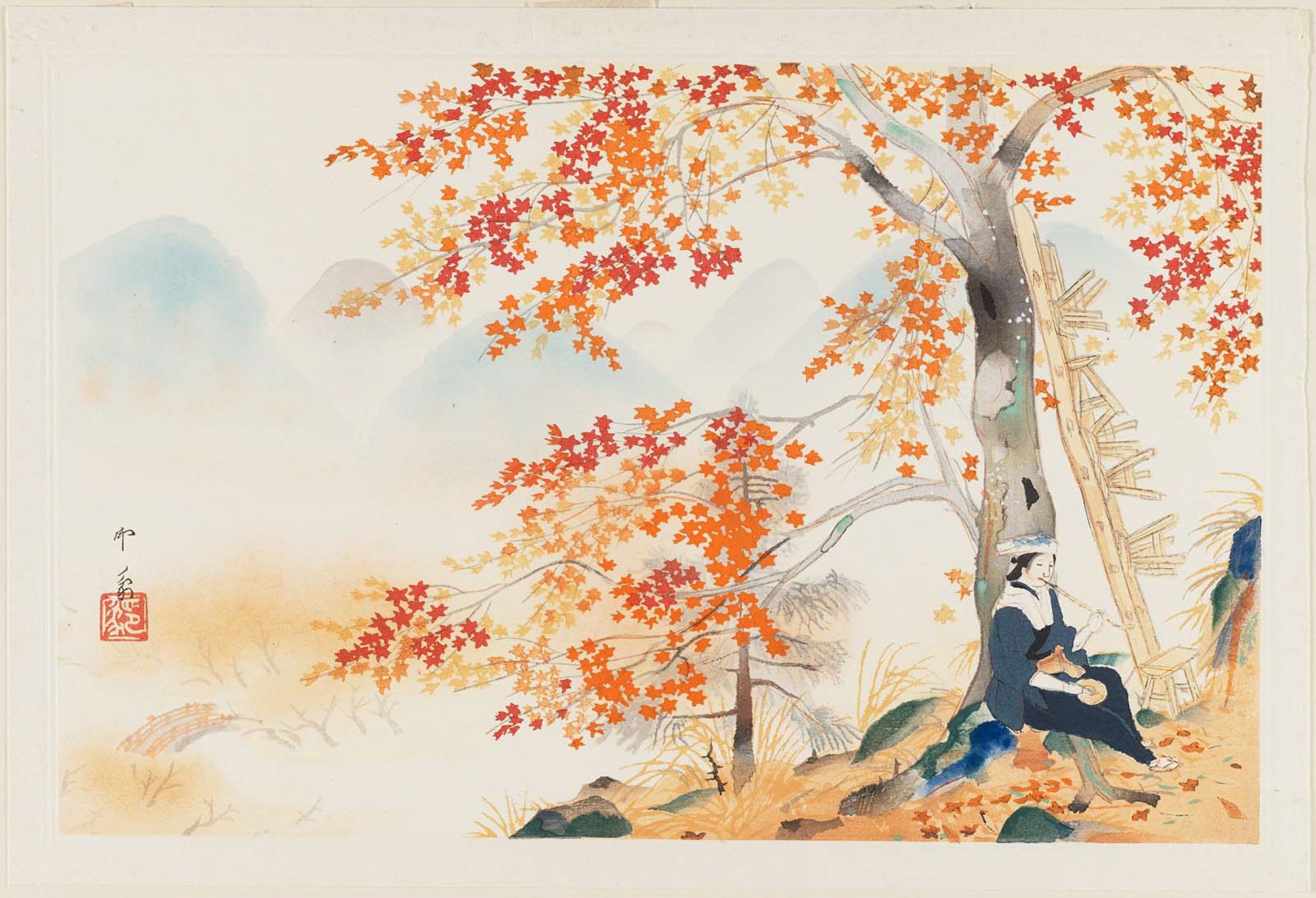
Autumn Maple Leaves at Takao, from the album Eight Views of Kyoto (Kyôto hakkei)
Woodblock print

The Beach at Kaiganji in Sanuki Province (Sanuki Kaiganji no hama), from the series "Collection of Views of Japan II, Kansai Edition (Nihon fukei shu II Kansai hen)"
1934
Color woodblock print; oban

Tea Kettle, section of a sheet from the series "Mirror of Stone Rubbings of Views of the Provinces" (Kohon meihitsu ishizuri kagami)
n.d.
Woodblock print; ishizuri-e, section of harimaze sheet
Featured in Collections
Curated cross-cuts that include this print.
Frequently Asked Questions
Resembling a Branch (Eda ni utsusu), from the series The Appearance of Upper-Class Women of the Edo Period (Tokugawa jidai kifujin no sugata) -- Woman with a Doll was created by Toyohara Chikanobu (豊原周延) in Meiji period, dated October 10, 1896.
Yes — Resembling a Branch (Eda ni utsusu), from the series The Appearance of Upper-Class Women of the Edo Period (Tokugawa jidai kifujin no sugata) -- Woman with a Doll is part of the The Appearance of Upper-Class Women of the Edo period series by Toyohara Chikanobu.
Resembling a Branch (Eda ni utsusu), from the series The Appearance of Upper-Class Women of the Edo Period (Tokugawa jidai kifujin no sugata) -- Woman with a Doll depicts landscapes, bijin-ga, and mount fuji, set at Tokyo.
Resembling a Branch (Eda ni utsusu), from the series The Appearance of Upper-Class Women of the Edo Period (Tokugawa jidai kifujin no sugata) -- Woman with a Doll measures 36.8 × 24.8 cm (Oban format).