
One year of Izu in pictures and poetry
- Medium:
- Mokuhanga (Japanese woodblock)
- Image courtesy of
- Saru Gallery
Description
A portfolio combining prints with accompanying verse depicting the Izu peninsula across the seasons. Image-and-text collaborations have a long history in Japanese printmaking, from haiga ink-painting traditions to nineteenth-century surimono exchanging poetry between literary circles. Hiratsuka's contribution consists of a sequence of mokuhanga keyed to particular months or scenes — coastal villages, Mount Amagi, hot spring towns, fishing harbors — paired with text printed by letterpress or brushed in calligraphy by a collaborating poet. The bookwork format allowed sosaku-hanga artists to reach readers through publishers' editions while supplementing their small-edition individual prints. Izu, the rugged peninsula southwest of Tokyo extending into Sagami Bay, has carried literary associations since Kawabata Yasunari's 1926 novella The Izu Dancer; framing the place through a year's seasonal cycle draws on this regional identity while extending Hiratsuka's habit of approaching landscape through serial composition.
More Prints by Hiratsuka Un'ichi


More Literary Prints

Poem 69-8, Shôwa period, 1969
Woodblock print
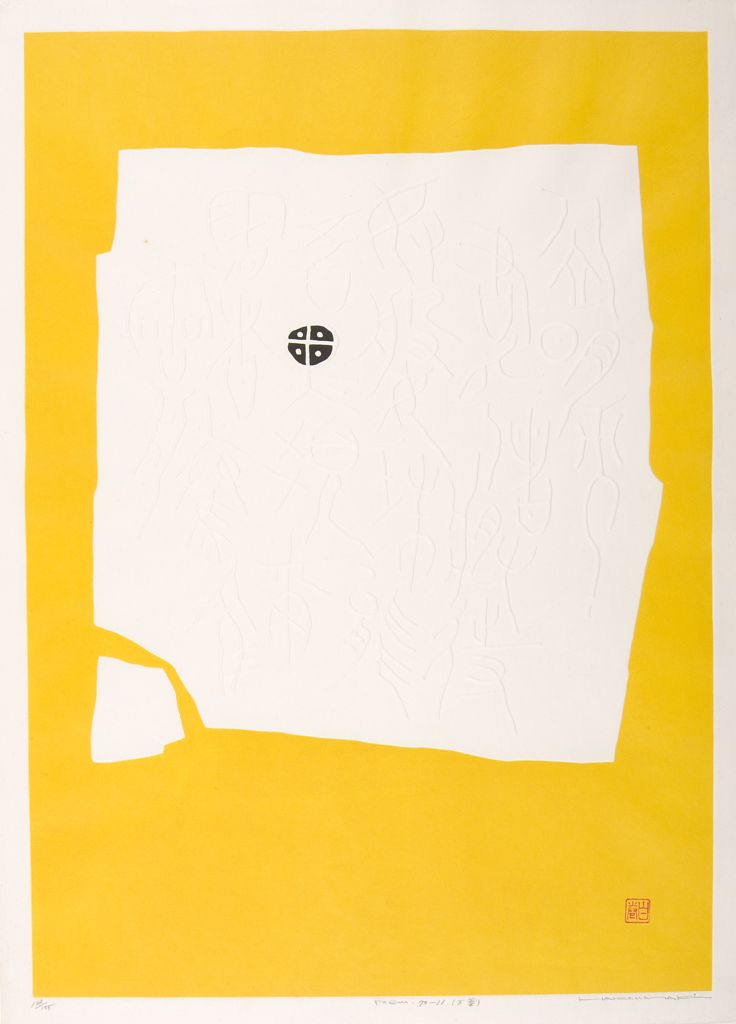
Poem 70-11, Shôwa period, 1970
Woodblock print

Poem 70-26, Shôwa period, 1970

Chiryu, from the series "Fifty-three Stations of the Tokaido (Tokaido gojusan tsugi)," also known as the Tokaido with Poem (Kyoka iri Tokaido)
c. 1837/42
Color woodblock print; chuban
Featured in Collections
Curated cross-cuts that include this print.
Frequently Asked Questions
One year of Izu in pictures and poetry was created by Hiratsuka Un'ichi (平塚運一).
One year of Izu in pictures and poetry depicts literary.