Dyers' Quarter, Kanda (Kanda Kon'ya-chō), Number 75 from the series One Hundred Famous Views of Edo (Meisho Edo hyakkei)
- Series:
- One Hundred Famous Views of Edo
- Date:
- Edo period, dated 1857 (11th month)
- Medium:
- Ukiyo-e woodblock print in "ōban" format; ink and color on paper
- Source:
- Harvard Art Museums
Description
Dyers' Quarter, Kanda (Kanda Kon'ya-cho), Number 75 from One Hundred Famous Views of Edo (Meisho Edo hyakkei), dated 1857, is among the most visually striking sheets in Utagawa Hiroshige's late masterwork. The Kon'ya-cho was the district of indigo dyers in the Kanda neighborhood, where long bolts of dyed cotton hung out to dry from tall poles ran in regular ranks above the street. Hiroshige isolates this vertical pattern of striped fabric against the sky, organizing the entire composition around the rhythmic dark-and-light columns of indigo cloth. Mount Fuji rises small and clear in the distance between the cloth ranks, and a fire-watchtower marks the skyline above the houses. As an Edo ukiyo-e landscape print, the design is a striking example of how the late Hiroshige found pictorial subject matter in the working industries of the city, turning the practical apparatus of the dyer's trade into an almost abstract pattern of vertical and horizontal forms. The Harvard Art Museums impression preserves the saturated indigo of the cloth, the pale blue of the sky, and the careful registration of the small distant Fuji. Among the Hundred Famous Views, this sheet has long been admired by modernist designers and architects for its near-graphic abstraction and its unflinching attention to ordinary urban labor.
More Prints by Utagawa Hiroshige


More Landscapes Prints

Lake Kugushi in Wakasa Province (Wakasa Kugushiko), from the series Souvenirs of Travel I (Tabi miyage dai isshu)"
Wakasa Kugushiko
1920
Color woodblock print; oban
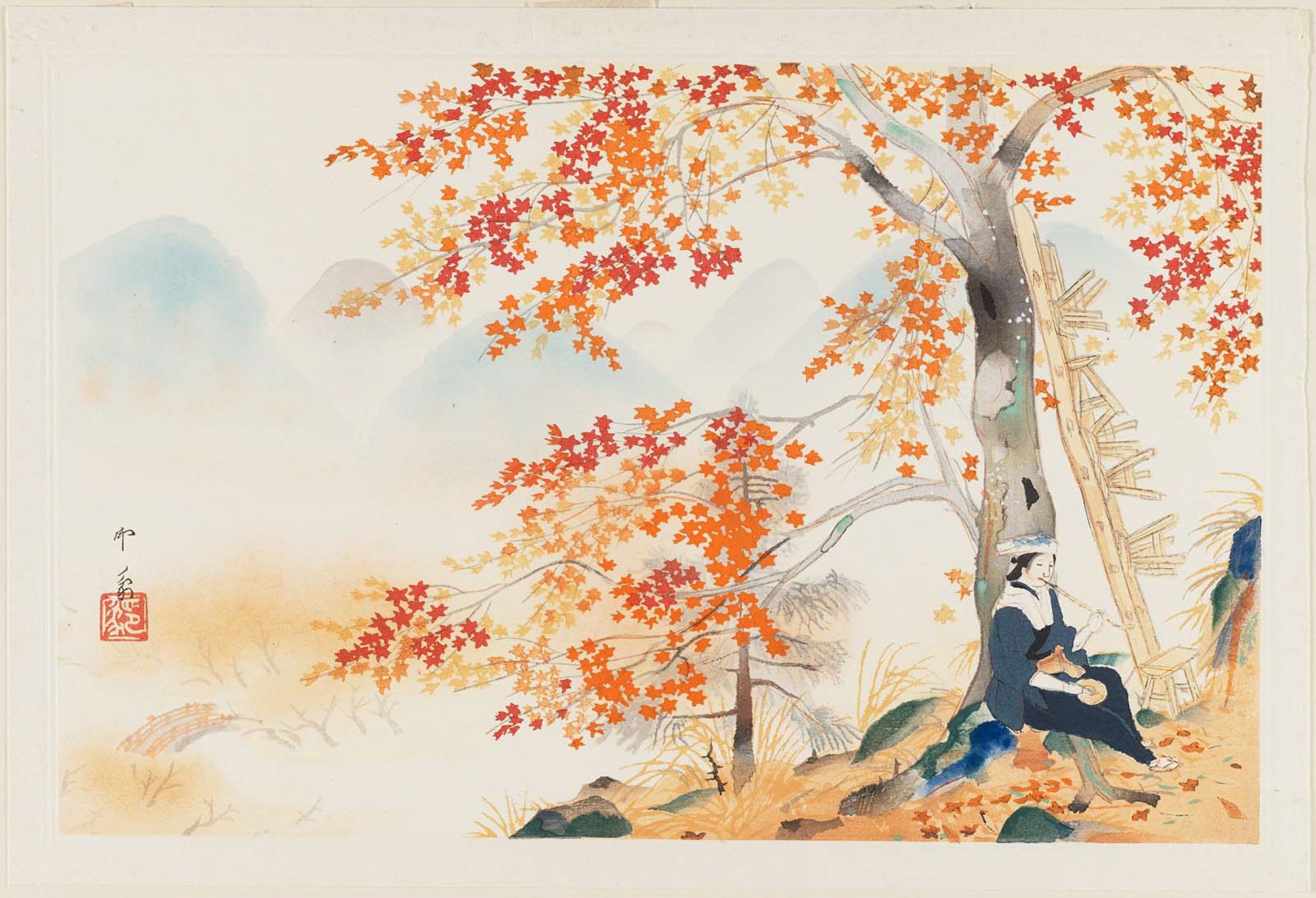
Autumn Maple Leaves at Takao, from the album Eight Views of Kyoto (Kyôto hakkei)
Woodblock print

The Beach at Kaiganji in Sanuki Province (Sanuki Kaiganji no hama), from the series "Collection of Views of Japan II, Kansai Edition (Nihon fukei shu II Kansai hen)"
1934
Color woodblock print; oban

Tea Kettle, section of a sheet from the series "Mirror of Stone Rubbings of Views of the Provinces" (Kohon meihitsu ishizuri kagami)
n.d.
Woodblock print; ishizuri-e, section of harimaze sheet
Featured in Collections
Curated cross-cuts that include this print.
Frequently Asked Questions
Dyers' Quarter, Kanda (Kanda Kon'ya-chō), Number 75 from the series One Hundred Famous Views of Edo (Meisho Edo hyakkei) was created by Utagawa Hiroshige (歌川広重) in Edo period, dated 1857 (11th month).
Yes — Dyers' Quarter, Kanda (Kanda Kon'ya-chō), Number 75 from the series One Hundred Famous Views of Edo (Meisho Edo hyakkei) is part of the One Hundred Famous Views of Edo series by Utagawa Hiroshige.
Dyers' Quarter, Kanda (Kanda Kon'ya-chō), Number 75 from the series One Hundred Famous Views of Edo (Meisho Edo hyakkei) depicts landscapes, edo & tokyo, and famous places (meisho-e).