Five Pines, Onagi Canal (Onagigawa Gohonmatsu), Number 97 from the series One Hundred Famous Views of Edo (Meisho Edo hyakkei)
- Series:
- One Hundred Famous Views of Edo
- Date:
- Edo period, dated 1856 (7th month)
- Medium:
- Ukiyo-e woodblock print in "ōban" format; ink and color on paper
- Source:
- Harvard Art Museums
Description
Number 97 in Utagawa Hiroshige's One Hundred Famous Views of Edo (Meisho Edo hyakkei) depicts the Five Pines (Gohonmatsu), a small but locally celebrated grouping of pine trees on the bank of the Onagi Canal in the Fukagawa district east of central Edo. Issued in 1856 as part of his last great landscape print series, this sheet is a masterful study in pictorial restraint: the canal is reduced to a calm horizontal band of greyed blue; a pleasure boat with a single passenger and rower is silhouetted against the water; and the famous pines rise from the embankment with characteristic gnarled silhouettes that Hiroshige draws with deliberate, almost portrait-like attention. The Edo ukiyo-e format, vertical oban, is used to dramatize scale, with the pines stretching up the sheet and their lower trunks framing the view. Like much of the Meisho Edo hyakkei, the composition feels at once topographically specific and abstractly designed, a quality that proved deeply influential on later Western printmakers. The Harvard Art Museums impression preserves the carefully graded sky, the rich pine greens, and the soft greys of the canal that distinguish good early printings.
More Prints by Utagawa Hiroshige


More Landscapes Prints

Lake Kugushi in Wakasa Province (Wakasa Kugushiko), from the series Souvenirs of Travel I (Tabi miyage dai isshu)"
Wakasa Kugushiko
1920
Color woodblock print; oban
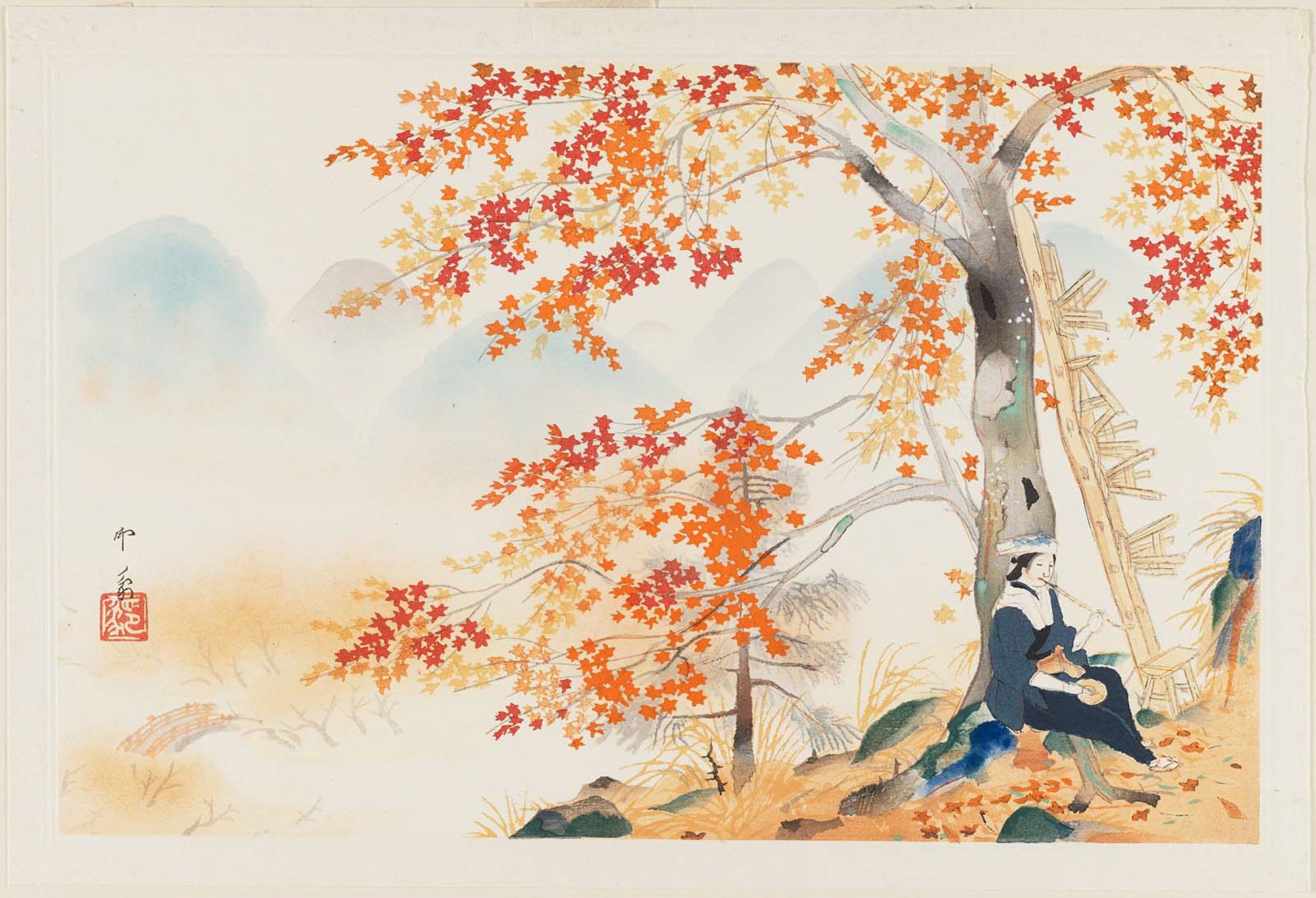
Autumn Maple Leaves at Takao, from the album Eight Views of Kyoto (Kyôto hakkei)
Woodblock print

The Beach at Kaiganji in Sanuki Province (Sanuki Kaiganji no hama), from the series "Collection of Views of Japan II, Kansai Edition (Nihon fukei shu II Kansai hen)"
1934
Color woodblock print; oban

Tea Kettle, section of a sheet from the series "Mirror of Stone Rubbings of Views of the Provinces" (Kohon meihitsu ishizuri kagami)
n.d.
Woodblock print; ishizuri-e, section of harimaze sheet
Featured in Collections
Curated cross-cuts that include this print.
Frequently Asked Questions
Five Pines, Onagi Canal (Onagigawa Gohonmatsu), Number 97 from the series One Hundred Famous Views of Edo (Meisho Edo hyakkei) was created by Utagawa Hiroshige (歌川広重) in Edo period, dated 1856 (7th month).
Yes — Five Pines, Onagi Canal (Onagigawa Gohonmatsu), Number 97 from the series One Hundred Famous Views of Edo (Meisho Edo hyakkei) is part of the One Hundred Famous Views of Edo series by Utagawa Hiroshige.
Five Pines, Onagi Canal (Onagigawa Gohonmatsu), Number 97 from the series One Hundred Famous Views of Edo (Meisho Edo hyakkei) depicts landscapes, edo & tokyo, and famous places (meisho-e).