
Ishibe: Megawa Village (Ishibe, Megawa no sato), from the series "Fifty-three Stations of the Tokaido (Tokaido gojusan tsugi no uchi)," also known as the Hoeido Tokaido
- Series:
- The Fifty-Three Stations of the Tokaido (print 52 of 55)
- Date:
- c. 1833/34
- Medium:
- Color woodblock print; oban
- Format:
- Oban
- Source:
- Art Institute of Chicago
Description
Ishibe, the fifty-first station on the Tokaido, sat in the gentle hill country of Omi Province east of Lake Biwa. Megawa no sato — "Megawa village" — was a hamlet just outside the station known for its charming rural setting. Hiroshige's Hoeido Tokaido print shows the village in a season of lush foliage, travelers passing through a landscape of farmhouses, fields, and wooded hills that characterized the quieter stretches of the highway.
More Prints by Utagawa Hiroshige


More Landscapes Prints

Lake Kugushi in Wakasa Province (Wakasa Kugushiko), from the series Souvenirs of Travel I (Tabi miyage dai isshu)"
Wakasa Kugushiko
1920
Color woodblock print; oban
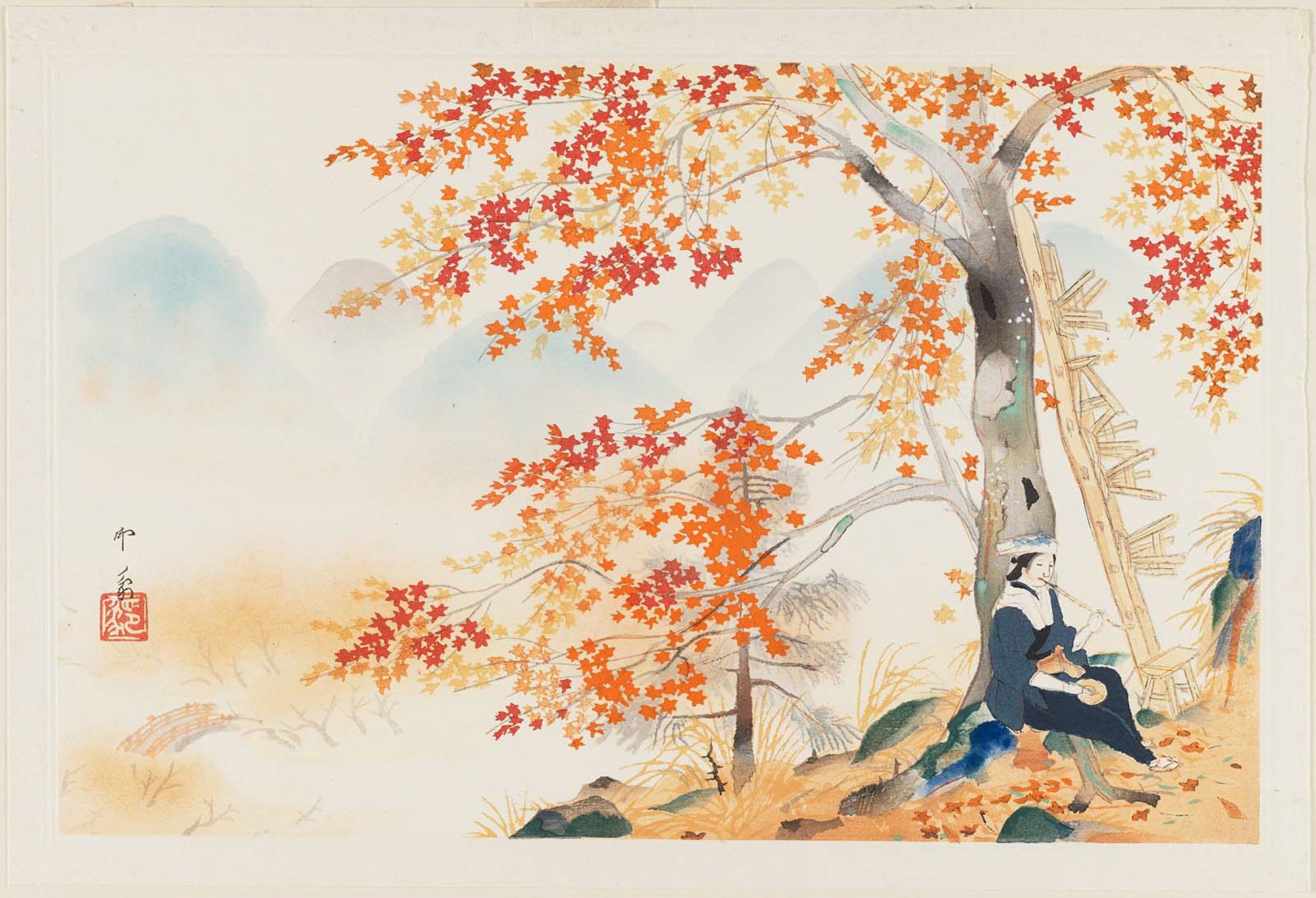
Autumn Maple Leaves at Takao, from the album Eight Views of Kyoto (Kyôto hakkei)
Woodblock print

The Beach at Kaiganji in Sanuki Province (Sanuki Kaiganji no hama), from the series "Collection of Views of Japan II, Kansai Edition (Nihon fukei shu II Kansai hen)"
1934
Color woodblock print; oban

Tea Kettle, section of a sheet from the series "Mirror of Stone Rubbings of Views of the Provinces" (Kohon meihitsu ishizuri kagami)
n.d.
Woodblock print; ishizuri-e, section of harimaze sheet
Featured in Collections
Curated cross-cuts that include this print.
Frequently Asked Questions
Ishibe: Megawa Village (Ishibe, Megawa no sato), from the series "Fifty-three Stations of the Tokaido (Tokaido gojusan tsugi no uchi)," also known as the Hoeido Tokaido was created by Utagawa Hiroshige (歌川広重) in c. 1833/34.
Yes — Ishibe: Megawa Village (Ishibe, Megawa no sato), from the series "Fifty-three Stations of the Tokaido (Tokaido gojusan tsugi no uchi)," also known as the Hoeido Tokaido is part of the The Fifty-Three Stations of the Tokaido series (print 52 of 55) by Utagawa Hiroshige.
Ishibe: Megawa Village (Ishibe, Megawa no sato), from the series "Fifty-three Stations of the Tokaido (Tokaido gojusan tsugi no uchi)," also known as the Hoeido Tokaido depicts landscapes, tōkaidō, and travel scenes.