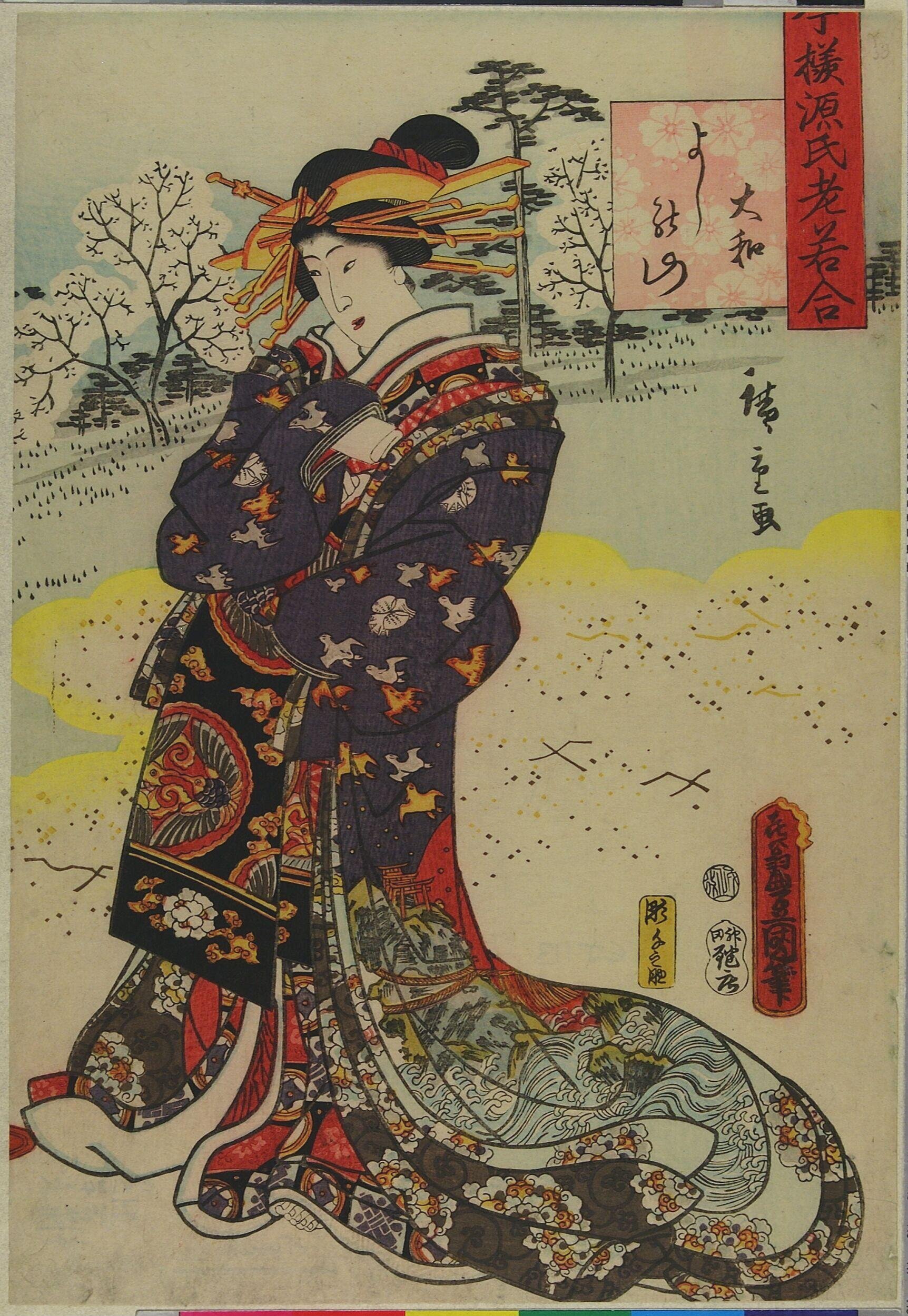
Mount Yoshino in Yamato Province (Yamato Yoshinoyama)
- Date:
- 1862
- Medium:
- Source:
- Victoria and Albert Museum
Description
Mount Yoshino in Yamato Province (Yamato Yoshinoyama) is a print dated 1862 in the Victoria and Albert Museum record, attributed to Utagawa Hiroshige (1797 to 1858). As Hiroshige died in 1858, the 1862 date indicates a posthumous impression, printed from blocks that continued in circulation during the early 1860s as demand for his designs persisted. Mount Yoshino, in the mountainous southern part of ancient Yamato Province in present-day Nara Prefecture, was one of the most celebrated places in Japan. It was famous above all for its cherry blossoms, which covered the slopes in dense profusion each spring and drew pilgrims and poets across a thousand years of Japanese cultural history. The mountain was also a center of mountain Buddhism, with the temple-shrine complex of Kinpusen-ji that served as a base for ascetic practice, and it played a role in the medieval Nanboku-cho conflict as the seat of the Southern Court. As an Edo ukiyo-e landscape print, the work participates in the broad meisho-e tradition that compiled views of famous places into pictorial inventories. Hiroshige composes the mountain as a layered landscape of blossom-covered slopes, distant peaks, and scattered temple buildings, drawing on the centuries of poetic tradition that had made Yoshino synonymous with the cherry blossom. The posthumous date and the durability of the image together testify to the strength of Hiroshige's reputation in the years following his death. The impression is held in the Victoria and Albert Museum, London.
More Prints by Utagawa Hiroshige


More Landscapes Prints

Lake Kugushi in Wakasa Province (Wakasa Kugushiko), from the series Souvenirs of Travel I (Tabi miyage dai isshu)"
Wakasa Kugushiko
1920
Color woodblock print; oban
Autumn Maple Leaves at Takao, from the album Eight Views of Kyoto (Kyôto hakkei)
Woodblock print

The Beach at Kaiganji in Sanuki Province (Sanuki Kaiganji no hama), from the series "Collection of Views of Japan II, Kansai Edition (Nihon fukei shu II Kansai hen)"
1934
Color woodblock print; oban

Tea Kettle, section of a sheet from the series "Mirror of Stone Rubbings of Views of the Provinces" (Kohon meihitsu ishizuri kagami)
n.d.
Woodblock print; ishizuri-e, section of harimaze sheet
Featured in Collections
Curated cross-cuts that include this print.
Frequently Asked Questions
Mount Yoshino in Yamato Province (Yamato Yoshinoyama) was created by Utagawa Hiroshige (歌川広重) in 1862.
Mount Yoshino in Yamato Province (Yamato Yoshinoyama) depicts landscapes.