Nihonbashi, from the series Thirty-six Views of the Eastern Capital (Tōto sanjūrokkei)
- Date:
- Late Edo period, 1861
- Medium:
- Woodblock print; ink and color on paper
- Source:
- Harvard Art Museums
Description
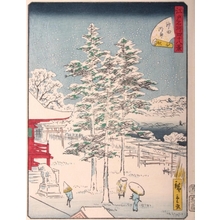
Nihonbashi, from Thirty-six Views of the Eastern Capital (Toto sanjurokkei), is Utagawa Hiroshige's 1861 (posthumously published) treatment of the bridge that served as the symbolic and physical center of the Edo road network. Nihonbashi marked kilometer zero for the five great highways and figured at the start of nearly every Tokaido series Hiroshige designed. By the time of this late vertical-format sheet the bridge had been drawn by Hiroshige countless times, but the new perspective and the oban tate format give the subject fresh weight. The composition places the timber span of Nihonbashi prominently in the lower register, with travelers, porters, and merchants moving across it, while the canal opens behind toward the white-walled storehouses of the riverside and the silhouette of Edo Castle's roofs in the distance. The Toto sanjurokkei series, modeled in title on earlier Thirty-six Views projects, gave Hiroshige and his pupils an opportunity to revisit the iconic skyline of the eastern capital in a unified format. As an Edo ukiyo-e landscape print, the Nihonbashi design exemplifies the artist's careful balance between civic monument and the bustle of mercantile life. The Harvard Art Museums impression preserves the bright blues of the canal and the careful blocking of the bridge's timber, qualities that distinguish good early impressions.
More Prints by Utagawa Hiroshige


More Landscapes Prints

Lake Kugushi in Wakasa Province (Wakasa Kugushiko), from the series Souvenirs of Travel I (Tabi miyage dai isshu)"
Wakasa Kugushiko
1920
Color woodblock print; oban
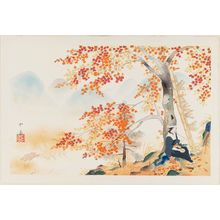
Autumn Maple Leaves at Takao, from the album Eight Views of Kyoto (Kyôto hakkei)
Woodblock print

The Beach at Kaiganji in Sanuki Province (Sanuki Kaiganji no hama), from the series "Collection of Views of Japan II, Kansai Edition (Nihon fukei shu II Kansai hen)"
1934
Color woodblock print; oban

Tea Kettle, section of a sheet from the series "Mirror of Stone Rubbings of Views of the Provinces" (Kohon meihitsu ishizuri kagami)
n.d.
Woodblock print; ishizuri-e, section of harimaze sheet
Featured in Collections
Curated cross-cuts that include this print.
Frequently Asked Questions
Nihonbashi, from the series Thirty-six Views of the Eastern Capital (Tōto sanjūrokkei) was created by Utagawa Hiroshige (歌川広重) in Late Edo period, 1861.
Nihonbashi, from the series Thirty-six Views of the Eastern Capital (Tōto sanjūrokkei) depicts landscapes.