No. 5, Hodogaya: Distant View of the Kamakura Mountains from the Boundary Tree Posthouse (Hodogaya, Kyōboku tateba Kamakurayama enbō), from the series Famous Sights of the Fifty-three Stations (Gojūsan tsugi meisho zue), also known as the Vertical Tōkaidō
- Date:
- 20th century
- Medium:
- Woodblock print; ink and color on paper
- Source:
- Harvard Art Museums
Description
No. 5, Hodogaya: Distant View of the Kamakura Mountains, from Utagawa Hiroshige's Gojūsan tsugi meisho zue, known as the Vertical Tōkaidō, returns the Edo ukiyo-e landscape artist to the highway that had launched his career, this time in tall single-sheet format. Hodogaya was the fifth station on the Tōkaidō, set in hilly country between Kanagawa and Totsuka, and the boundary-tree posthouse (kyōboku tateba) was a rest stop along the road where travelers paused before continuing inland. The vertical composition lets Hiroshige build a deep recession from foreground travelers and a teahouse to a middle ground of road and trees and finally to the distant mass of the Kamakura mountains, with the Pacific suggested beyond. The landscape print conventions he had developed in his earlier horizontal Tōkaidō are reworked here for the taller format, with greater emphasis on stacked planes and a stronger sense of altitude. The Vertical Tōkaidō belongs to the later phase of his career when publishers and audiences had appetite for new variations on the road that had become his signature subject, and the Hodogaya design demonstrates the continuing fertility of that engagement. The Harvard Art Museums impression preserves a documented example of the series and lets the Hodogaya view be compared with Hiroshige's earlier renderings of the same station.
More Prints by Utagawa Hiroshige


More Landscapes Prints

Lake Kugushi in Wakasa Province (Wakasa Kugushiko), from the series Souvenirs of Travel I (Tabi miyage dai isshu)"
Wakasa Kugushiko
1920
Color woodblock print; oban
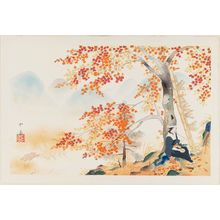
Autumn Maple Leaves at Takao, from the album Eight Views of Kyoto (Kyôto hakkei)
Woodblock print

The Beach at Kaiganji in Sanuki Province (Sanuki Kaiganji no hama), from the series "Collection of Views of Japan II, Kansai Edition (Nihon fukei shu II Kansai hen)"
1934
Color woodblock print; oban

Tea Kettle, section of a sheet from the series "Mirror of Stone Rubbings of Views of the Provinces" (Kohon meihitsu ishizuri kagami)
n.d.
Woodblock print; ishizuri-e, section of harimaze sheet
Featured in Collections
Curated cross-cuts that include this print.
Frequently Asked Questions
No. 5, Hodogaya: Distant View of the Kamakura Mountains from the Boundary Tree Posthouse (Hodogaya, Kyōboku tateba Kamakurayama enbō), from the series Famous Sights of the Fifty-three Stations (Gojūsan tsugi meisho zue), also known as the Vertical Tōkaidō was created by Utagawa Hiroshige (歌川広重) in 20th century.
Yes — No. 5, Hodogaya: Distant View of the Kamakura Mountains from the Boundary Tree Posthouse (Hodogaya, Kyōboku tateba Kamakurayama enbō), from the series Famous Sights of the Fifty-three Stations (Gojūsan tsugi meisho zue), also known as the Vertical Tōkaidō is part of the Famous Sights of the Fifty-three Stations series by Utagawa Hiroshige.
No. 5, Hodogaya: Distant View of the Kamakura Mountains from the Boundary Tree Posthouse (Hodogaya, Kyōboku tateba Kamakurayama enbō), from the series Famous Sights of the Fifty-three Stations (Gojūsan tsugi meisho zue), also known as the Vertical Tōkaidō depicts landscapes and famous places (meisho-e).