
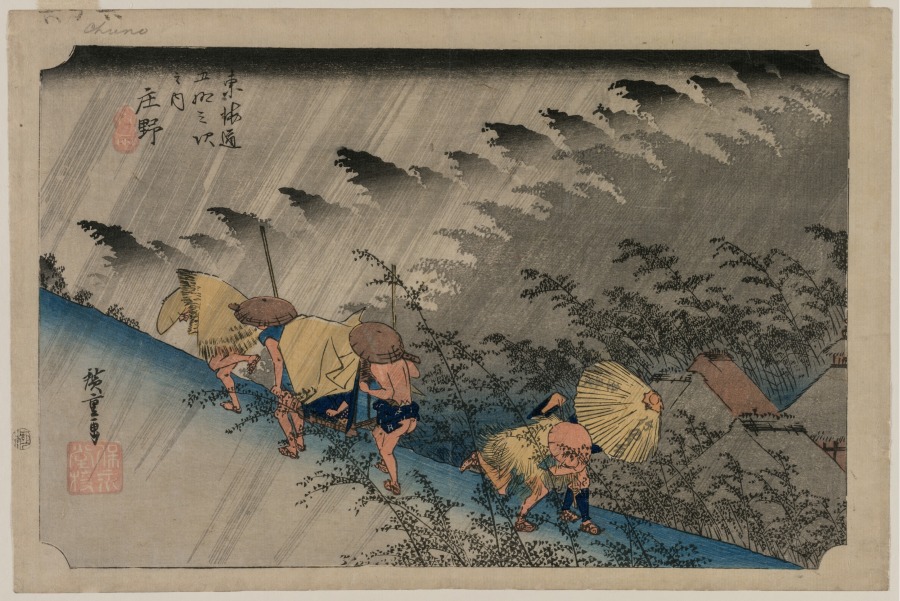
Shirasuka: Shiomi Slope,no. 33 from the series Fifty-Three Stations of the Tokaido (Tōkaidō gojūsan tsugi)
- Date:
- 1847-52
- Medium:
- Color woodblock print; ōban
- Source:
- Art Institute of Chicago
Description
Shirasuka: Shiomi Slope is the thirty-third station in Utagawa Hiroshige's celebrated cycle of post towns along the great coastal highway connecting Edo to Kyoto. Dated to 1842, the print belongs to the artist's continued reworkings of the Tokaido road, a subject he had first transformed into Edo ukiyo-e gold a decade earlier and would return to throughout his career. The composition's title refers to the dramatic rise of Shiomi-zaka, the slope from which travelers gazed across the Enshu sea toward distant headlands. Hiroshige uses the climb as a structural device, anchoring a long file of porters and palanquin bearers as they descend toward the bay. The bleached green of inland hills sits against a graded blue distance, with the white edge of the surf drawing the eye to the right margin. This is landscape print thinking at its most economical: a single diagonal does most of the spatial work, and the ocean is allowed to dominate without competing detail. The Art Institute of Chicago, which holds an impression of this sheet (object 18307), preserves a strong example with the bokashi gradations in sky and water still cleanly readable. Coming roughly ten years after his breakthrough Hoeido Tokaido, the 1842 series shows Hiroshige refining rather than reinventing his earlier vision, often quieting the human anecdote in favor of broader atmospheric mood. For collectors of Edo ukiyo-e travel imagery, the station prints of the later Tokaido series offer a useful counterpoint to the better-known first set, and Shirasuka is one of the more spatially open designs in the run.
More Prints by Utagawa Hiroshige


More Landscapes Prints

Lake Kugushi in Wakasa Province (Wakasa Kugushiko), from the series Souvenirs of Travel I (Tabi miyage dai isshu)"
Wakasa Kugushiko
1920
Color woodblock print; oban
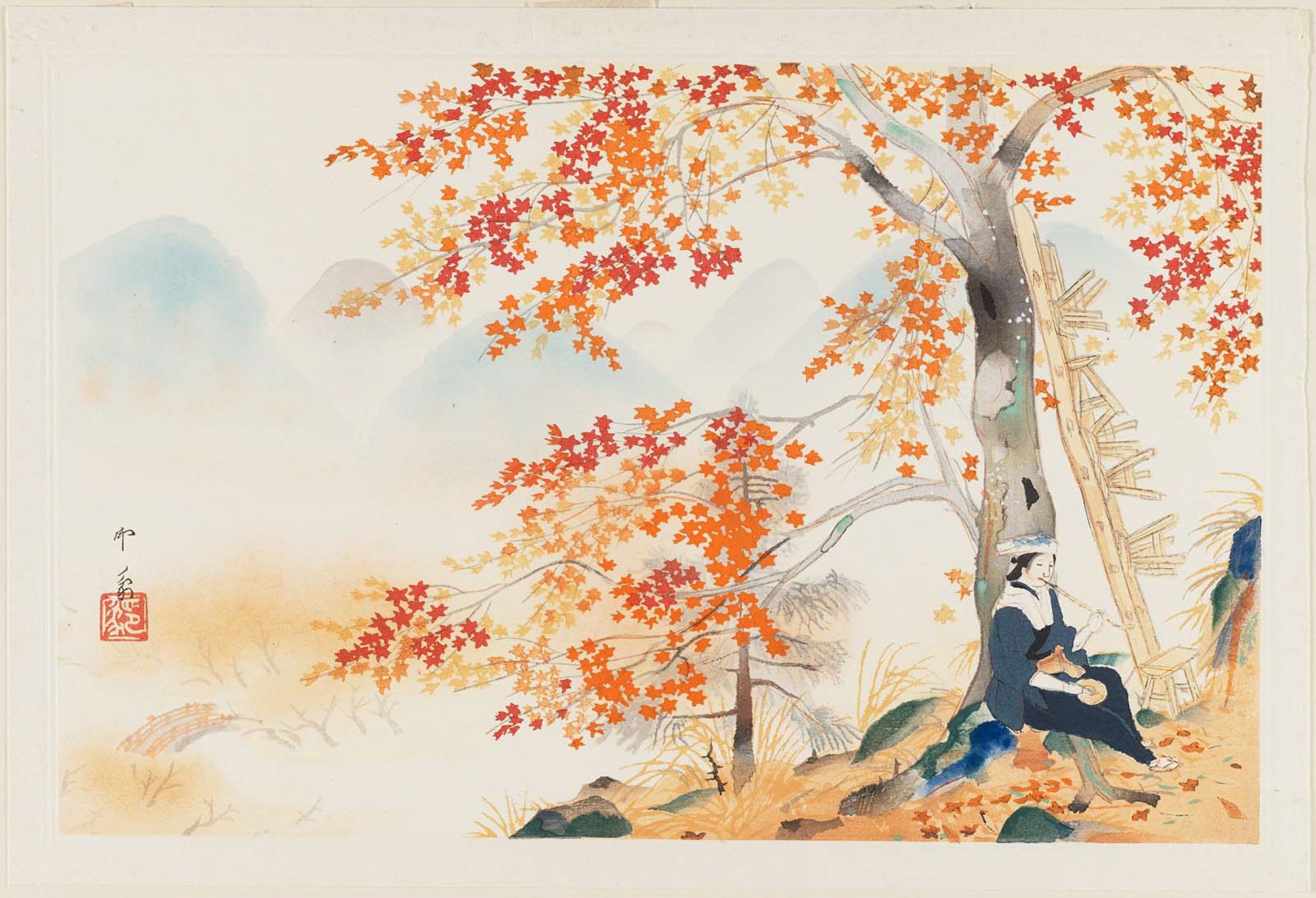
Autumn Maple Leaves at Takao, from the album Eight Views of Kyoto (Kyôto hakkei)
Woodblock print

The Beach at Kaiganji in Sanuki Province (Sanuki Kaiganji no hama), from the series "Collection of Views of Japan II, Kansai Edition (Nihon fukei shu II Kansai hen)"
1934
Color woodblock print; oban

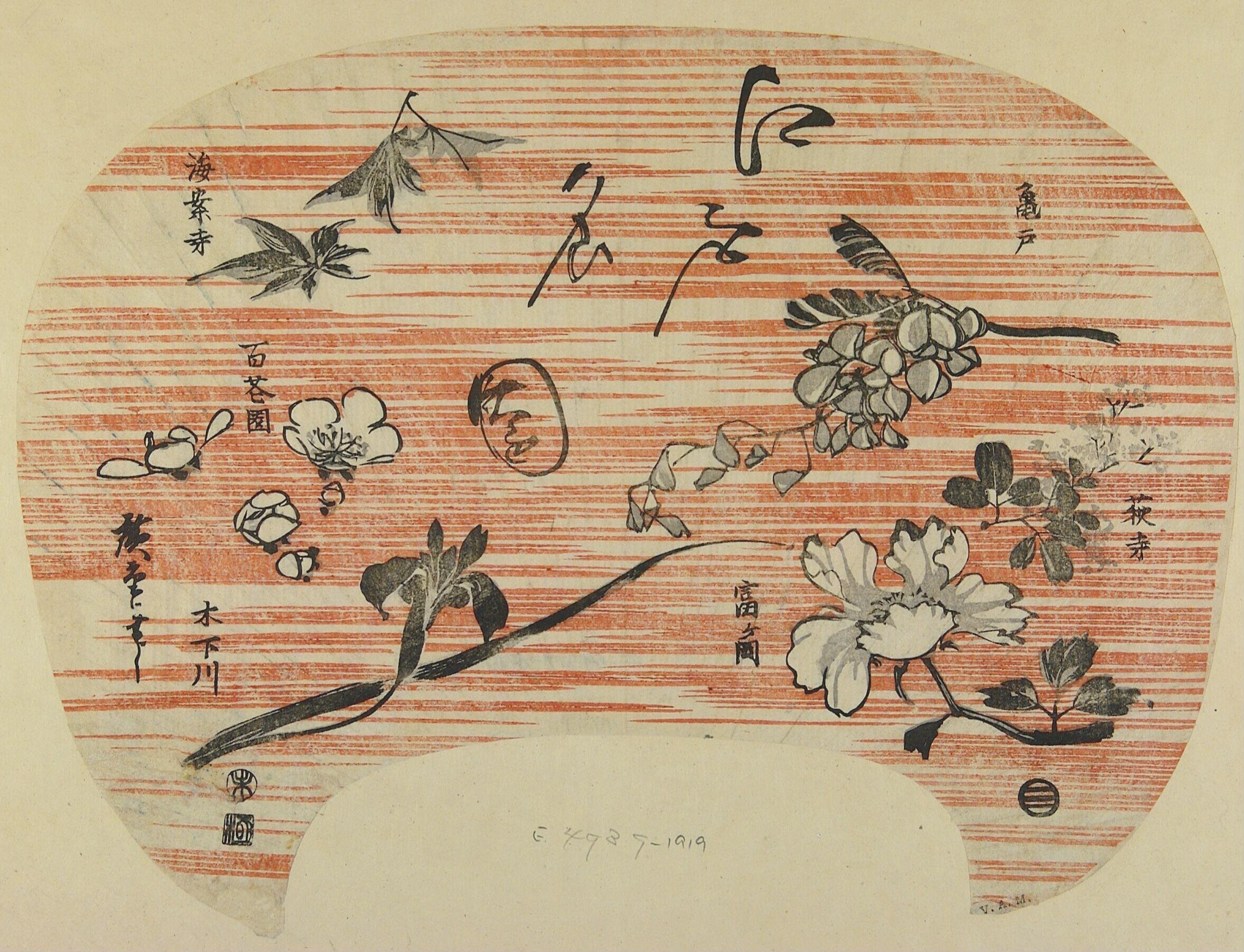
Tea Kettle, section of a sheet from the series "Mirror of Stone Rubbings of Views of the Provinces" (Kohon meihitsu ishizuri kagami)
n.d.
Woodblock print; ishizuri-e, section of harimaze sheet
Featured in Collections
Curated cross-cuts that include this print.
Frequently Asked Questions
Shirasuka: Shiomi Slope,no. 33 from the series Fifty-Three Stations of the Tokaido (Tōkaidō gojūsan tsugi) was created by Utagawa Hiroshige (歌川広重) in 1847-52.
Shirasuka: Shiomi Slope,no. 33 from the series Fifty-Three Stations of the Tokaido (Tōkaidō gojūsan tsugi) depicts landscapes, tōkaidō, and travel scenes.