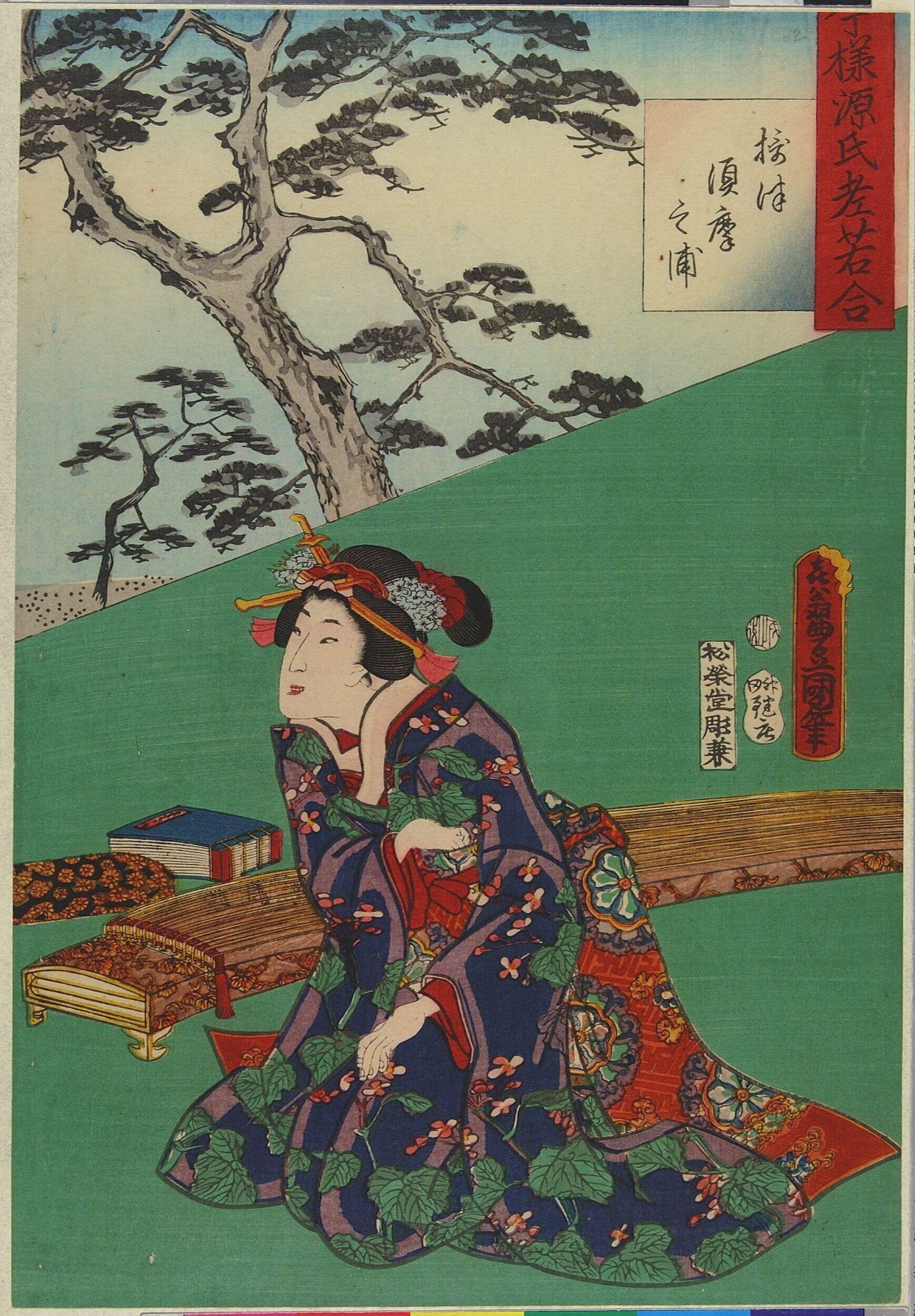
Suma Bay in Settsu Province (Settsu suma no ura)
- Date:
- 1862
- Medium:
- Source:
- Victoria and Albert Museum
Description
Suma Bay in Settsu Province (Settsu suma no ura) is a print dated 1862 in the Victoria and Albert Museum record, attributed to Utagawa Hiroshige (1797 to 1858). As Hiroshige died in 1858, the 1862 date indicates a posthumous impression, issued from blocks that remained in circulation after his death and continued to be printed and sold during the 1860s. Suma Bay, on the coast of Settsu Province near present-day Kobe, is one of the most celebrated places in classical Japanese literature. The bay is associated with the eleventh-century Tale of Genji, in which the eponymous prince undergoes a period of exile at Suma, and with The Tale of the Heike, where the bay forms part of the geography of the late twelfth-century Genpei War. It also figures in classical poetry as a place of pine-fringed shores, autumn moon, and melancholy beauty. Hiroshige's view participates in the broad Edo ukiyo-e tradition of meisho-e treatments of literary places, providing a landscape print that gives visual form to a location familiar to readers through centuries of poetry and prose. The composition opens out across the bay, with pine-lined shores and small craft animating the foreground while the literary resonance of the setting hangs over the image as cultural context. The posthumous printing reflects the continuing market for Hiroshige's designs through the final years of the Tokugawa period. The impression is held in the Victoria and Albert Museum, London, alongside a substantial body of related Hiroshige landscape and literary-place prints.
More Prints by Utagawa Hiroshige


More Landscapes Prints

Lake Kugushi in Wakasa Province (Wakasa Kugushiko), from the series Souvenirs of Travel I (Tabi miyage dai isshu)"
Wakasa Kugushiko
1920
Color woodblock print; oban
Autumn Maple Leaves at Takao, from the album Eight Views of Kyoto (Kyôto hakkei)
Woodblock print

The Beach at Kaiganji in Sanuki Province (Sanuki Kaiganji no hama), from the series "Collection of Views of Japan II, Kansai Edition (Nihon fukei shu II Kansai hen)"
1934
Color woodblock print; oban

Tea Kettle, section of a sheet from the series "Mirror of Stone Rubbings of Views of the Provinces" (Kohon meihitsu ishizuri kagami)
n.d.
Woodblock print; ishizuri-e, section of harimaze sheet
Featured in Collections
Curated cross-cuts that include this print.
Frequently Asked Questions
Suma Bay in Settsu Province (Settsu suma no ura) was created by Utagawa Hiroshige (歌川広重) in 1862.
Suma Bay in Settsu Province (Settsu suma no ura) depicts landscapes.