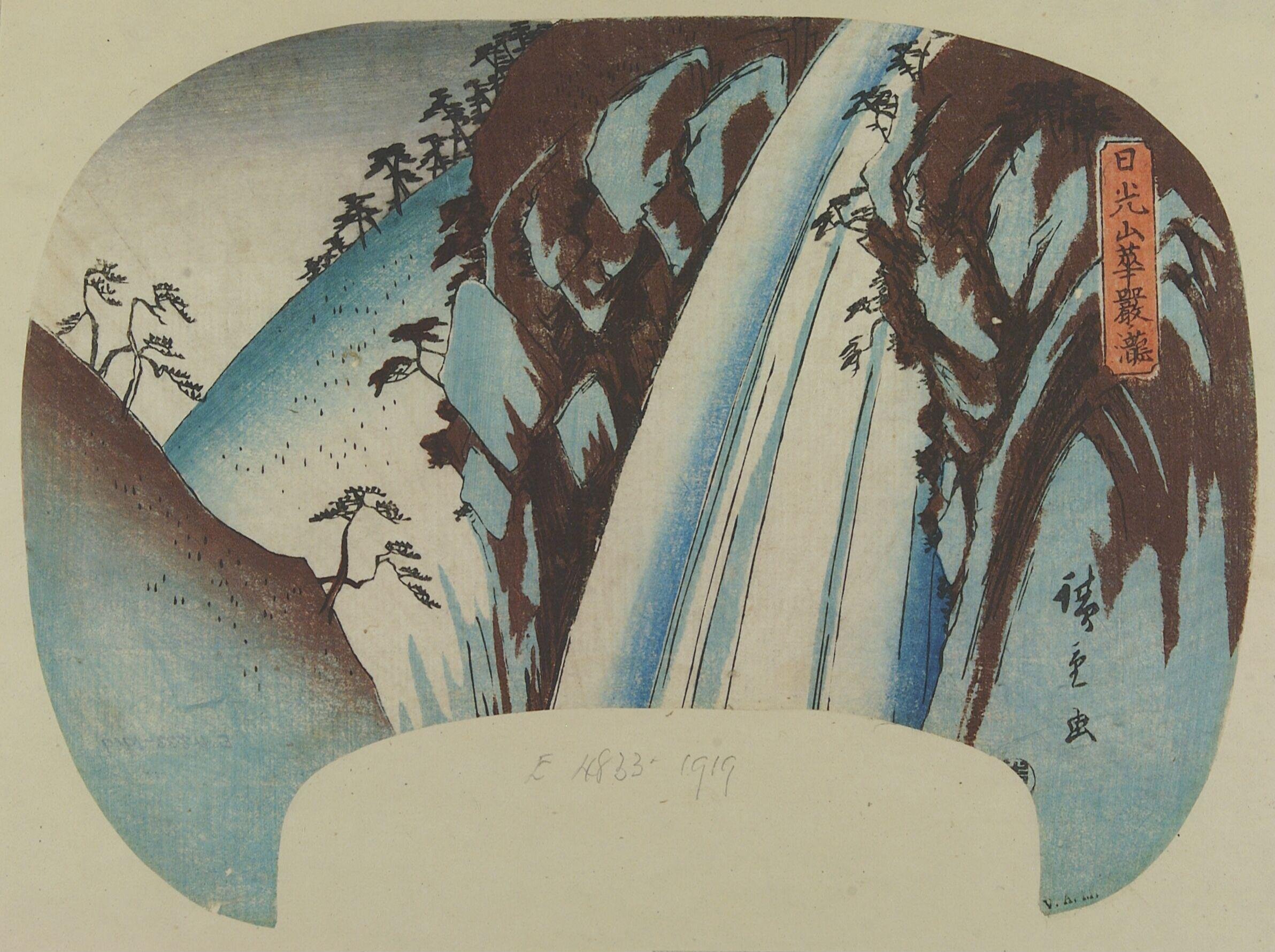
The Kegon Waterfall at Nikko
- Date:
- ca. 1848-1850
- Medium:
- Source:
- Victoria and Albert Museum
Description
The Kegon Waterfall at Nikko is an 1848 landscape print by Utagawa Hiroshige (1797 to 1858), one of the foremost designers of the Edo ukiyo-e tradition. The Kegon Falls drop nearly a hundred meters from Lake Chuzenji into a gorge in the mountains of Nikko, the region north of Edo famous for the Tokugawa shogunal mausoleum complex at Toshogu and for its dramatic natural scenery. The falls were among the most celebrated waterfalls in Japan, associated with Buddhist pilgrimage routes that drew travelers into the mountains and figuring prominently in classical poetry and topographical literature. Hiroshige treats the subject by orienting his composition vertically to follow the falling water, a format that exploits the strong descending line of the cataract. He uses gradations of blue indigo to register the water's descent against the dark cliff face, with the trees and rocks of the gorge framing the column of falling water and a small viewing party providing scale at the base. As a landscape print, The Kegon Waterfall at Nikko participates in Hiroshige's broader interest in the famous scenic spots of Japan beyond the well-traveled corridors of the Tokaido and the Kisokaido roads. The 1848 date situates it after the major Tokaido series and within the period in which Hiroshige produced views of provinces across the archipelago, helping to define for an Edo audience the canonical landscape image of regional Japan. The print is held in the Victoria and Albert Museum, London, which preserves substantial holdings of Hiroshige's landscape work.
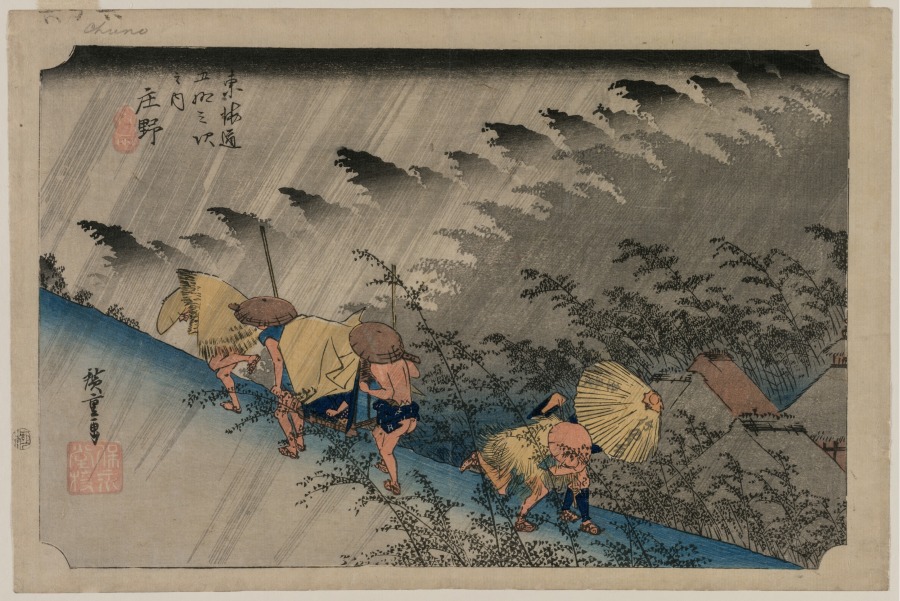
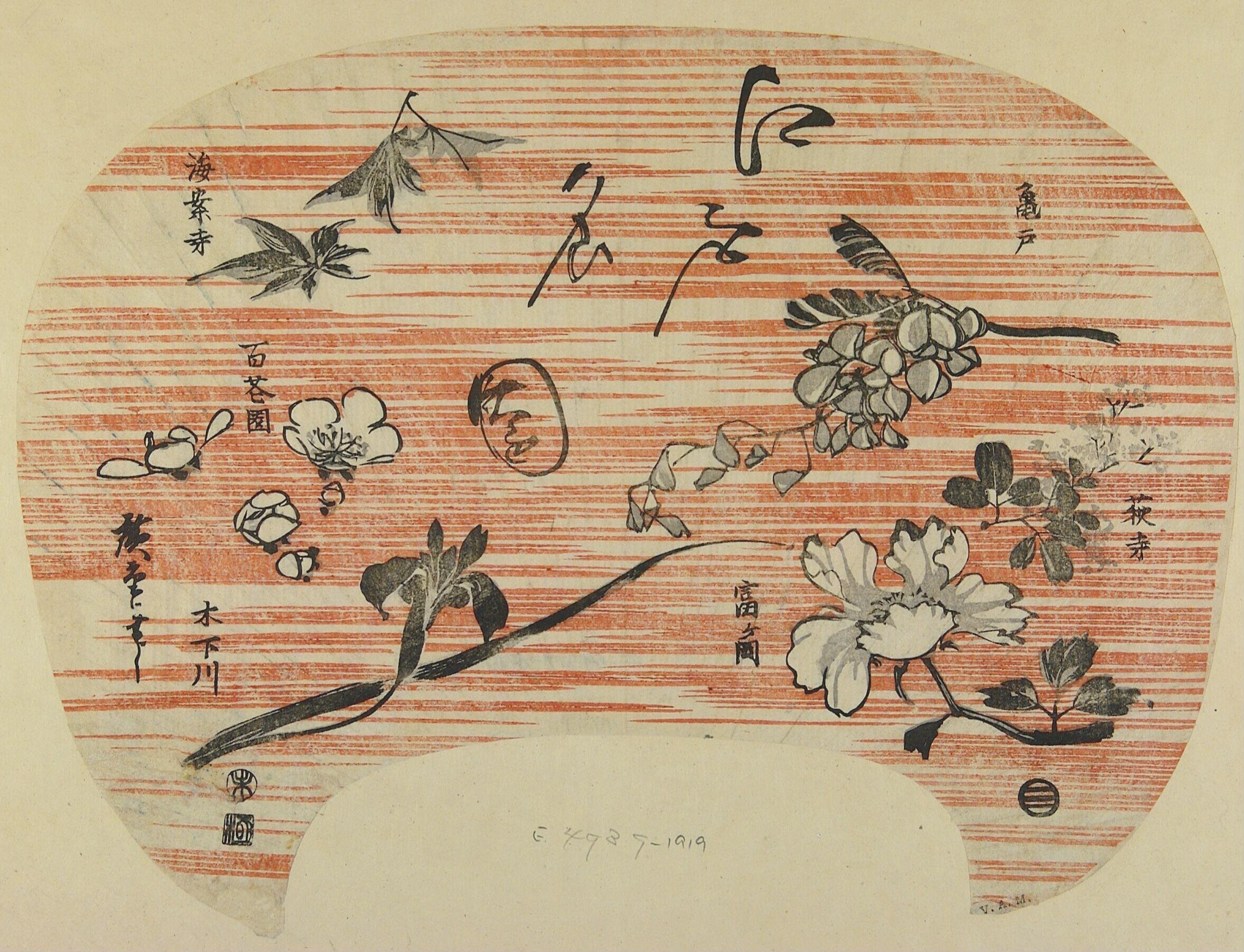
More Prints by Utagawa Hiroshige


More Landscapes Prints

Lake Kugushi in Wakasa Province (Wakasa Kugushiko), from the series Souvenirs of Travel I (Tabi miyage dai isshu)"
Wakasa Kugushiko
1920
Color woodblock print; oban
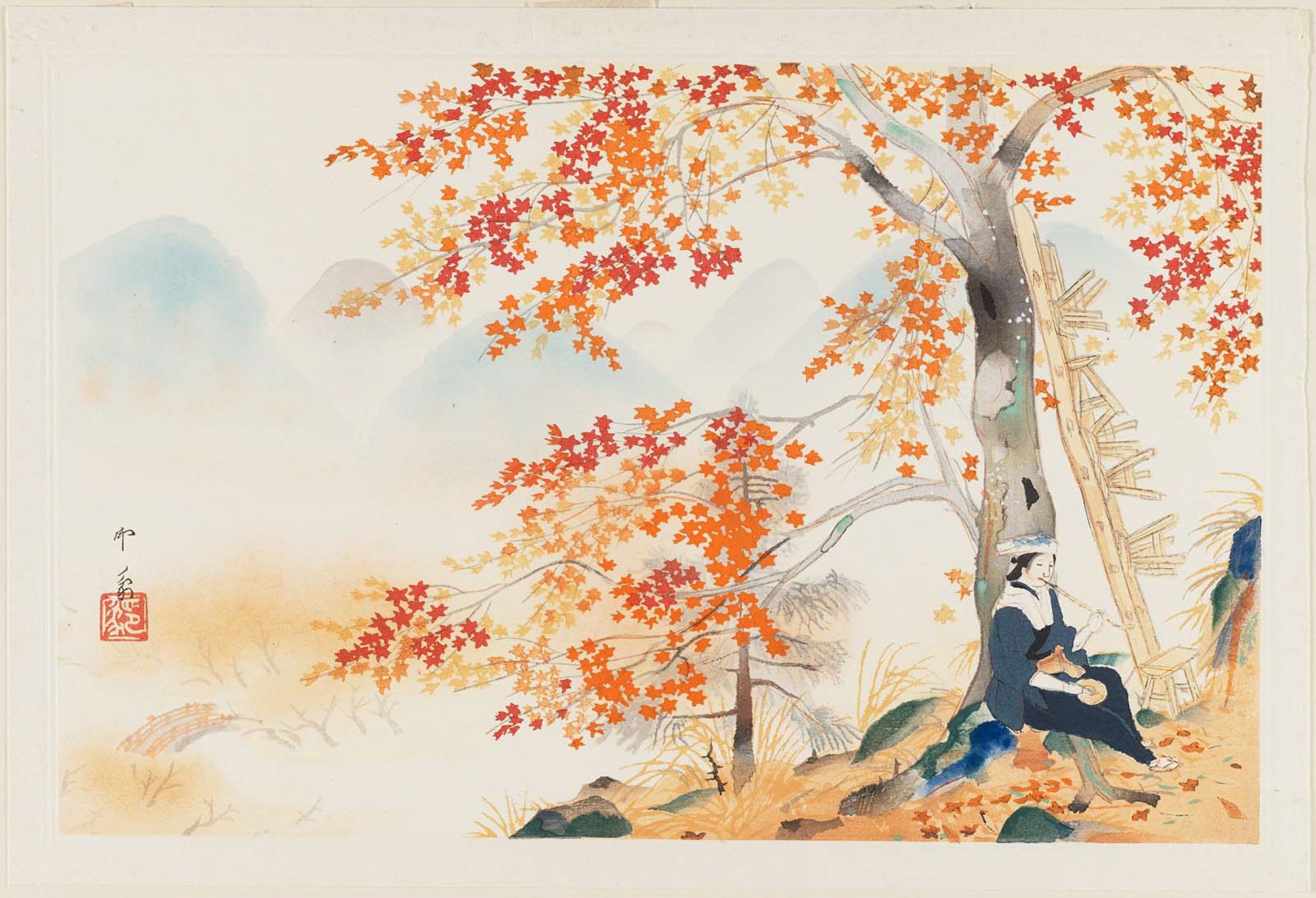
Autumn Maple Leaves at Takao, from the album Eight Views of Kyoto (Kyôto hakkei)
Woodblock print

The Beach at Kaiganji in Sanuki Province (Sanuki Kaiganji no hama), from the series "Collection of Views of Japan II, Kansai Edition (Nihon fukei shu II Kansai hen)"
1934
Color woodblock print; oban

Tea Kettle, section of a sheet from the series "Mirror of Stone Rubbings of Views of the Provinces" (Kohon meihitsu ishizuri kagami)
n.d.
Woodblock print; ishizuri-e, section of harimaze sheet
Featured in Collections
Curated cross-cuts that include this print.
Frequently Asked Questions
The Kegon Waterfall at Nikko was created by Utagawa Hiroshige (歌川広重) in ca. 1848-1850.
The Kegon Waterfall at Nikko depicts landscapes, waterfalls, and autumn foliage.