
The Willow Tree at the Gate of Shimabara Pleasure Quarter (Shimabara deguchi no yanagi), from the series “Famous Views of Kyoto (Kyoto meisho no uchi)"
- Date:
- c. 1834
- Medium:
- Color woodblock print; oban
- Format:
- Oban
- Source:
- Art Institute of Chicago
Description
At Shimabara, Kyoto's licensed pleasure quarter, a solitary willow tree stood at the gateway separating the quarter's world from the street outside. This oban print from the "Famous Views of Kyoto" series captures the iconic tree in its setting — its trailing branches framing the gate, townspeople passing beneath. The willow had accumulated layers of literary and artistic association, making it a charged symbol of the quarter's boundary between fantasy and ordinary life.
More Prints by Utagawa Hiroshige


More Urban Scenes Prints

A Hundred Shades of Ink of Edo: Kiyonaga's Pipe (Edo zumi hyaku shoku: Kiyonaga no kiseru)
Woodblock print

View of Kabuki Theater from Matsuya (Ginza Matsuya yori Kabukiza), no. 3 from the series "Pictures of Ginza, First Series (Gashu Ginza dai isshu)"
1928
Color lithograph

Distant View of Mitsukoshi Movie Theater in Shinjuku from the Sixth Floor of Hoteiya (Hoteiya rokkai kara Shinjuku Mitsukoshi Musashi no kan enbo zu), no. 1 from the series "Scenery of Shinjuku (Gashu Shinjuku fukei)"
1930
Color lithograph
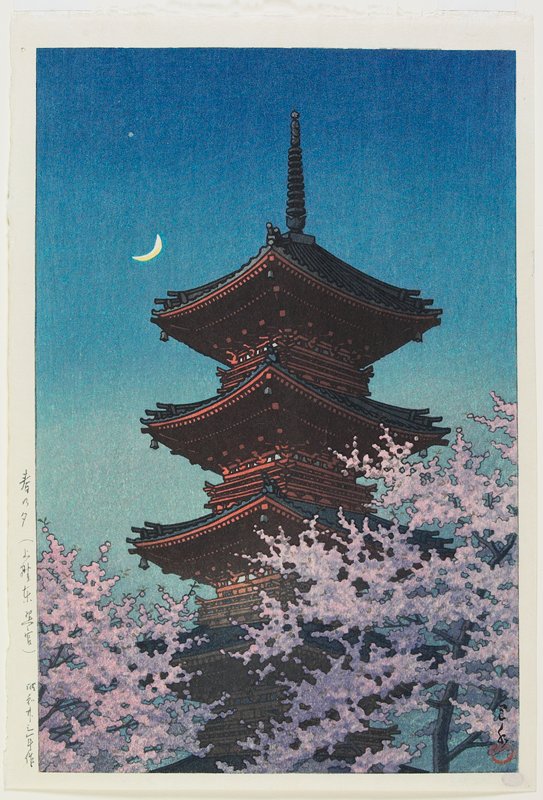
Spring Dusk at the Tōshō Shrine in Ueno
1948
Woodblock print, ink and color on paper
Featured in Collections
Curated cross-cuts that include this print.
Frequently Asked Questions
The Willow Tree at the Gate of Shimabara Pleasure Quarter (Shimabara deguchi no yanagi), from the series “Famous Views of Kyoto (Kyoto meisho no uchi)" was created by Utagawa Hiroshige (歌川広重) in c. 1834.
Yes — The Willow Tree at the Gate of Shimabara Pleasure Quarter (Shimabara deguchi no yanagi), from the series “Famous Views of Kyoto (Kyoto meisho no uchi)" is part of the Famous Views of Kyoto (Kyoto meisho no uchi) series by Utagawa Hiroshige.
The Willow Tree at the Gate of Shimabara Pleasure Quarter (Shimabara deguchi no yanagi), from the series “Famous Views of Kyoto (Kyoto meisho no uchi)" depicts urban scenes, landscapes, and kyoto, set at Kyoto.