THIRTY-SIX VIEWS OF YEDO "OCHANOMIZU"
- Date:
- 19th century
- Medium:
- Ink on paper
- Source:
- Harvard Art Museums
Description
The Ochanomizu sheet from a "Thirty-Six Views of Yedo" series, preserved at the Harvard Art Museums, shows Utagawa Hiroshige working again at a site that had become a touchstone of Edo ukiyo-e topography. Ochanomizu was the dramatic gorge cut through the bluff between Hongō and Surugadai when the Kanda River was rerouted as part of Edo's flood-control works in the seventeenth century. By Hiroshige's day it had become a celebrated landscape feature, prized for the way its narrow channel, steep wooded slopes, and elegant aqueducts looked entirely unlike the surrounding flat city. In this design the artist takes a high oblique view: the river runs diagonally across the sheet, lined by pines and the timbered slopes of the cut, while a wooden footbridge or aqueduct spans the gorge at an angle. Small boats and figures on the banks indicate scale, but the picture's real subject is the rush of water through a deep, green channel. The printer's use of graded blue (bokashi) in the river and softer washes in the foliage produces the cool, slightly humid mood appropriate to the site, and the composition relies on overlapping diagonals rather than a strict perspective grid. As a landscape print in a city-view series, it neatly illustrates the way Hiroshige could find, even within the densest districts of Edo, dramatic natural-feeling scenery worth presenting alongside his more rural and travel-related work.
More Prints by Utagawa Hiroshige


More Landscapes Prints

Lake Kugushi in Wakasa Province (Wakasa Kugushiko), from the series Souvenirs of Travel I (Tabi miyage dai isshu)"
Wakasa Kugushiko
1920
Color woodblock print; oban
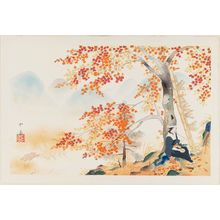
Autumn Maple Leaves at Takao, from the album Eight Views of Kyoto (Kyôto hakkei)
Woodblock print

The Beach at Kaiganji in Sanuki Province (Sanuki Kaiganji no hama), from the series "Collection of Views of Japan II, Kansai Edition (Nihon fukei shu II Kansai hen)"
1934
Color woodblock print; oban

Tea Kettle, section of a sheet from the series "Mirror of Stone Rubbings of Views of the Provinces" (Kohon meihitsu ishizuri kagami)
n.d.
Woodblock print; ishizuri-e, section of harimaze sheet
Featured in Collections
Curated cross-cuts that include this print.
Frequently Asked Questions
THIRTY-SIX VIEWS OF YEDO "OCHANOMIZU" was created by Utagawa Hiroshige (歌川広重) in 19th century.
THIRTY-SIX VIEWS OF YEDO "OCHANOMIZU" depicts landscapes.