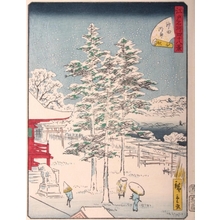
THIRTY-SIX VIEWS OF YEDO, "SANOGONGEN SETCHU"
- Date:
- Late Edo period, 1862
- Medium:
- Ink on paper
- Source:
- Harvard Art Museums
Description
This sheet, recorded in the Harvard Art Museums as Thirty-six Views of Yedo, Sanogongen Setchu and dated 1862, belongs to a posthumous series associated with Utagawa Hiroshige's name and continued by his successors after his death in 1858. Sano Gongen was the popular name for the shrine to a tutelary deity on the western side of Edo, and setchu, snow scene, names the seasonal moment chosen for the composition. The subject suits the Edo ukiyo-e landscape print tradition Hiroshige had defined: a shrine precinct seen across a fresh fall of snow, with bare trees and a few muffled worshippers giving scale to the architecture. Mid-1860s Thirty-six Views of Edo sets typically rework motifs Hiroshige had already established, recombining shrine, river, and seasonal weather in new compositions for a Meiji-era market still hungry for the imagery of the late shogunal capital. The Harvard impression therefore documents both the continued commercial life of Hiroshige's name after his death and the way later workshops kept his vocabulary in circulation as Edo itself was being renamed Tokyo and physically transformed. As a winter view from a Thirty-six Views series, it sits alongside other snow scenes in his oeuvre as a record of how the city was imagined under snowfall, a state in which urban noise and color were softened and shrines like Sano Gongen recovered some of the quiet associated with rural retreats.
More Prints by Utagawa Hiroshige


More Landscapes Prints

Lake Kugushi in Wakasa Province (Wakasa Kugushiko), from the series Souvenirs of Travel I (Tabi miyage dai isshu)"
Wakasa Kugushiko
1920
Color woodblock print; oban
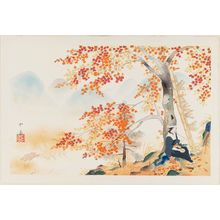
Autumn Maple Leaves at Takao, from the album Eight Views of Kyoto (Kyôto hakkei)
Woodblock print

The Beach at Kaiganji in Sanuki Province (Sanuki Kaiganji no hama), from the series "Collection of Views of Japan II, Kansai Edition (Nihon fukei shu II Kansai hen)"
1934
Color woodblock print; oban

Tea Kettle, section of a sheet from the series "Mirror of Stone Rubbings of Views of the Provinces" (Kohon meihitsu ishizuri kagami)
n.d.
Woodblock print; ishizuri-e, section of harimaze sheet
Featured in Collections
Curated cross-cuts that include this print.
Frequently Asked Questions
THIRTY-SIX VIEWS OF YEDO, "SANOGONGEN SETCHU" was created by Utagawa Hiroshige (歌川広重) in Late Edo period, 1862.
THIRTY-SIX VIEWS OF YEDO, "SANOGONGEN SETCHU" depicts landscapes.