
Turtle
- Date:
- c. 1840s
- Medium:
- Color woodblock print; section of harimaze sheet
- Source:
- Art Institute of Chicago
Description
Turtle is a small kacho-ga study by Utagawa Hiroshige dated to 1840 and held by the Art Institute of Chicago (object 33485). The print shows a freshwater turtle, its carapace rendered with patterned scales and its head and limbs extended in a moment of slow movement. The animal is set against a spare background suggesting water, with a few accents of vegetation or current giving a sense of habitat without crowding the composition. Hiroshige works in restrained color, relying on the structure of the woodblock outline to define the segments of the shell and the texture of the skin. The turtle was a common emblem of long life and good fortune in Japanese visual culture, often paired in painting with the crane in symbolic celebration prints. In the context of Edo ukiyo-e, Hiroshige's natural-history sheets occupied a niche between high-status painted bird-and-flower scrolls and the cheaper anonymous nature prints sold on the street. He took the genre seriously and produced numerous studies of small creatures, often in surimono-like vertical formats. While Utagawa Hiroshige is best remembered for the landscape print and the great Tokaido cycles, this Turtle reminds collectors of his fluency with non-landscape subjects and shows how the same compositional discipline he brought to wide views of bays and roads could be applied to a single quiet animal at close range.
More Prints by Utagawa Hiroshige


More Landscapes Prints

Lake Kugushi in Wakasa Province (Wakasa Kugushiko), from the series Souvenirs of Travel I (Tabi miyage dai isshu)"
Wakasa Kugushiko
1920
Color woodblock print; oban
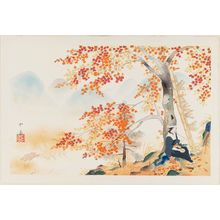
Autumn Maple Leaves at Takao, from the album Eight Views of Kyoto (Kyôto hakkei)
Woodblock print

The Beach at Kaiganji in Sanuki Province (Sanuki Kaiganji no hama), from the series "Collection of Views of Japan II, Kansai Edition (Nihon fukei shu II Kansai hen)"
1934
Color woodblock print; oban

Tea Kettle, section of a sheet from the series "Mirror of Stone Rubbings of Views of the Provinces" (Kohon meihitsu ishizuri kagami)
n.d.
Woodblock print; ishizuri-e, section of harimaze sheet
Featured in Collections
Curated cross-cuts that include this print.
Frequently Asked Questions
Turtle was created by Utagawa Hiroshige (歌川広重) in c. 1840s.
Turtle depicts landscapes.