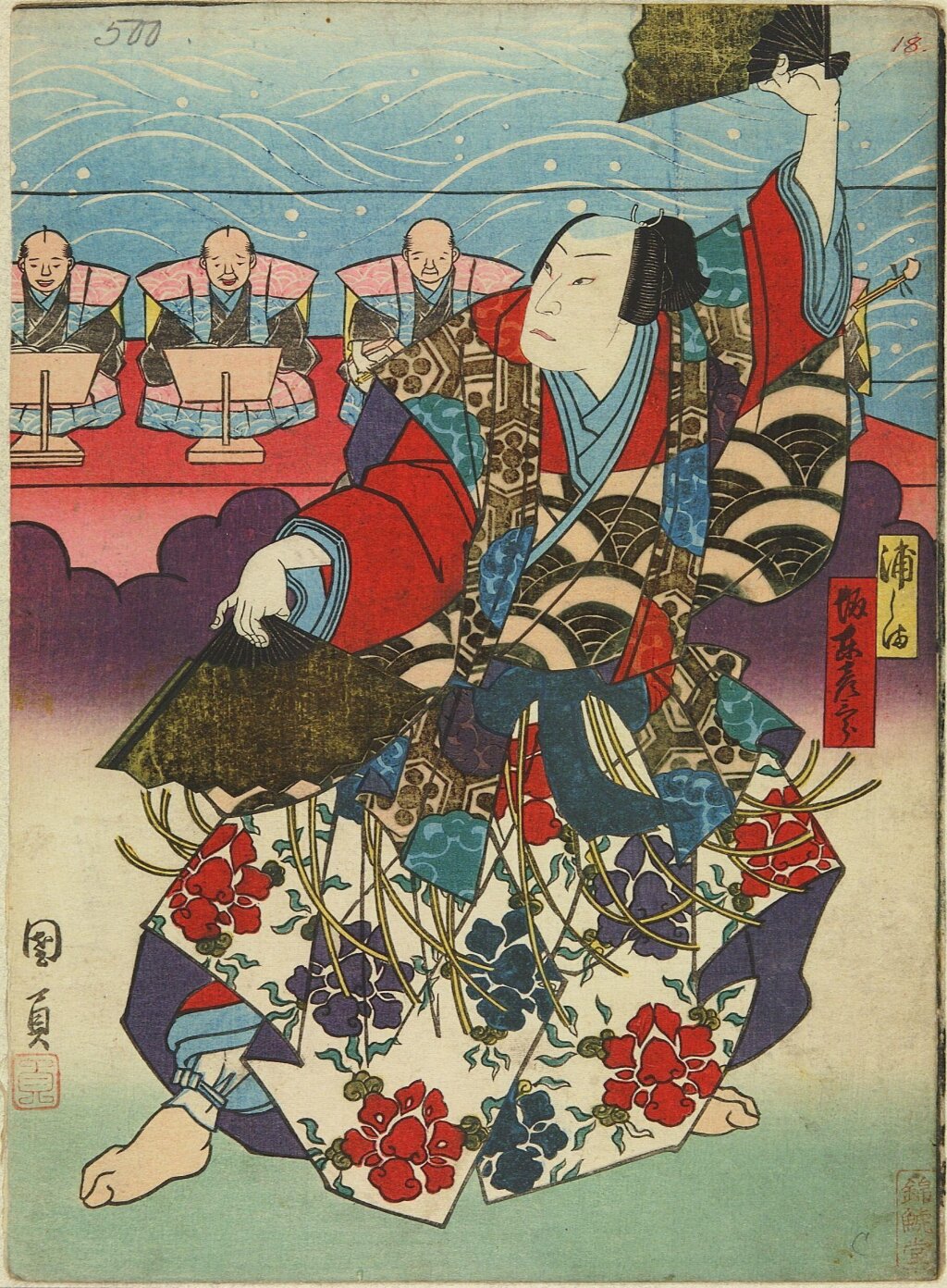
Actor Bandō Hikosaburō as Urashima
- Date:
- 1859
- Medium:
- Color woodblock print
- Source:
- Victoria and Albert Museum
Description
This 1859 yakusha-e by Utagawa Kunikazu, held by the Victoria and Albert Museum (accession E.5470-1886), depicts the actor Bandō Hikosaburō (typically Hikosaburō V) in the role of Urashima, the legendary fisherman who travels to the Dragon Palace beneath the sea and returns to find centuries have passed in his absence. The composition shows the actor in a tightly cropped half-length view, in the costume of Urashima with the role's distinctive accoutrements indicated by careful printing of textile and prop detail. Bandō Hikosaburō V was an Edo-trained actor whose appearances on the Osaka stage exemplified the cross-traffic between the two great kabuki traditions, and Kunikazu's documentation of his Osaka performances reflects the systematic record-keeping function that kamigata-e yakusha-e served for its patron community. The Urashima tale, drawn from the medieval setsuwa tradition and adapted into kabuki under various titles across the Edo period, gave actors a chance to display both the fisherman's earthy physicality at the opening and the spectral grief of his ageless return at the close, and Kunikazu's portrait captures the iconographic markers that identified the role for theater-going viewers. The print measures the standard Osaka ōban format and is executed as a color woodblock print on paper, with selective use of mica or metallic pigment in the background characteristic of kamigata-e printing. The V&A acquired the print in 1886 as part of the Wakai sale, and the museum's holdings of Kunikazu's actor portraits document the principal male leads on the Osaka stage in the years immediately preceding the Meiji Restoration.
More Prints by Utagawa Kunikazu
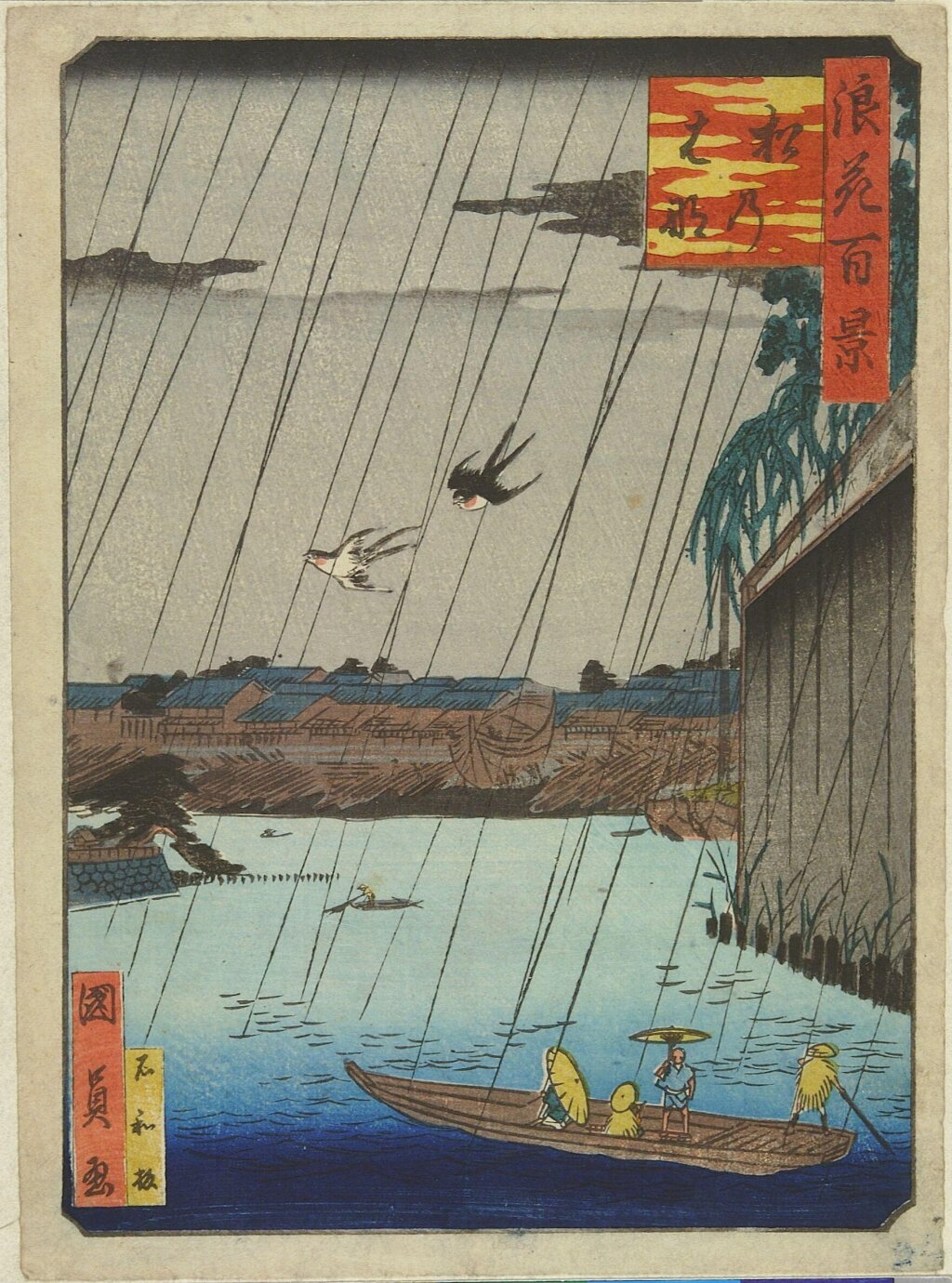
Pine Tree Point (Matsu-no-hana)
松の鼻
1860
Color woodblock print
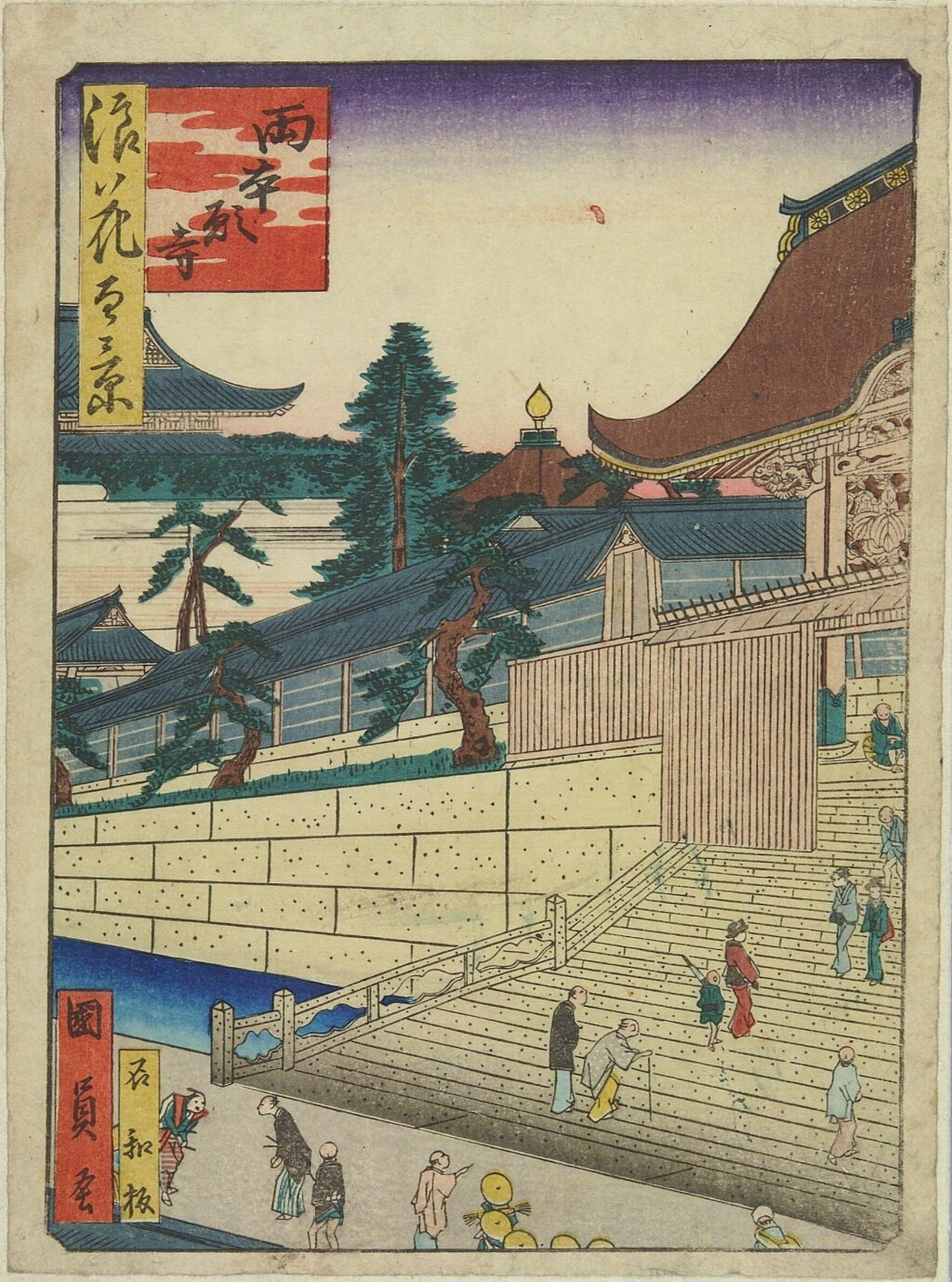
The Two Hongan-ji Temples (Ryō Hongan-ji)
両本願寺
1860
Color woodblock print

Dai Nihon rokujū yo kyō no uchi (One of the Sixty-odd Provinces of Great Japan)
大日本六十余州之内
c. 1862
Color woodblock print
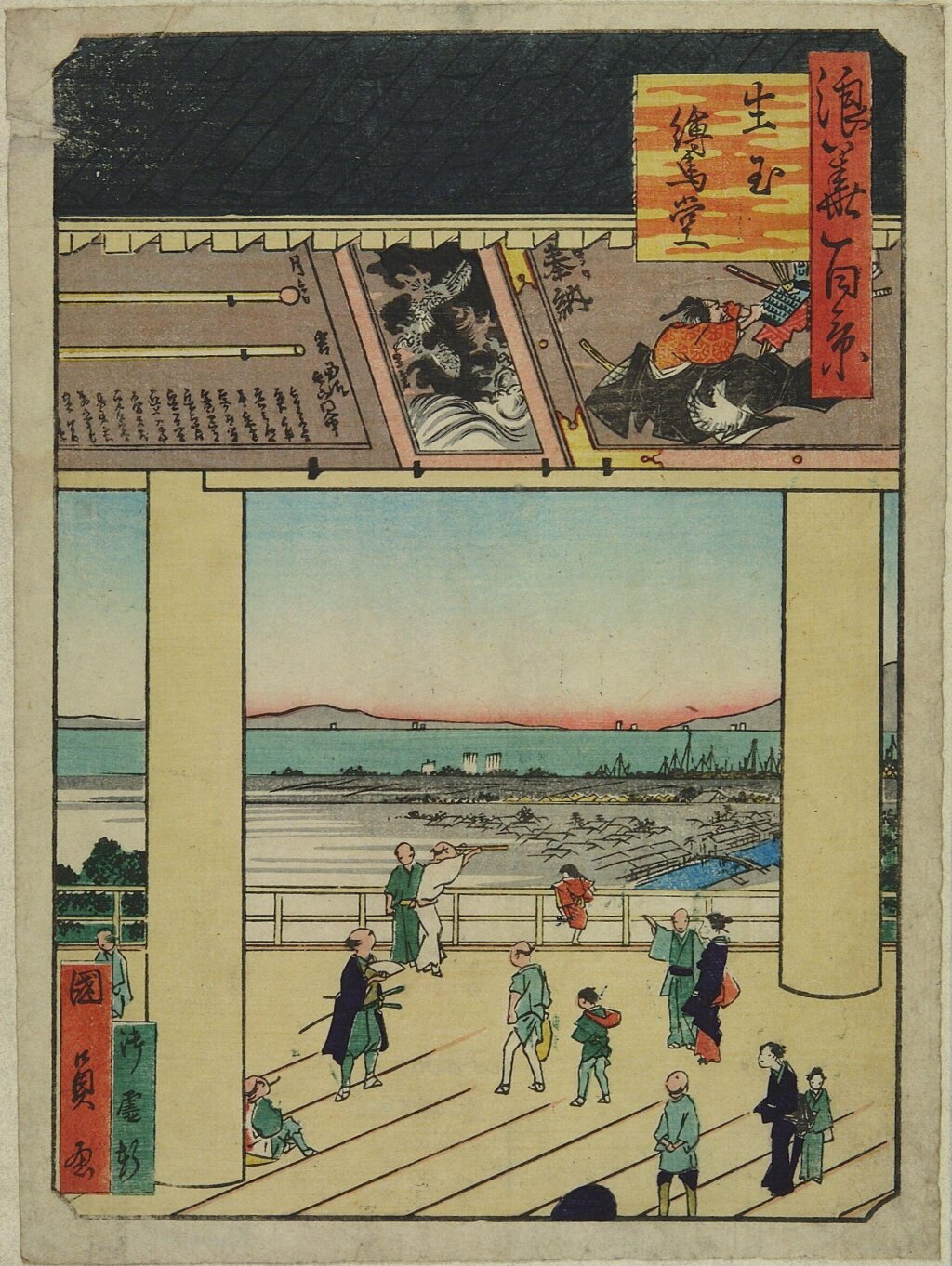
Votive-Picture Hall of the Shrine at Ikutama (Ikutama Ema-dō)
生玉絵馬堂
1860
Color woodblock print
More Landscapes Prints

Lake Kugushi in Wakasa Province (Wakasa Kugushiko), from the series Souvenirs of Travel I (Tabi miyage dai isshu)"
Wakasa Kugushiko
1920
Color woodblock print; oban
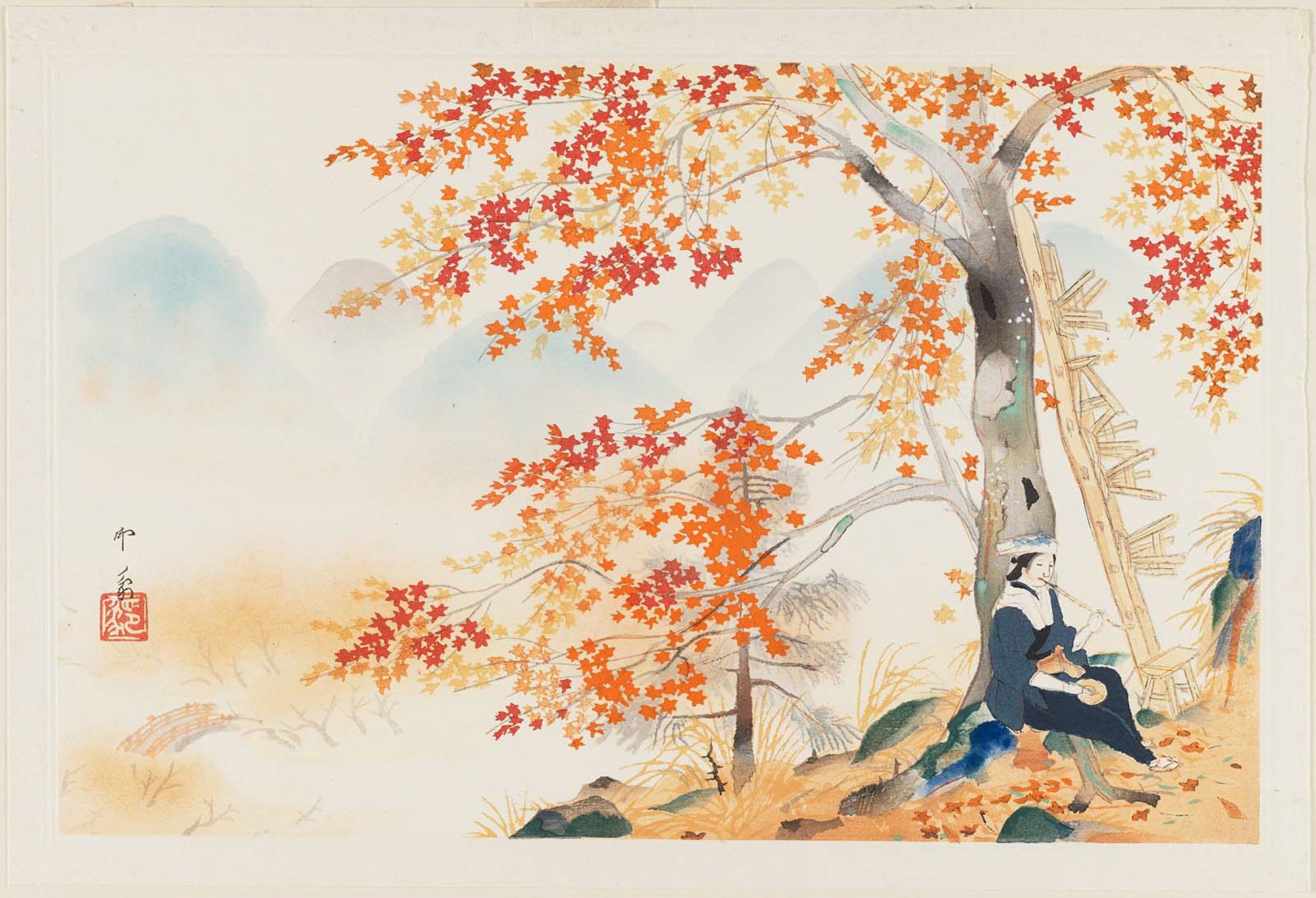
Autumn Maple Leaves at Takao, from the album Eight Views of Kyoto (Kyôto hakkei)
Woodblock print

The Beach at Kaiganji in Sanuki Province (Sanuki Kaiganji no hama), from the series "Collection of Views of Japan II, Kansai Edition (Nihon fukei shu II Kansai hen)"
1934
Color woodblock print; oban

Tea Kettle, section of a sheet from the series "Mirror of Stone Rubbings of Views of the Provinces" (Kohon meihitsu ishizuri kagami)
n.d.
Woodblock print; ishizuri-e, section of harimaze sheet
Featured in Collections
Curated cross-cuts that include this print.
Frequently Asked Questions
Actor Bandō Hikosaburō as Urashima was created by Utagawa Kunikazu (歌川国員) in 1859.
Actor Bandō Hikosaburō as Urashima depicts landscapes.