
The Actor Arashi Rikan III as Token Jūbei
- Date:
- c. 1860
- Medium:
- Color woodblock print
- Source:
- Walters Art Museum
Description
This color woodblock yakusha-e by Utagawa Kunikazu, held by the Walters Art Museum (accession 95.594) in Baltimore and digitally preserved on Wikimedia Commons, depicts the Osaka actor Arashi Rikan III in the role of Token (China Dog) Jūbei, a streetwise outlaw character drawn from the Osaka kabuki play Benimurasaki ai de someage (Red and Purple, Rich Dyes of Osaka). The role of Tōken Jūbei was one of the most enduring villain (kataki-yaku) parts of the Osaka stage, originally created in the early nineteenth century and revived periodically by successive generations of leading actors; Kunikazu's portrait of Arashi Rikan III in the role likely dates to the mid-1860s and continues a portraiture tradition begun by Shunkōsai Hokushū's portraits of Ichikawa Ebijurō I in the same part in 1816 and 1822. Arashi Rikan III, a major Osaka male lead of the 1860s, inherited the role from earlier generations of his family and the broader Arashi acting clan, and Kunikazu's portrait documents one of his signature performances. The composition shows the actor in a tightly cropped half-length view characteristic of kamigata-e yakusha-e, with the role identified by inscription and the costume rendered with careful attention to specific iconographic markers. The Walters Art Museum, founded in 1934 from the collection of William and Henry Walters, holds a significant sample of late Osaka kamigata-e acquired in the early twentieth century, and its Kunikazu holdings include both yakusha-e portraits and warrior prints from the Dai Nihon rokujū yo kyō no uchi series.
More Prints by Utagawa Kunikazu
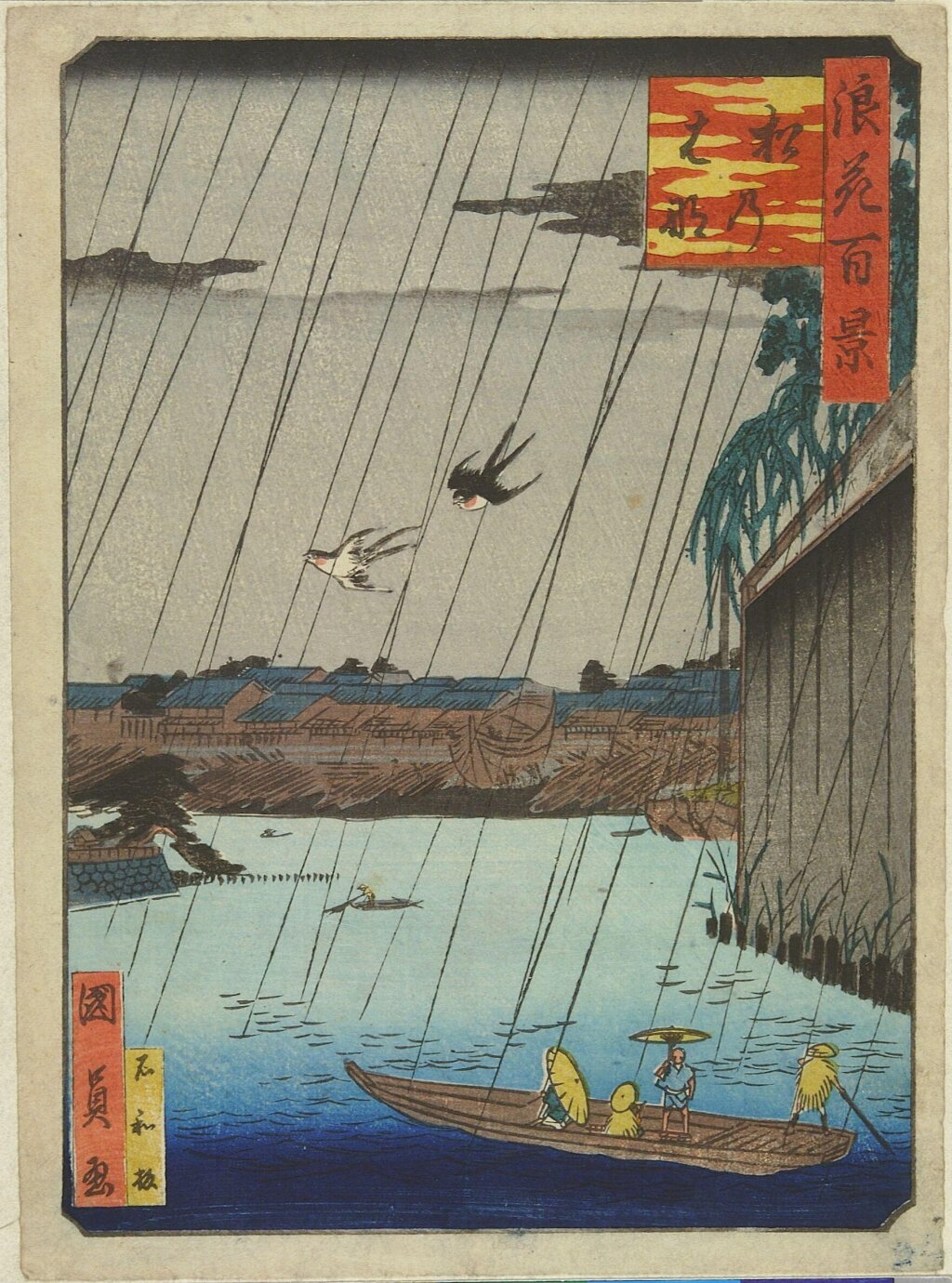
Pine Tree Point (Matsu-no-hana)
松の鼻
1860
Color woodblock print
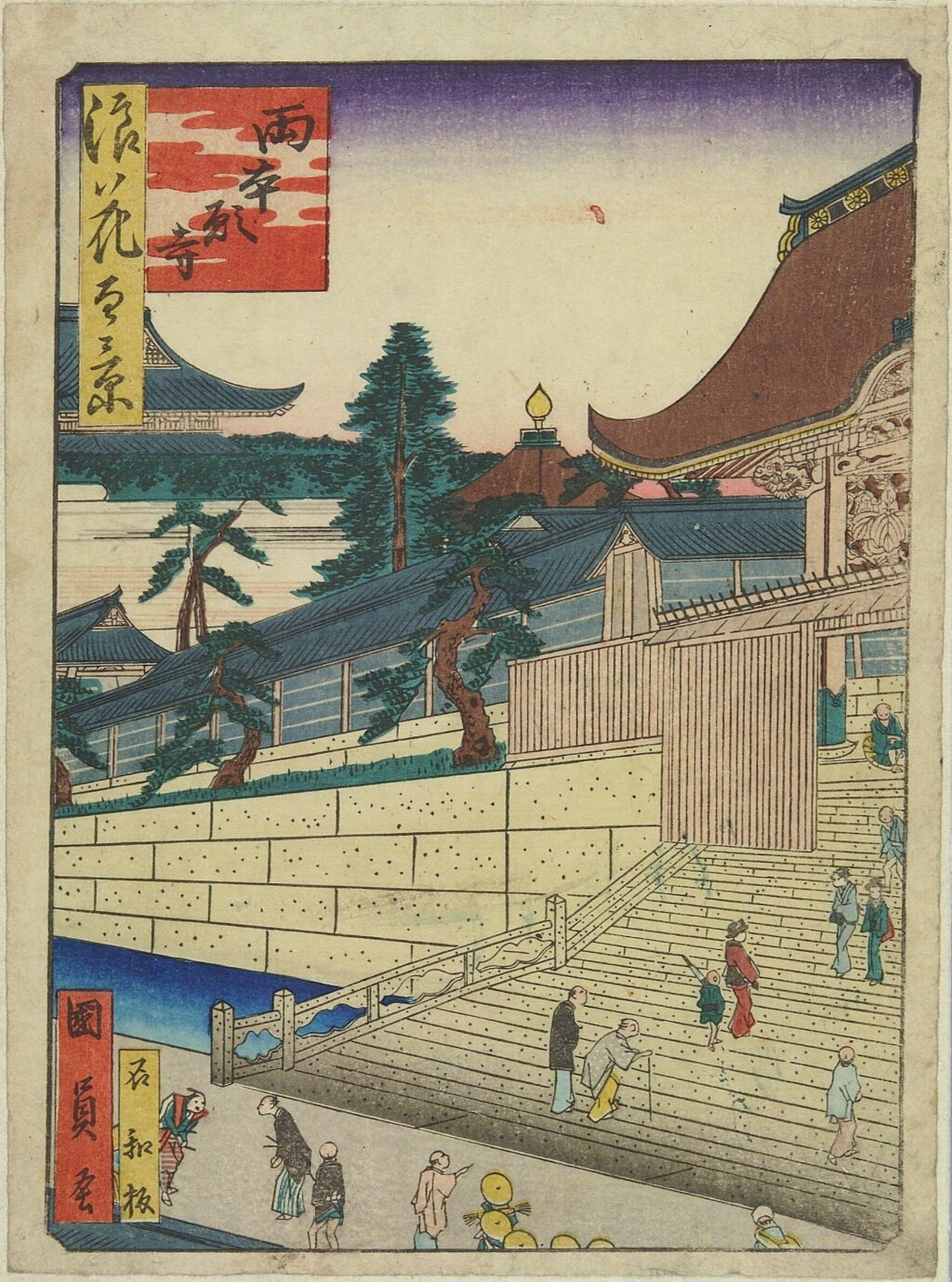
The Two Hongan-ji Temples (Ryō Hongan-ji)
両本願寺
1860
Color woodblock print

Dai Nihon rokujū yo kyō no uchi (One of the Sixty-odd Provinces of Great Japan)
大日本六十余州之内
c. 1862
Color woodblock print
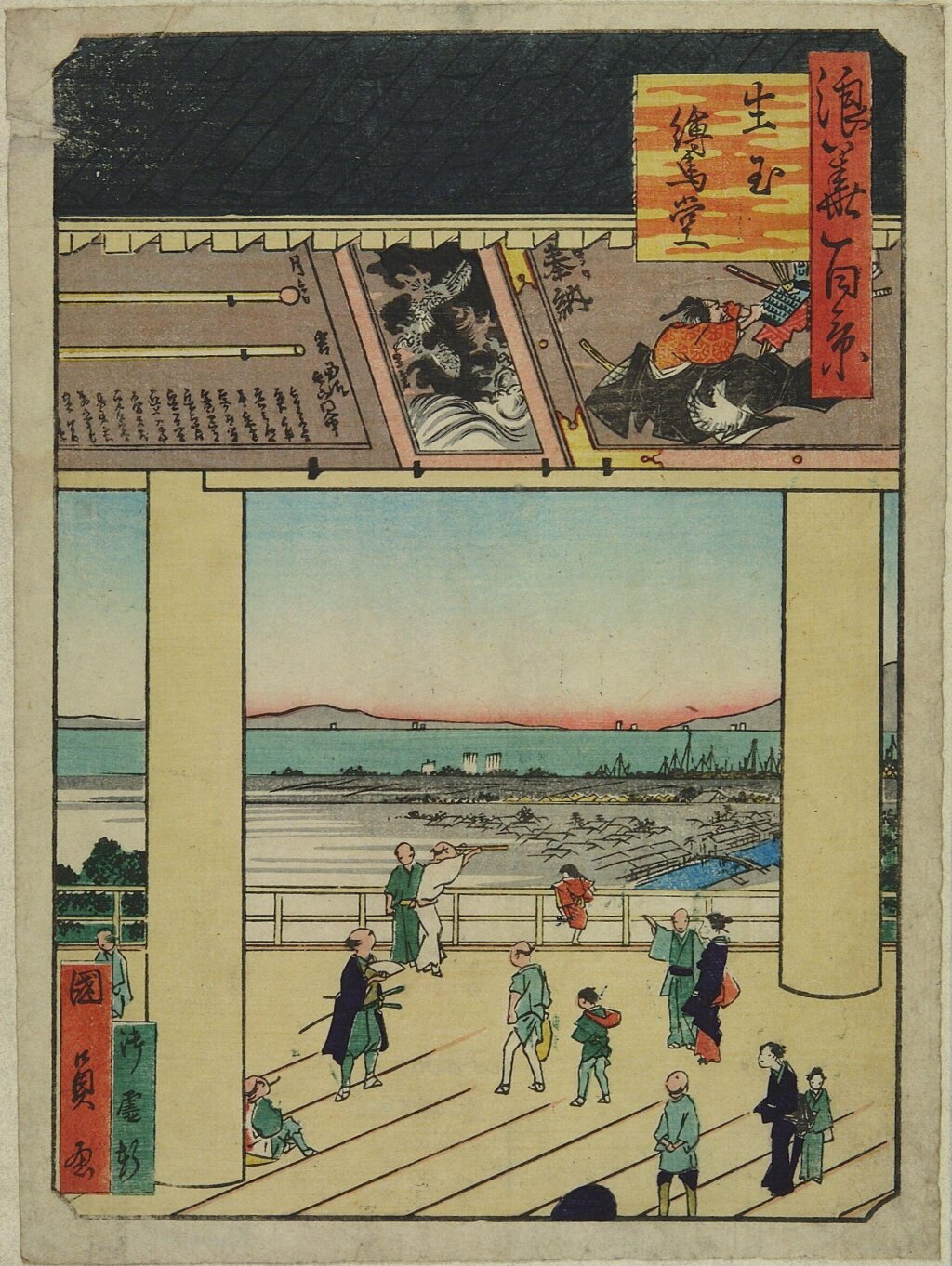
Votive-Picture Hall of the Shrine at Ikutama (Ikutama Ema-dō)
生玉絵馬堂
1860
Color woodblock print
More Landscapes Prints

Lake Kugushi in Wakasa Province (Wakasa Kugushiko), from the series Souvenirs of Travel I (Tabi miyage dai isshu)"
Wakasa Kugushiko
1920
Color woodblock print; oban
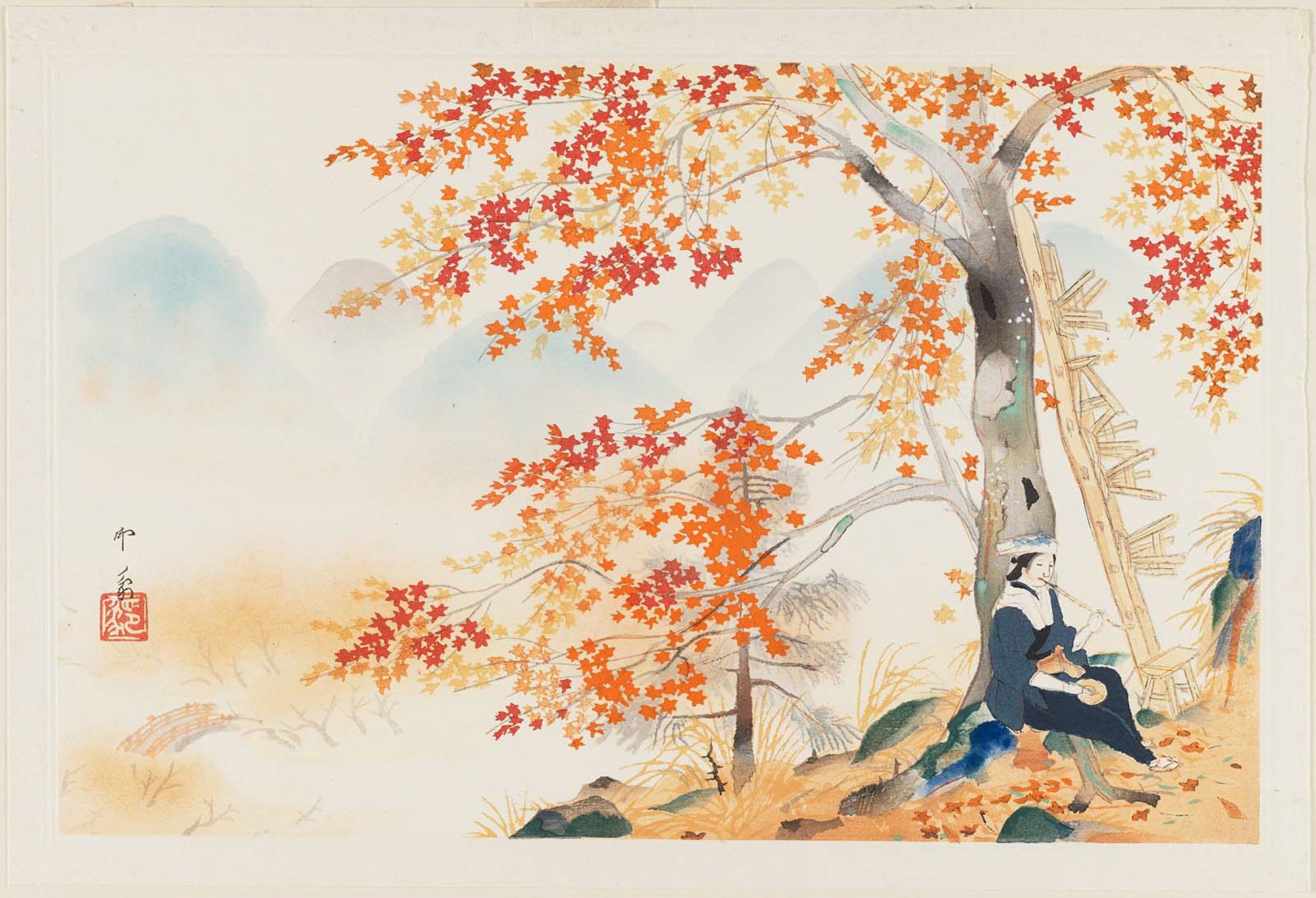
Autumn Maple Leaves at Takao, from the album Eight Views of Kyoto (Kyôto hakkei)
Woodblock print

The Beach at Kaiganji in Sanuki Province (Sanuki Kaiganji no hama), from the series "Collection of Views of Japan II, Kansai Edition (Nihon fukei shu II Kansai hen)"
1934
Color woodblock print; oban

Tea Kettle, section of a sheet from the series "Mirror of Stone Rubbings of Views of the Provinces" (Kohon meihitsu ishizuri kagami)
n.d.
Woodblock print; ishizuri-e, section of harimaze sheet
Featured in Collections
Curated cross-cuts that include this print.
Frequently Asked Questions
The Actor Arashi Rikan III as Token Jūbei was created by Utagawa Kunikazu (歌川国員) in c. 1860.
The Actor Arashi Rikan III as Token Jūbei depicts landscapes.