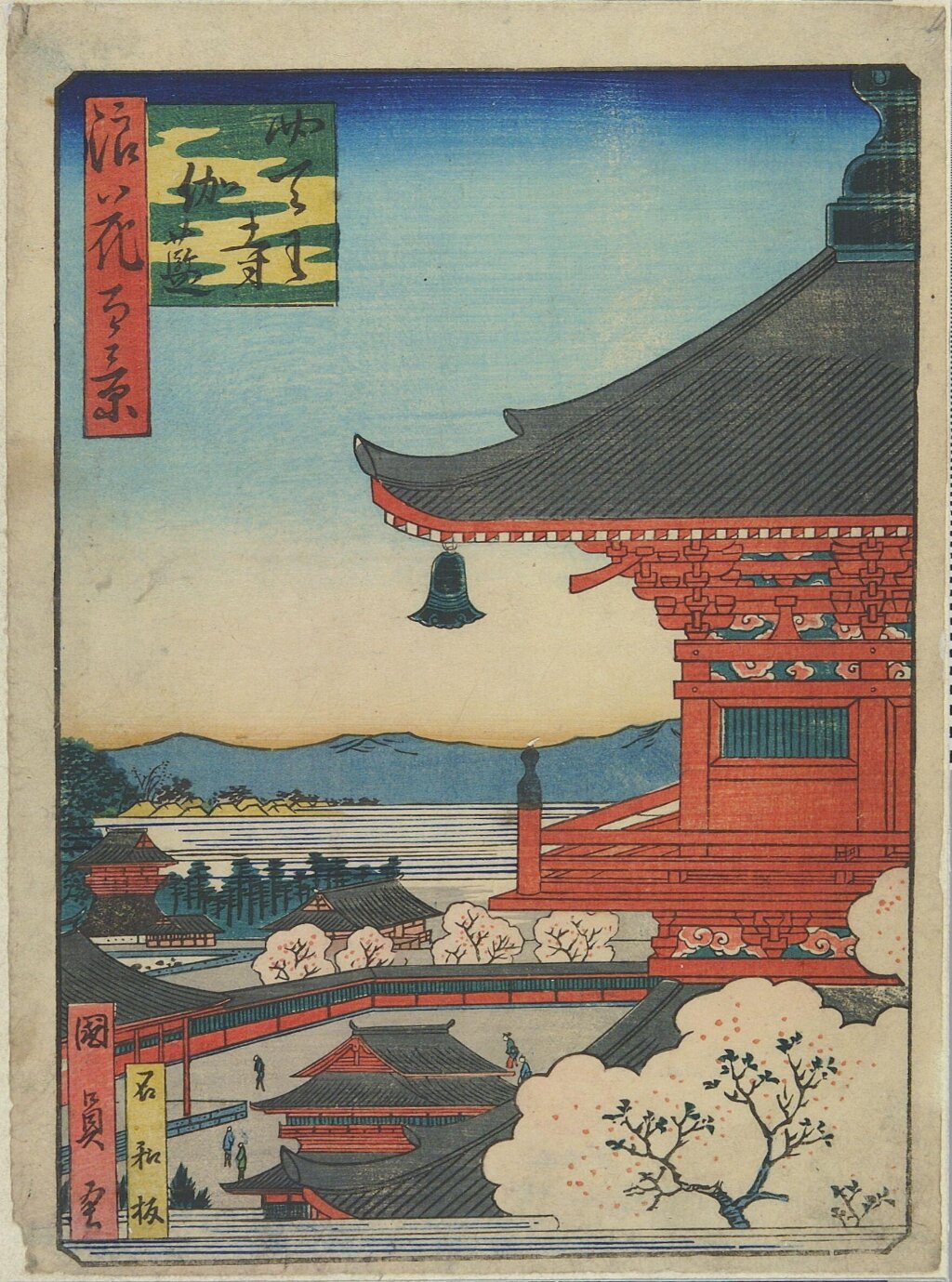
The Precincts of Shitennō-ji Temple (Shitennō-ji garan)
四天王寺伽藍
- Date:
- 1860
- Medium:
- Color woodblock print
- Source:
- Victoria and Albert Museum
Description
This 1860 color woodblock print by Utagawa Kunikazu, held by the Victoria and Albert Museum (accession E.5461-1886), depicts the precincts of Shitennō-ji Temple (四天王寺) in Osaka, one of the oldest and most historically significant Buddhist temples in Japan, founded in 593 CE by Prince Shōtoku. The composition surveys the temple's principal halls, pagoda, and surrounding gardens with the cartographic precision and atmospheric attention to weather and light that defined the kamigata meisho-e tradition. The print belongs to the great Osaka topographical project of 1860-1861, the Naniwa hyakkei (One Hundred Views of Naniwa), a 102-print series designed collaboratively by Kunikazu with Hasegawa Sadanobu II and Nansuitei Yoshiyuki to document the temples, bridges, and merchant districts of Osaka in the manner of Hiroshige's Edo meisho. Shitennō-ji's selection for the series reflects its centrality to Osaka civic identity: the temple served as the religious anchor of the southern half of the city and hosted the Doya doya New Year ritual that drew crowds from across Settsu province. The print measures the standard chū-tanzaku format used throughout the Naniwa hyakkei series and is rendered in a restrained palette of indigo, vermilion, and ochre with a careful gradient sky that exemplifies the kamigata-e approach to atmospheric printing. The V&A acquired the print as part of the 1886 Wakai sale, the foundational acquisition that established the museum's substantial Osaka kamigata-e holdings. The Naniwa hyakkei is preserved in its most complete form at the Osaka Municipal Central Library, and the V&A's set of five prints from the series, accessioned E.5461 through E.5465, provides Western scholars with a representative sample of Kunikazu's contribution to the project.
More Prints by Utagawa Kunikazu
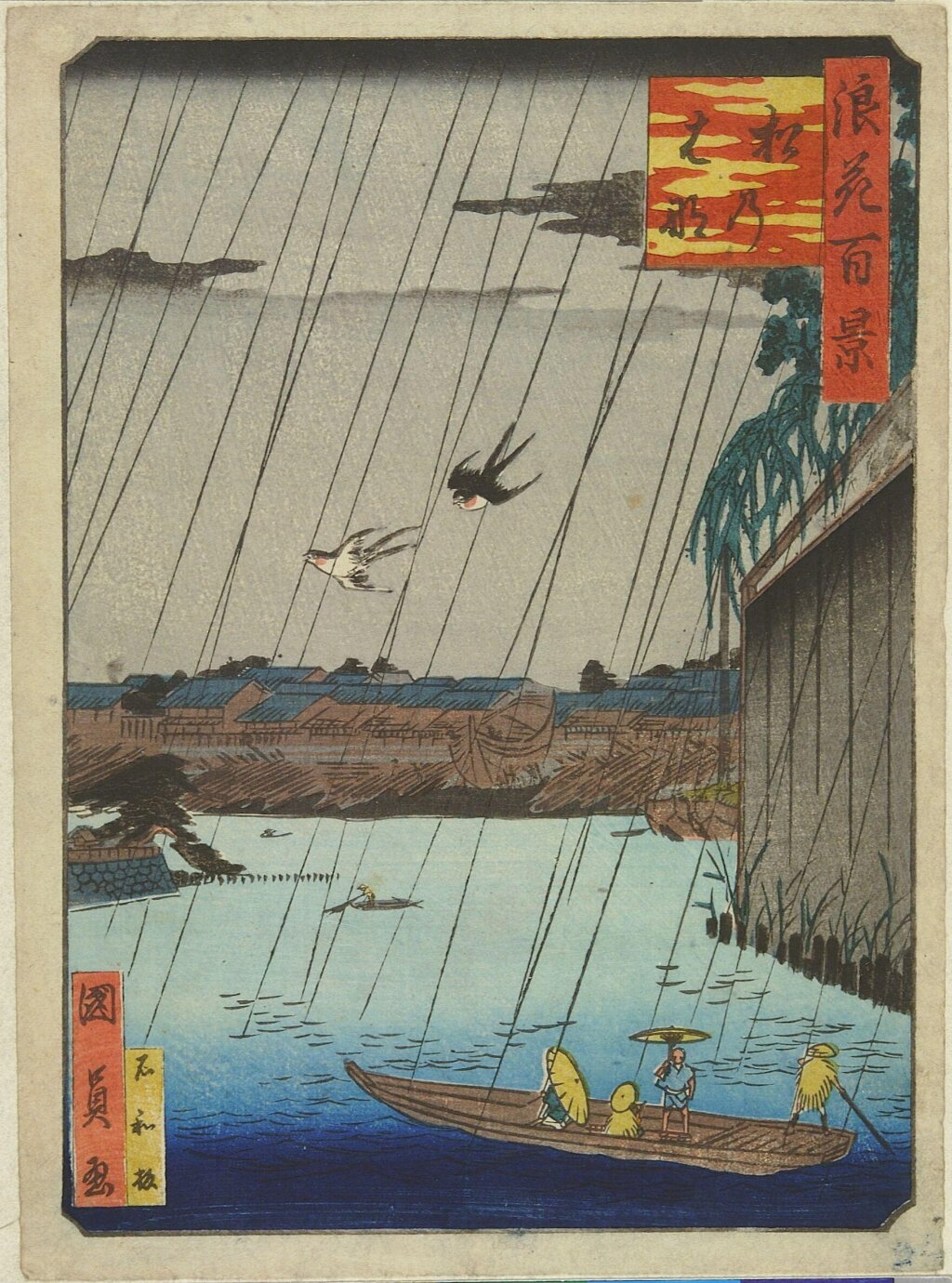
Pine Tree Point (Matsu-no-hana)
松の鼻
1860
Color woodblock print
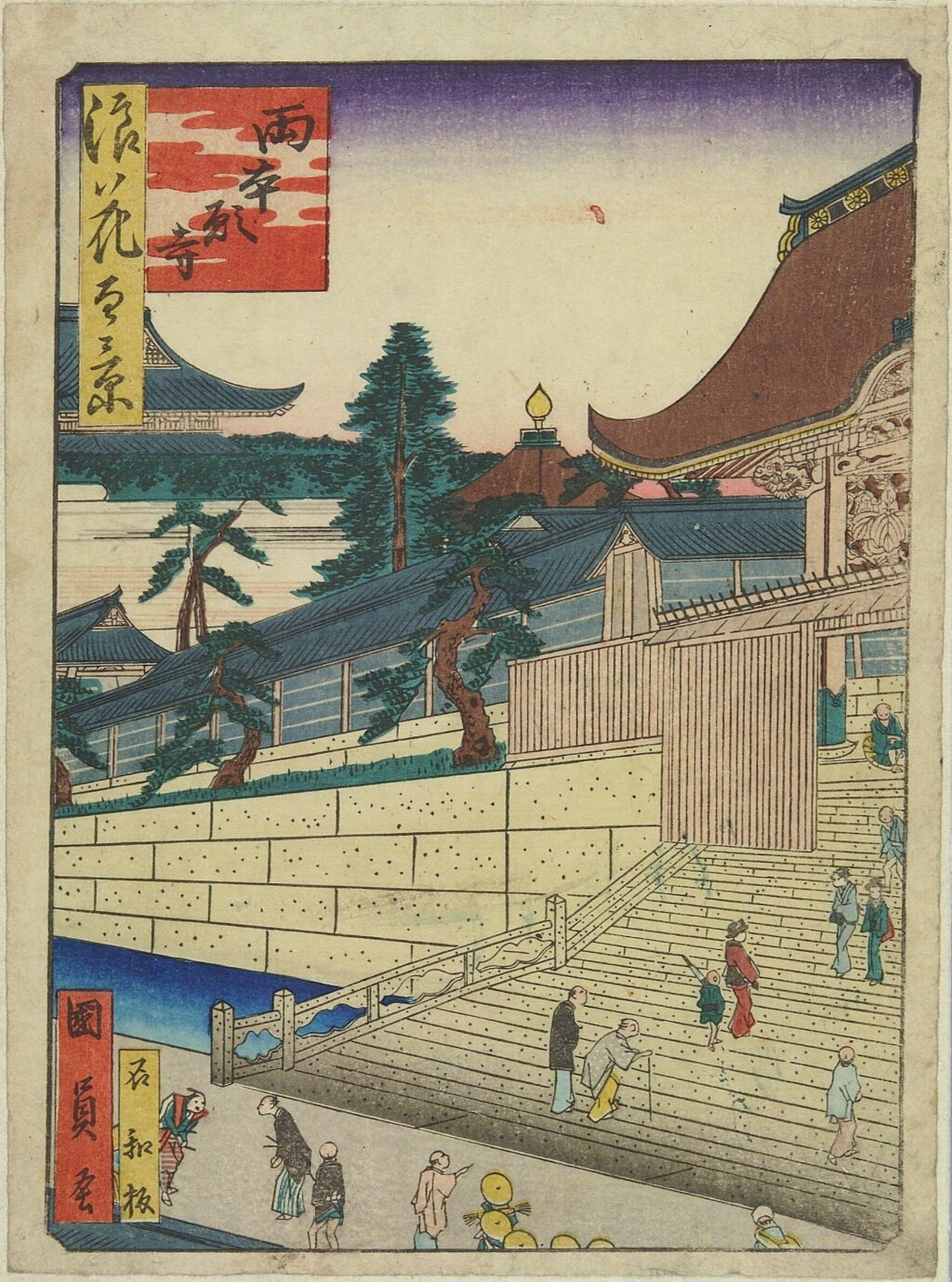
The Two Hongan-ji Temples (Ryō Hongan-ji)
両本願寺
1860
Color woodblock print

Dai Nihon rokujū yo kyō no uchi (One of the Sixty-odd Provinces of Great Japan)
大日本六十余州之内
c. 1862
Color woodblock print
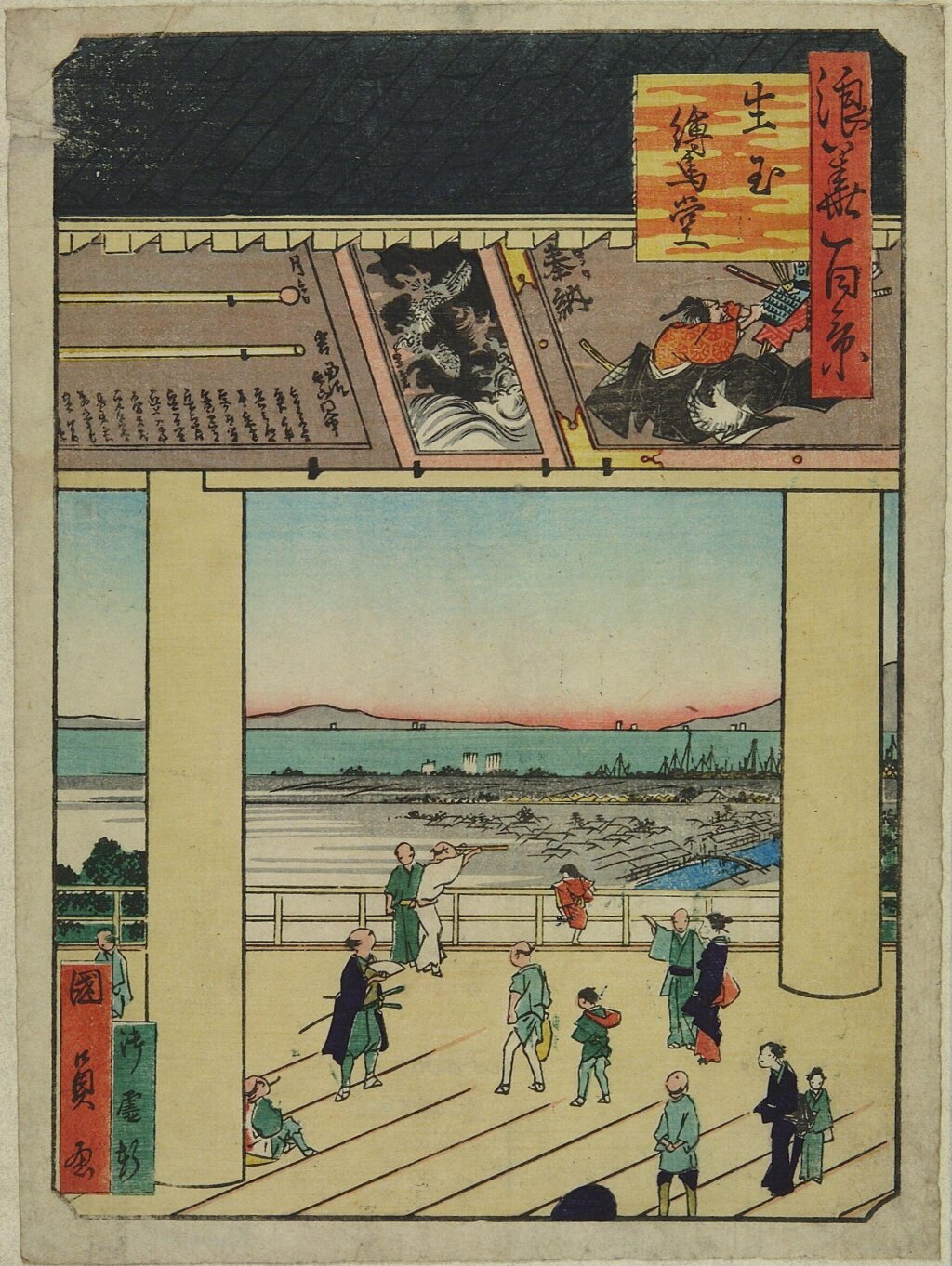
Votive-Picture Hall of the Shrine at Ikutama (Ikutama Ema-dō)
生玉絵馬堂
1860
Color woodblock print
More Landscapes Prints

Lake Kugushi in Wakasa Province (Wakasa Kugushiko), from the series Souvenirs of Travel I (Tabi miyage dai isshu)"
Wakasa Kugushiko
1920
Color woodblock print; oban
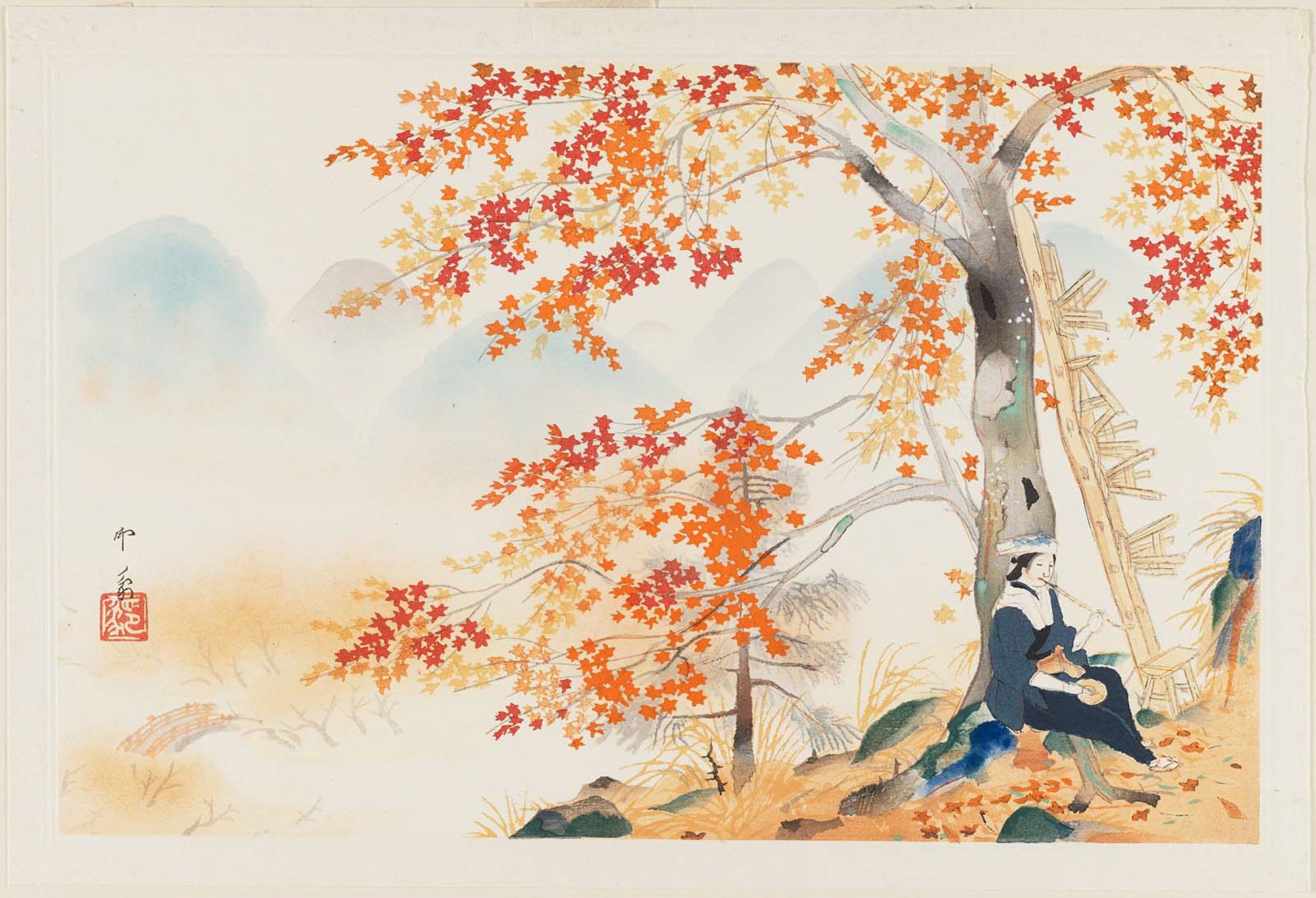
Autumn Maple Leaves at Takao, from the album Eight Views of Kyoto (Kyôto hakkei)
Woodblock print

The Beach at Kaiganji in Sanuki Province (Sanuki Kaiganji no hama), from the series "Collection of Views of Japan II, Kansai Edition (Nihon fukei shu II Kansai hen)"
1934
Color woodblock print; oban

Tea Kettle, section of a sheet from the series "Mirror of Stone Rubbings of Views of the Provinces" (Kohon meihitsu ishizuri kagami)
n.d.
Woodblock print; ishizuri-e, section of harimaze sheet
Featured in Collections
Curated cross-cuts that include this print.
Frequently Asked Questions
The Precincts of Shitennō-ji Temple (Shitennō-ji garan) (四天王寺伽藍) was created by Utagawa Kunikazu (歌川国員) in 1860.
The Precincts of Shitennō-ji Temple (Shitennō-ji garan) depicts landscapes.