
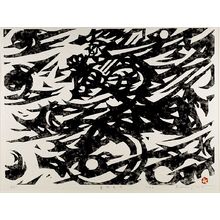
Oiwa's Ghost (Oiwa no borei)
- Date:
- 1860s
- Medium:
- Color woodblock print
- Source:
- Art Institute of Chicago
Description
"Oiwa's Ghost (Oiwa no borei)" is a 1860s color woodblock print by Utagawa Kunisada, signed in his later career as Toyokuni III, and held in the Art Institute of Chicago. The subject is one of the most famous in all of Japanese theater and ukiyo-e: Oiwa, the wronged wife from Tsuruya Nanboku IV's 1825 kabuki play "Tokaido Yotsuya Kaidan" (The Ghost Story of Yotsuya on the Tokaido). Poisoned by her treacherous husband Iemon, Oiwa returns as a vengeful spirit (yurei) whose disfigured face, drooping eye, and tangled hair became a defining iconography of Japanese horror imagery. Kunisada produced many designs based on the play over his career; by the 1860s the story had been continuously staged for nearly forty years, and Kunisada's late prints of Oiwa drew on his deep familiarity with the dramaturgy. Stylistically the print exhibits the saturated reds, bold outlines, and atmospheric darkness typical of Toyokuni III's late Edo period, sometimes incorporating the brilliant aniline red pigments that became available after 1860. As a yakusha-e Oiwa is shown as the role embodied by a specific male actor in the onnagata (female-role) tradition, with the actor's distinctive features visible beneath the ghostly transformation. The print survives at the Art Institute of Chicago as part of that institution's strong holdings of late-Edo Utagawa-school actor prints and theatrical subjects.
More Prints by Utagawa Kunisada

The actors Ichikawa Danjuro VII as Takamoto no kitsune and Segawa Kikunojo V as Izumi no Chieda-gitsune
1818
Color woodblock print; shikishiban, surimono

Basketry Work: By the Craftsman Ichida Shōshichirō of Naniwa (Kagozaiku Naniwa saikunin Ichida Shōshichirō)
1819
Woodblock print; ink and color on paper
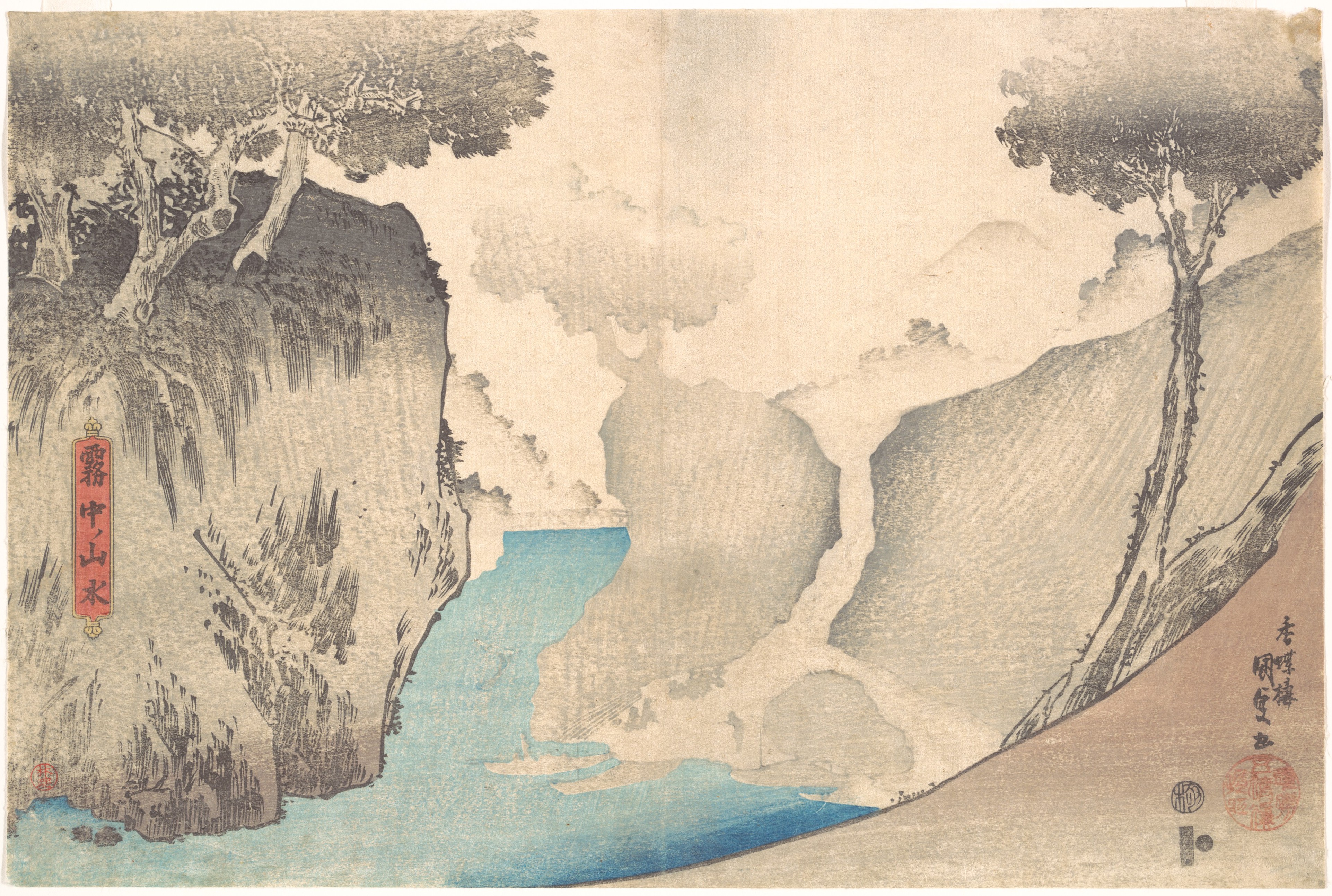
Ochanomizu in the Mist
mid-19th century
Woodblock print; ink and color on paper
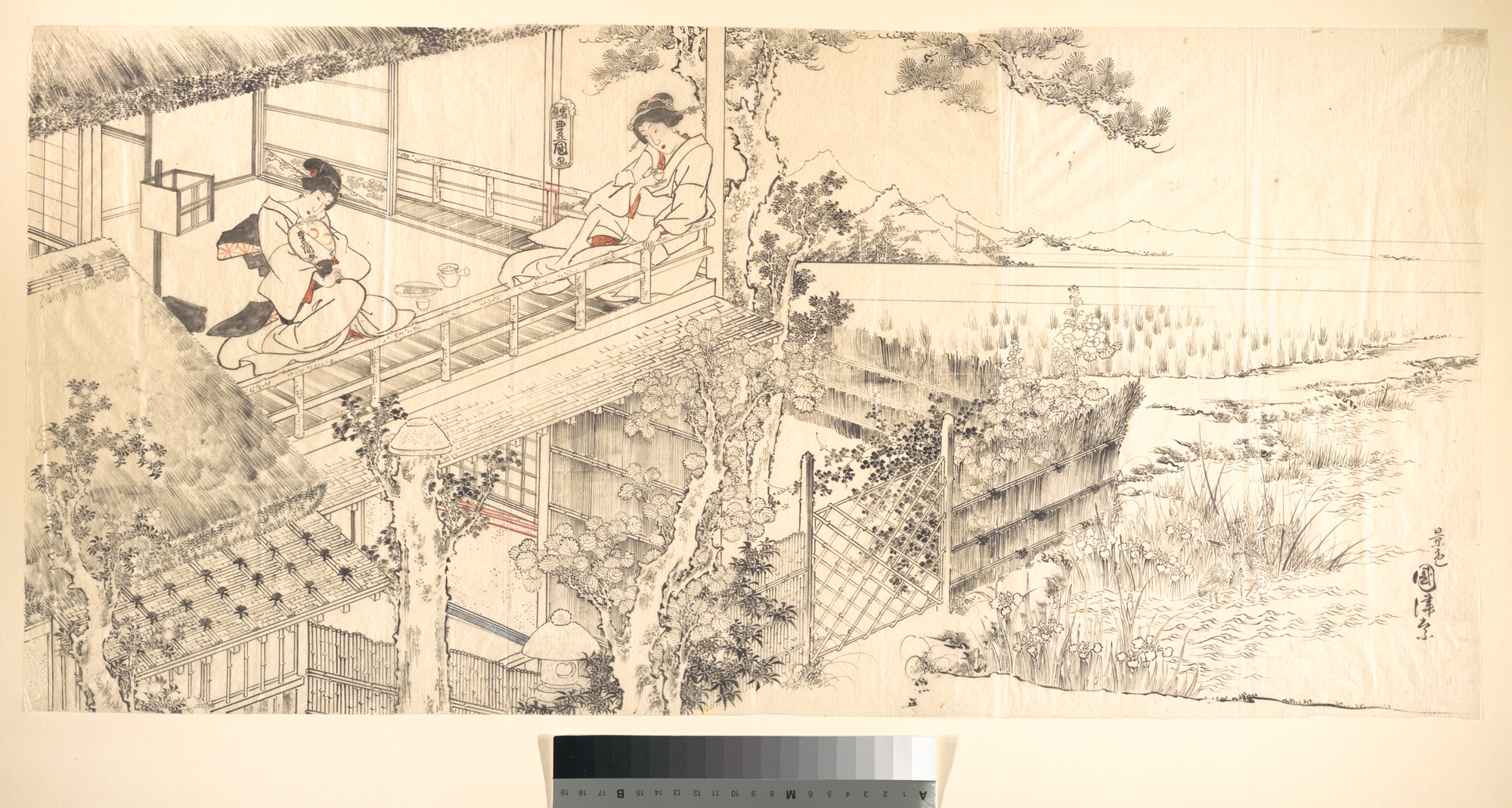
Two Courtesans Enjoying the View from a Teahouse
after 1844
Drawings intended as design for woodblock prints (triptych); ink and color on paper
More Mythology Prints

Featured in Collections
Curated cross-cuts that include this print.
Frequently Asked Questions
Oiwa's Ghost (Oiwa no borei) was created by Utagawa Kunisada (歌川国貞) in 1860s.
Oiwa's Ghost (Oiwa no borei) depicts mythology.