
Poem by Fujiwara no Toshinari
- Date:
- ca. 1845-48
- Medium:
- Source:
- Victoria and Albert Museum
Description
Poem by Fujiwara no Toshinari is an 1845 woodblock print by Utagawa Kunisada, part of a series in which the celebrated classical anthology Hyakunin Isshu (One Hundred Poets, One Poem Each) was reimagined through scenes from kabuki and Edo life. The mitate format — pairing a classical poem with a parallel modern image — was central to late Edo ukiyo-e and gave designers a way to weave the prestige of court literature into the popular print market. Fujiwara no Toshinari (Shunzei), a great twelfth-century waka poet and compiler of the Senzaishū, anchors this sheet with one of the most famous laments in the Hyakunin Isshu about the sorrow of the world. Kunisada answers that classical text with a contemporary figure drawn from the kabuki stage or the urban demi-monde, a typical Utagawa-school strategy that allowed yakusha-e to circulate under a learned cover. The figure occupies the lower portion of the sheet in deliberate, slightly theatrical posture, while a cartouche at the upper register carries the poem and the poet's name in calligraphic script. Color is concentrated in the kimono pattern, with mineral reds and blues set against quieter ground tones in the manner Kunisada favored in the mid-1840s after the Tenpō Reforms had pushed publishers toward subtler palettes. The print is held by the Victoria and Albert Museum, which records its 1845 date and situates it within Kunisada's prolific mitate output, illustrating how the leading designer of Edo ukiyo-e adapted classical poetry to a commercial print culture without surrendering its visual energy.
More Prints by Utagawa Kunisada

The actors Ichikawa Danjuro VII as Takamoto no kitsune and Segawa Kikunojo V as Izumi no Chieda-gitsune
1818
Color woodblock print; shikishiban, surimono

Basketry Work: By the Craftsman Ichida Shōshichirō of Naniwa (Kagozaiku Naniwa saikunin Ichida Shōshichirō)
1819
Woodblock print; ink and color on paper
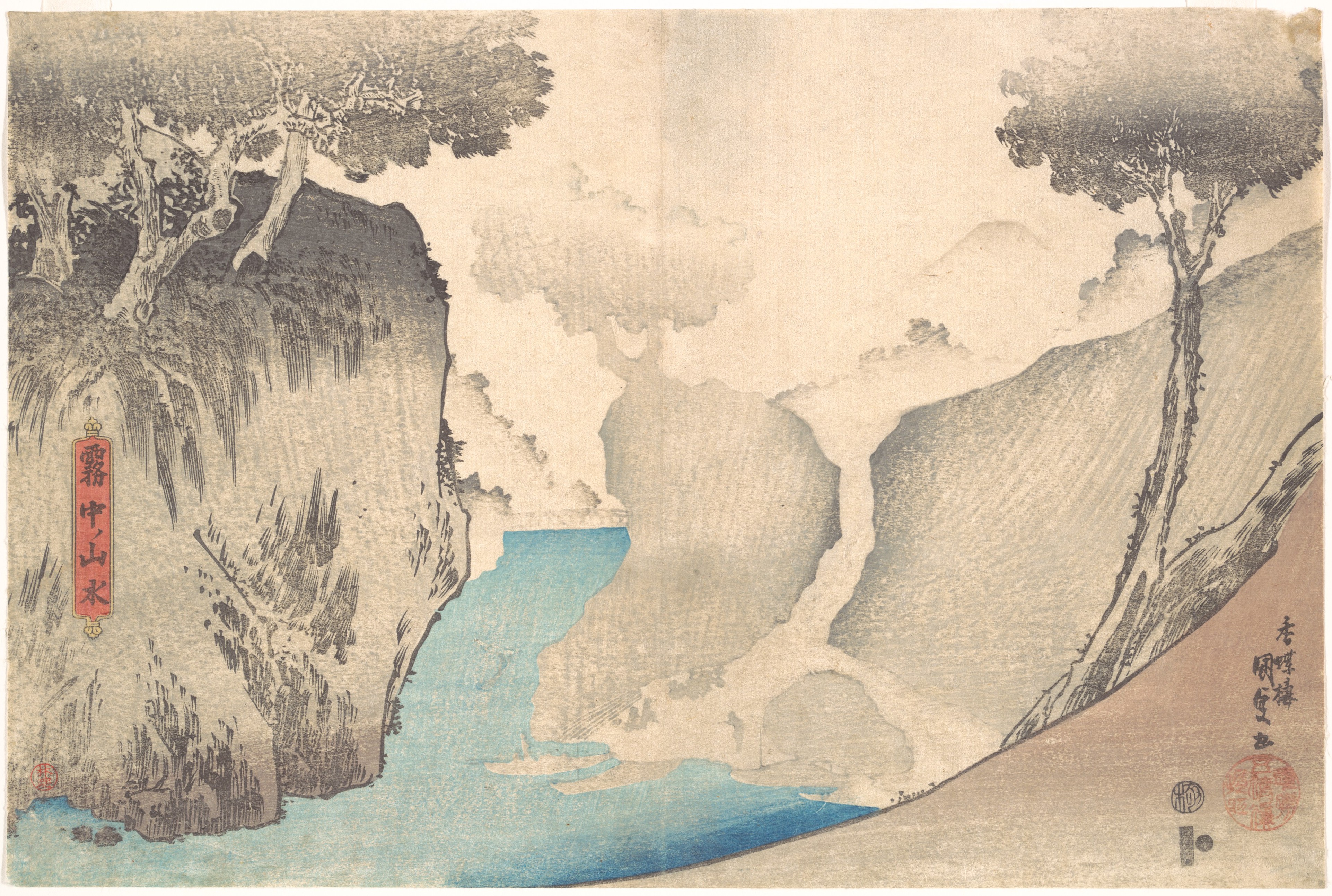
Ochanomizu in the Mist
mid-19th century
Woodblock print; ink and color on paper
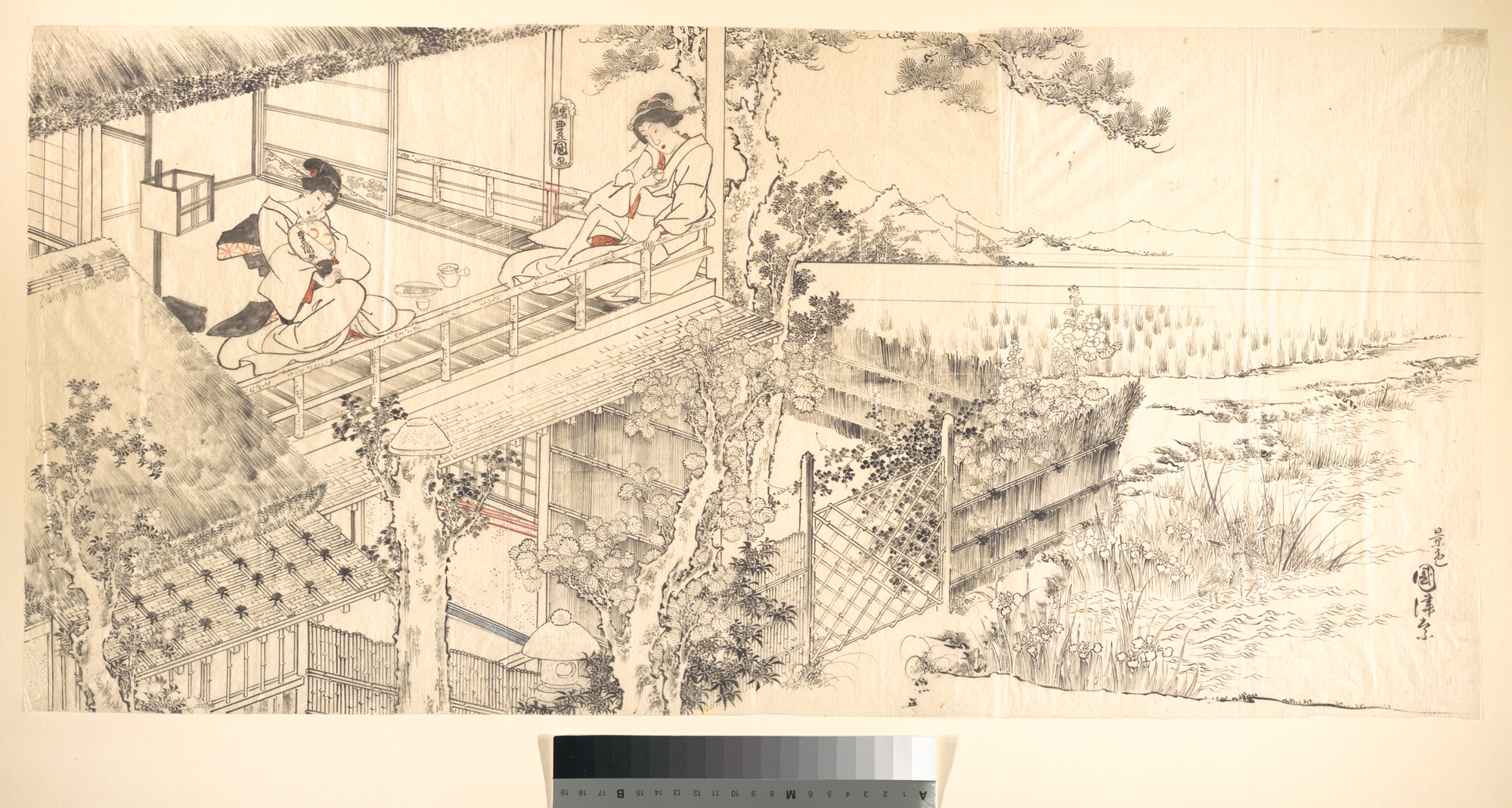
Two Courtesans Enjoying the View from a Teahouse
after 1844
Drawings intended as design for woodblock prints (triptych); ink and color on paper
More Mount Fuji Prints
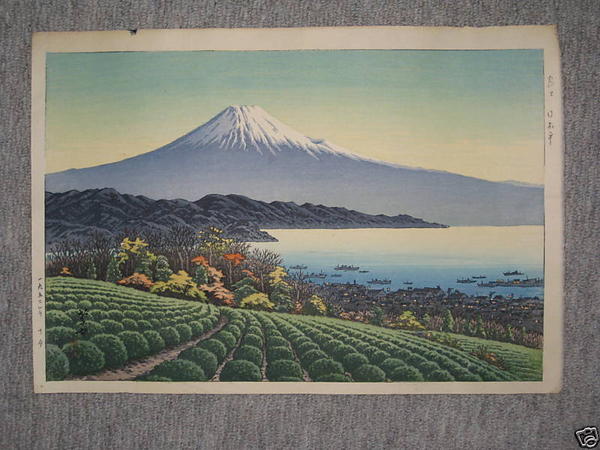
Fuji from tea farm
Woodblock print

Akasaka, Fujikawa, Okazaki, Chiryu, and Narumi, from the series "Famous Places on the Fifty-three Stations of the Tokaido, Five Stations (Tokaido gojusan eki goshuku meisho)"
c. 1830/35
Color woodblock print; oban
![Mount Fuji on a Moonlit Night, Kawai Bridge (Tsukiyo no Fuji [Kawaibashi]), from the series "Selection of Views of the Tokaido (Tokaido fukei senshu)" by Kawase Hasui](https://www.artic.edu/iiif/2/d0960668-1e73-339a-b182-fb995a54bff0/full/843,/0/default.jpg)
Mount Fuji on a Moonlit Night, Kawai Bridge (Tsukiyo no Fuji [Kawaibashi]), from the series "Selection of Views of the Tokaido (Tokaido fukei senshu)"
1947
Color woodblock print; oban

Mt. Fuji in Rain (Ame no Fuji)
n.d.
Color woodblock print
Featured in Collections
Curated cross-cuts that include this print.
Frequently Asked Questions
Poem by Fujiwara no Toshinari was created by Utagawa Kunisada (歌川国貞) in ca. 1845-48.
Poem by Fujiwara no Toshinari depicts mount fuji.