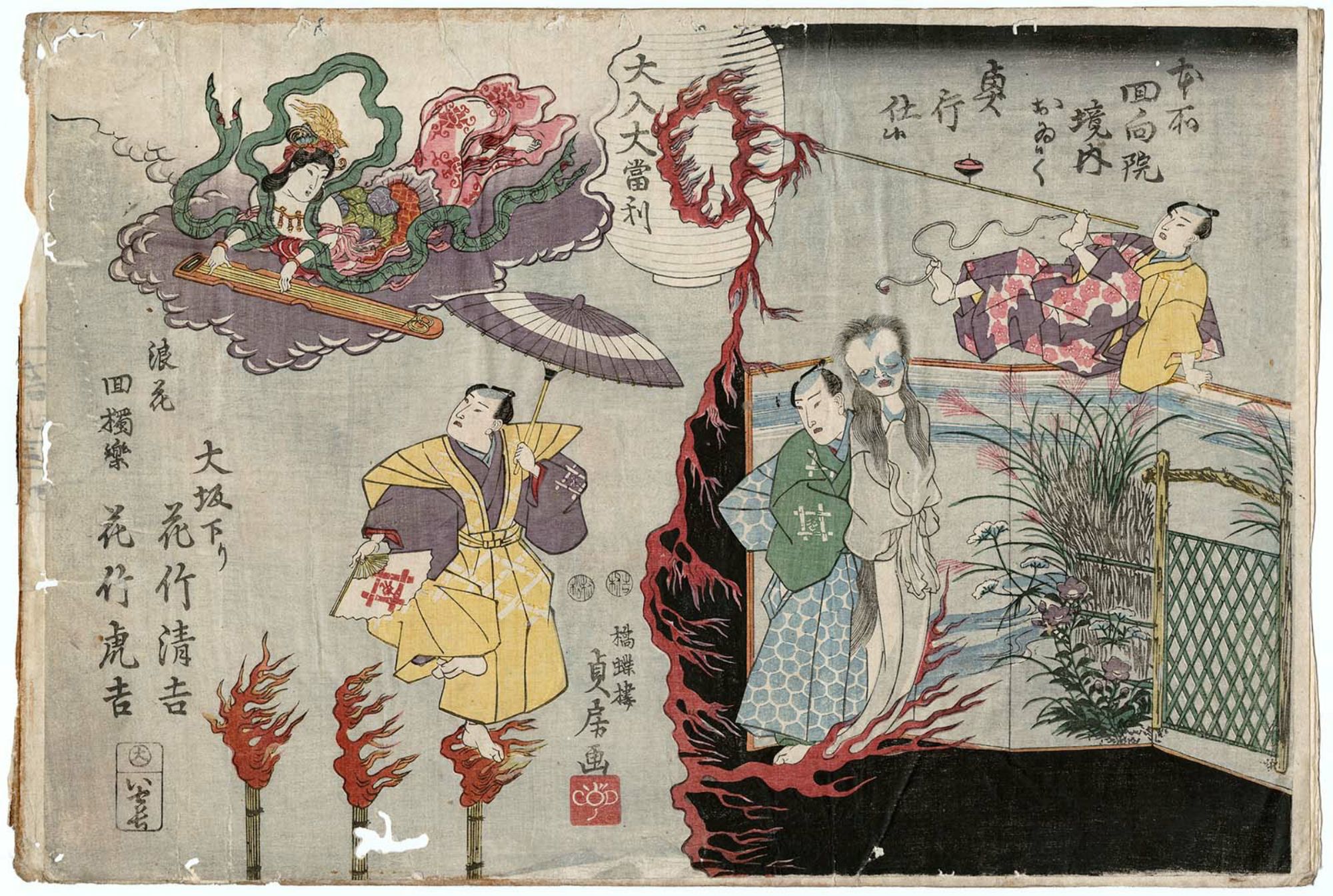
Acrobats
- Date:
- 1847-52
- Medium:
- Woodblock print (nishiki-e); ink and color on paper
- Source:
- Museum of Fine Arts, Boston
Description
An Utagawa-school print of acrobatic performers by Utagawa Sadafusa, dated by the Museum of Fine Arts Boston to approximately 1847-1852 and held in the Bigelow collection. Acrobat prints (karuwaza-e or kyokuba-e) were a distinctive sub-genre of late-Edo ukiyo-e that documented the troupes of itinerant performers who appeared at temple-festival grounds, street fairs, and impromptu venues in the city's entertainment districts. Acrobats demonstrated feats of balance, contortion, juggling, rope-walking, and animal tricks at locations such as the Asakusa temple grounds, the Ryōgoku bridge, and other Edo gathering places, often as part of misemono (curiosity shows) that paid no regard to the licensing and respectability conventions that governed the kabuki theatres. The depiction of acrobats in single-sheet ukiyo-e allowed Utagawa designers to display dynamic figural compositions of unusual physicality, distinct from the stately portraits of kabuki actors and bijin that constituted most of their output. Sadafusa's print belongs to this lively documentary strand of late-Edo print culture and demonstrates his ability to handle the rapid movement and inventive grouping that the subject demanded. The MFA Boston catalogue records the work as part of the broad Sadafusa holding in the William Sturgis Bigelow collection of Edo woodblock prints. The dating to circa 1847-1852 places the print in the mid-career period of Sadafusa's output, contemporary with the height of Kunisada's own production and within the broader competitive ecosystem of Utagawa-school design.
More Prints by Utagawa Sadafusa
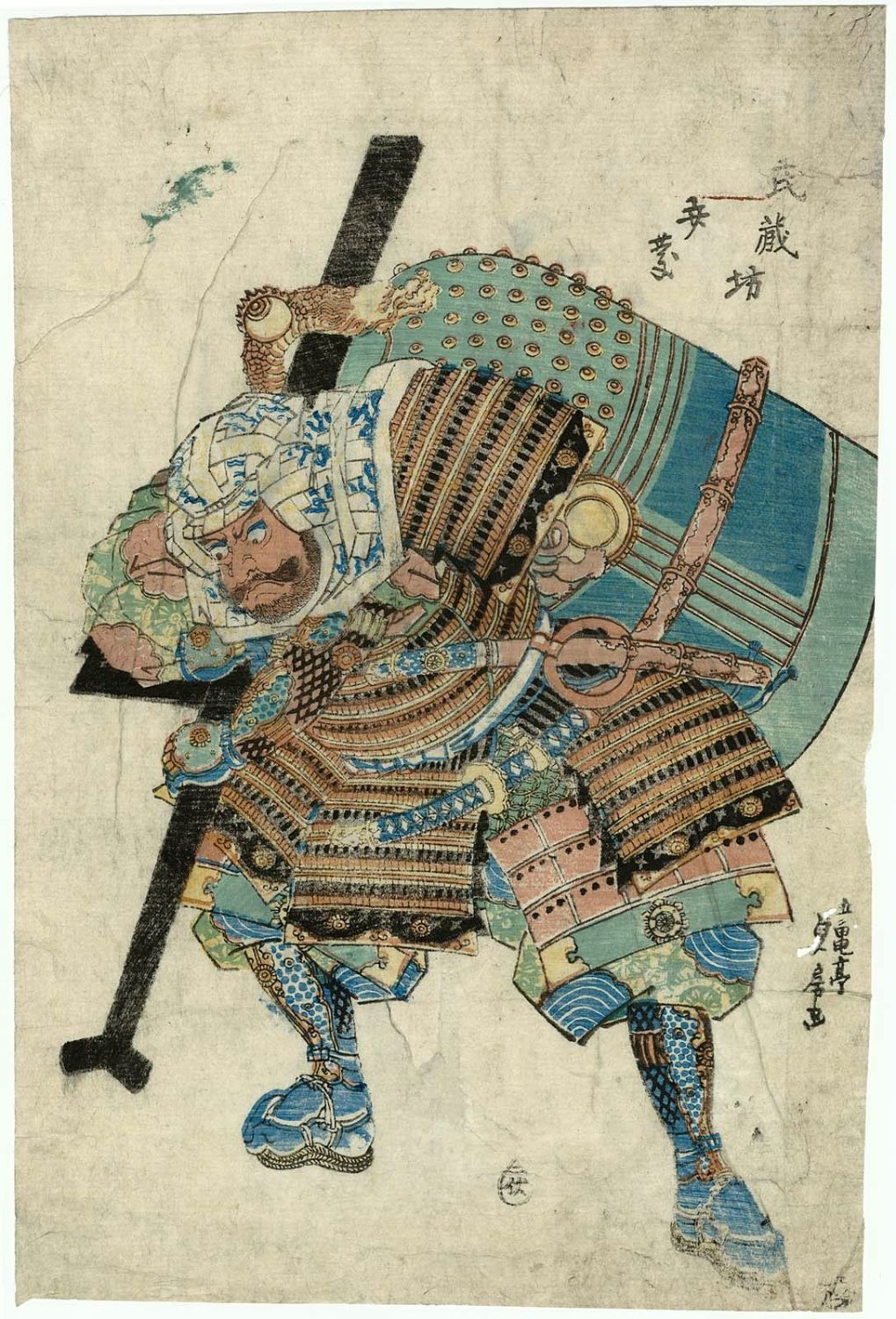
Musashibō Benkei
武蔵坊弁慶
1830
Woodblock print (nishiki-e); ink and color on paper
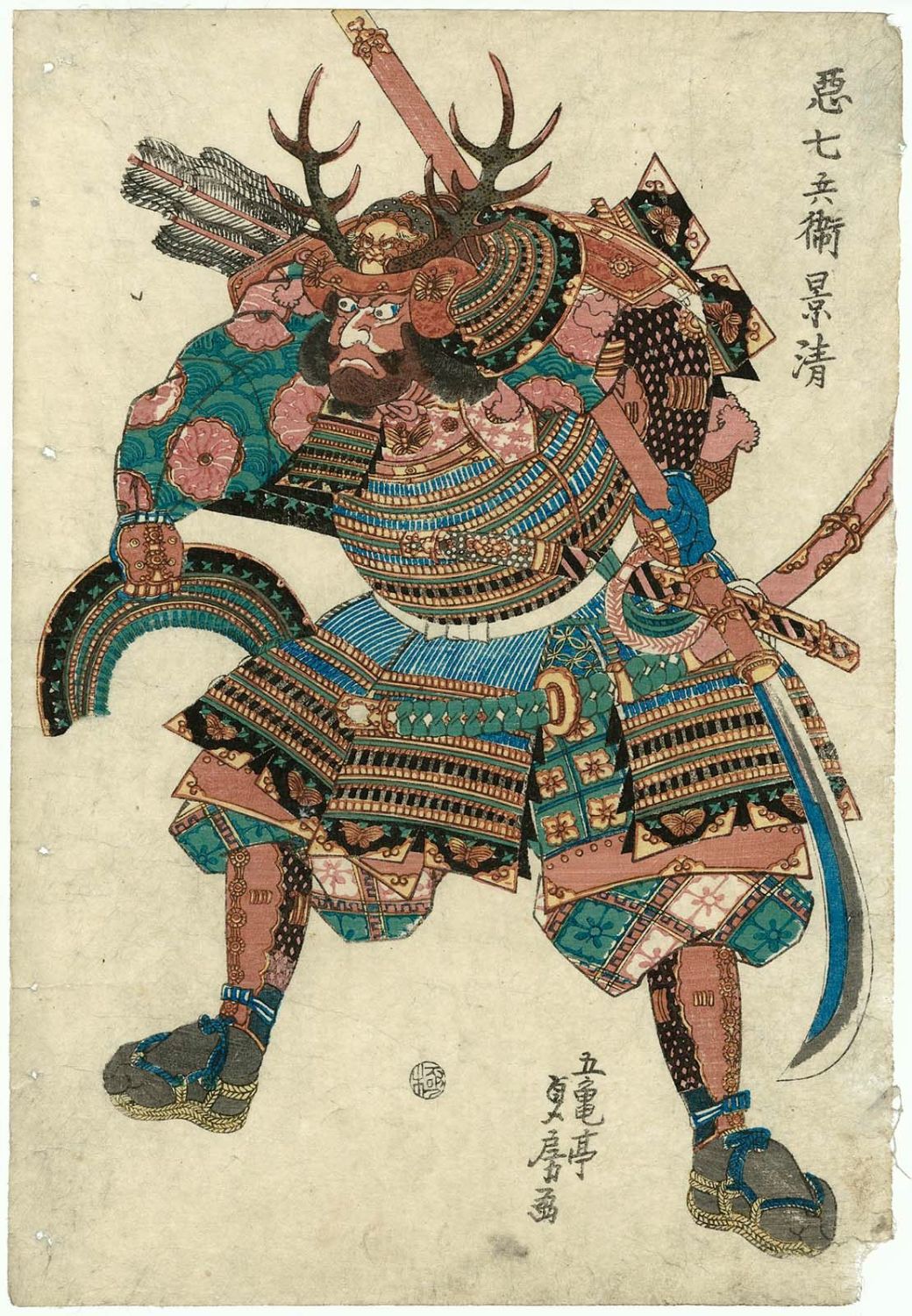
Akushichibyōe Kagekiyo
悪七兵衛景清
1830
Woodblock print (nishiki-e); ink and color on paper
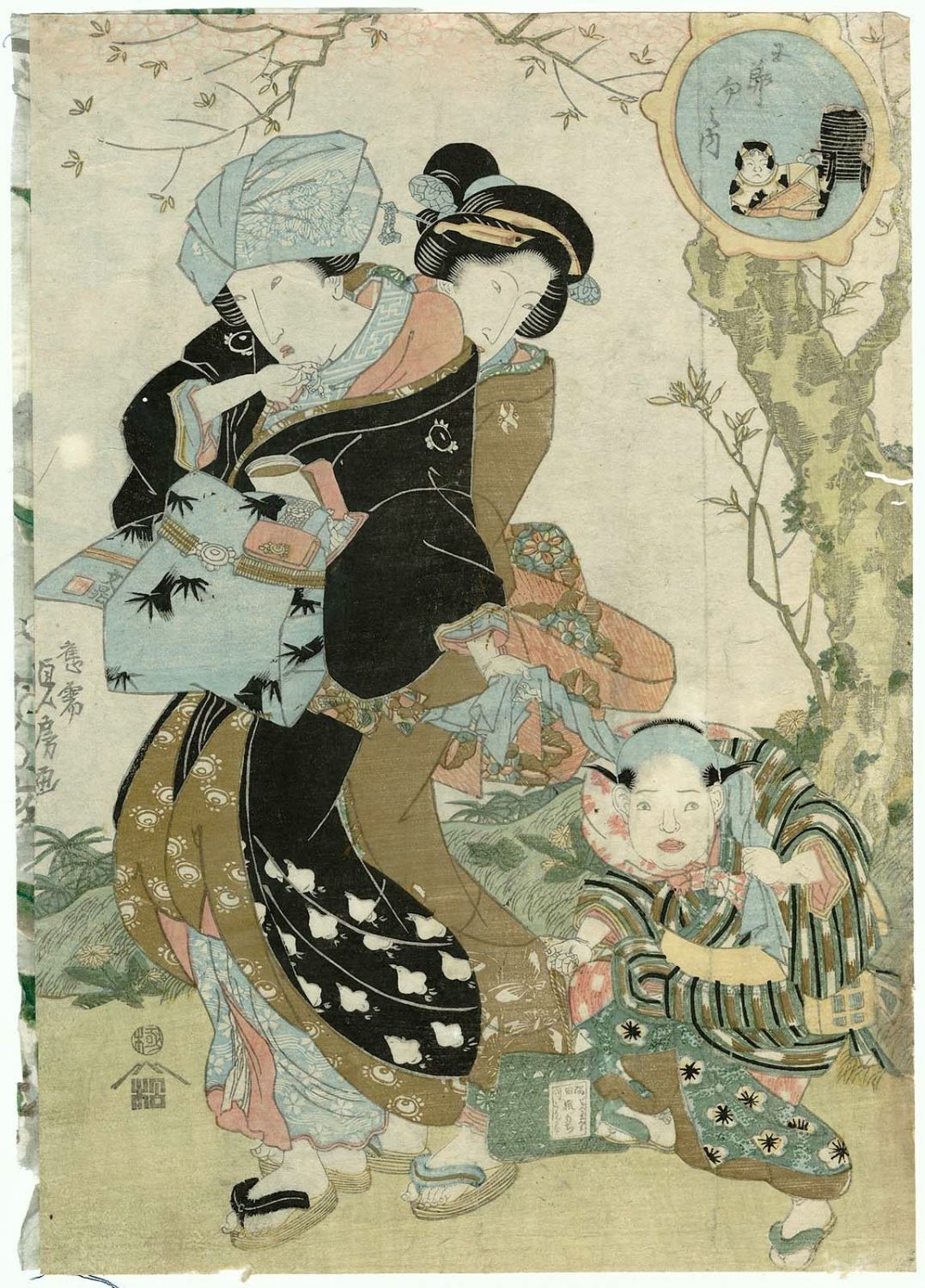
Third month, Go Sekku no uchi
五節句之内 三月
Edo period, c. 1830s-1840s
Woodblock print (nishiki-e); ink and color on paper
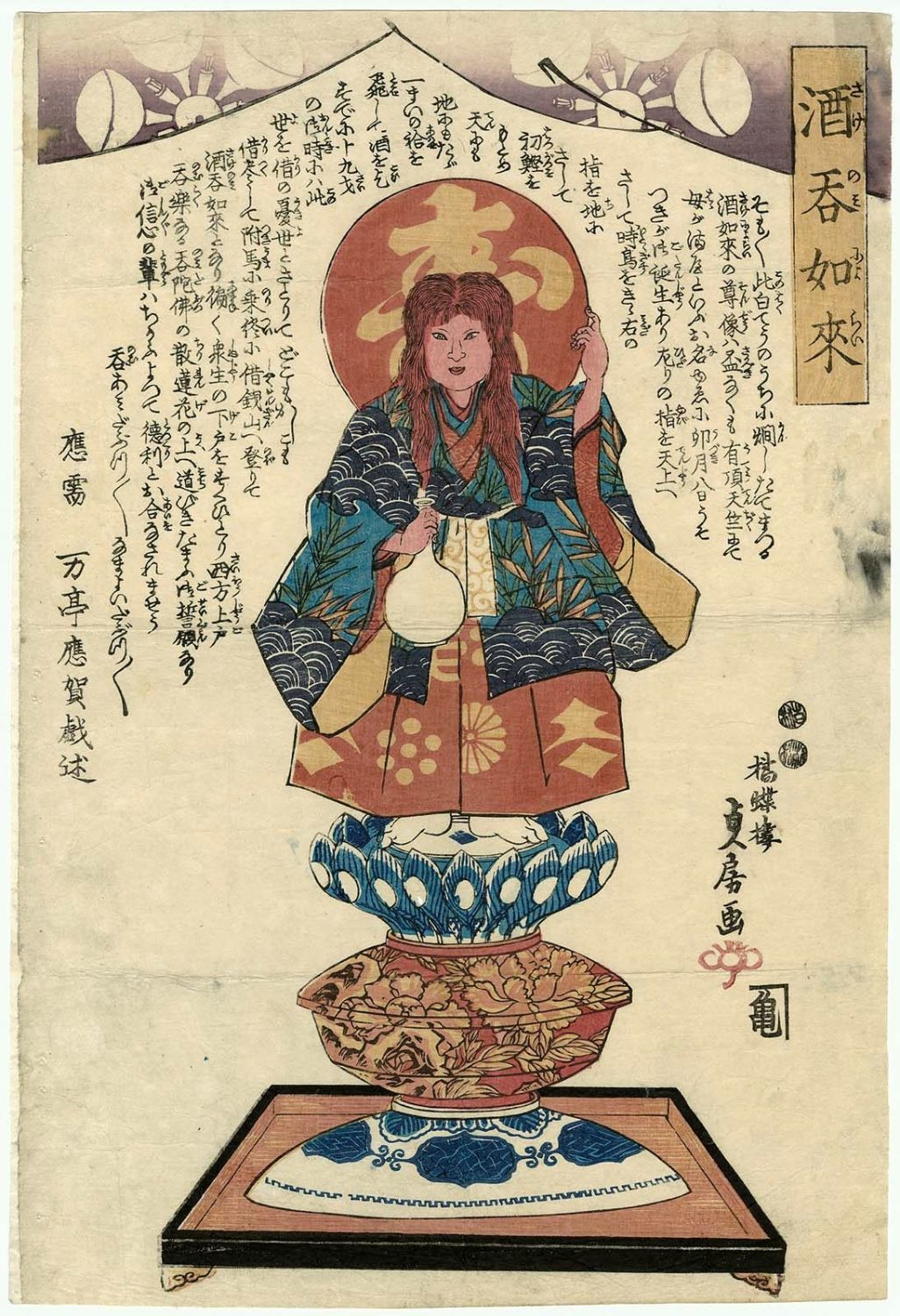
The Buddha of Sake Drinking (Sakenomi Nyorai)
酒呑如来
1847-52
Woodblock print (nishiki-e); ink and color on paper
Frequently Asked Questions
Acrobats was created by Utagawa Sadafusa (歌川貞房) in 1847-52.