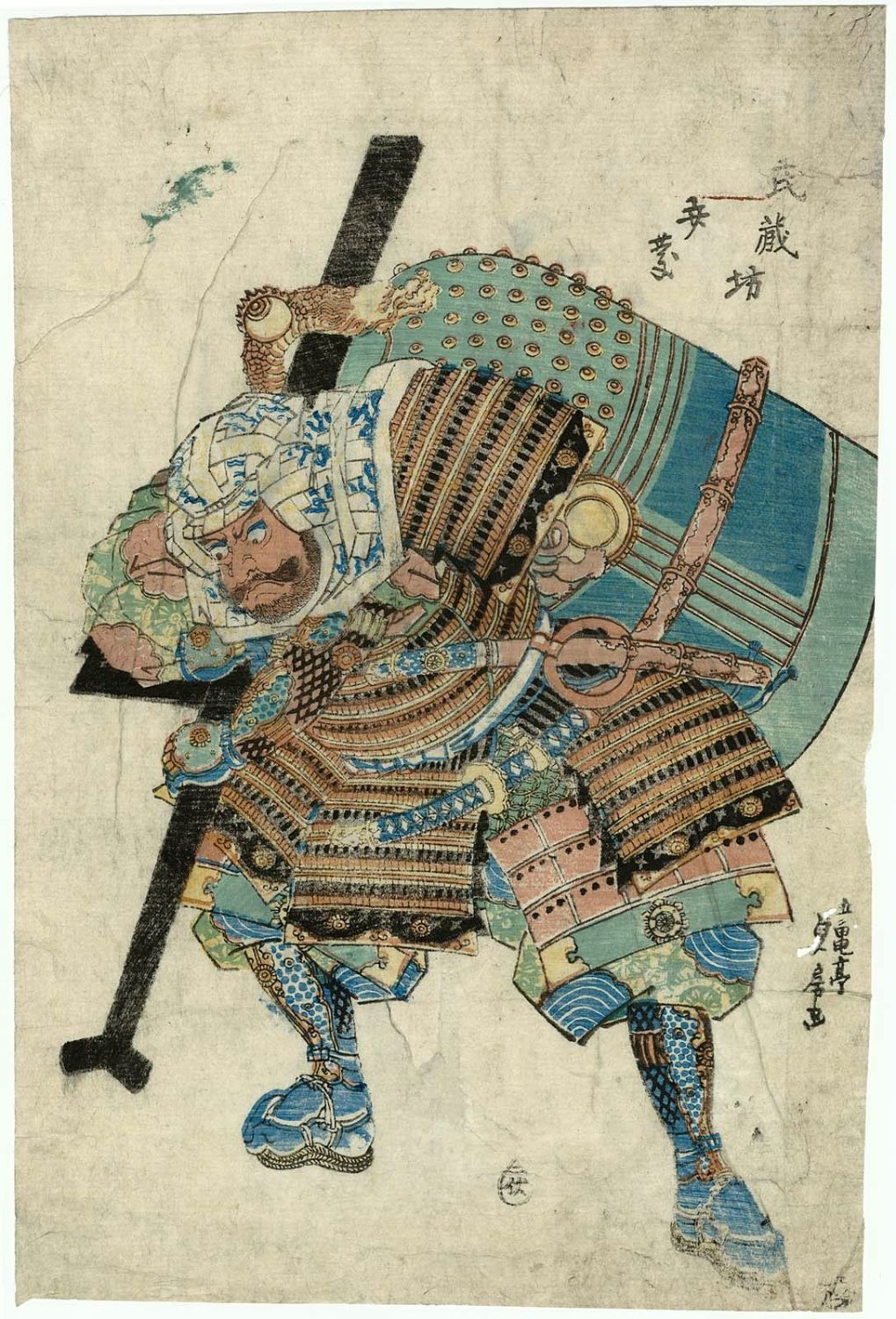
Musashibō Benkei
武蔵坊弁慶
- Date:
- 1830
- Medium:
- Woodblock print (nishiki-e); ink and color on paper
- Source:
- Museum of Fine Arts, Boston
Description
This 1830 woodblock print by Utagawa Sadafusa, held by the Museum of Fine Arts Boston, depicts the legendary warrior-monk Musashibō Benkei, the most beloved figure of medieval Japanese heroic legend after his master Minamoto no Yoshitsune. Benkei was a gigantic sōhei (warrior monk) of the late twelfth century who, according to the medieval romance the Heiji monogatari and the no and kabuki plays that descended from it, was defeated in single combat on the Gojō Bridge in Kyoto by the young Yoshitsune and thereafter became his lifelong retainer, fighting beside him through the Genpei War and dying beside him at the siege of Koromogawa in 1189. The Benkei legend supplied Edo theatre, painting, and print culture with a continuous stream of pictorial subjects, including the iconic moment of his defeat on the Gojō Bridge, his pretended pilgrimage costume in the play Ataka (and its kabuki adaptation Kanjinchō), and his final stand at Koromogawa where he died upright with arrows piercing him. Utagawa Sadafusa's print belongs to the musha-e (warrior print) strand of his output, a regular component of Utagawa-school production in the second quarter of the nineteenth century when warrior prints had become commercially important alongside the more established yakusha-e and bijin-ga genres. The dating to 1830 places the print in the early-to-middle period of Sadafusa's career and within the broader rise of musha-e as a distinct genre under the influence of Utagawa Kuniyoshi's celebrated warrior series of the late 1820s and 1830s. The print is preserved in the William Sturgis Bigelow collection at the Museum of Fine Arts Boston.
More Prints by Utagawa Sadafusa
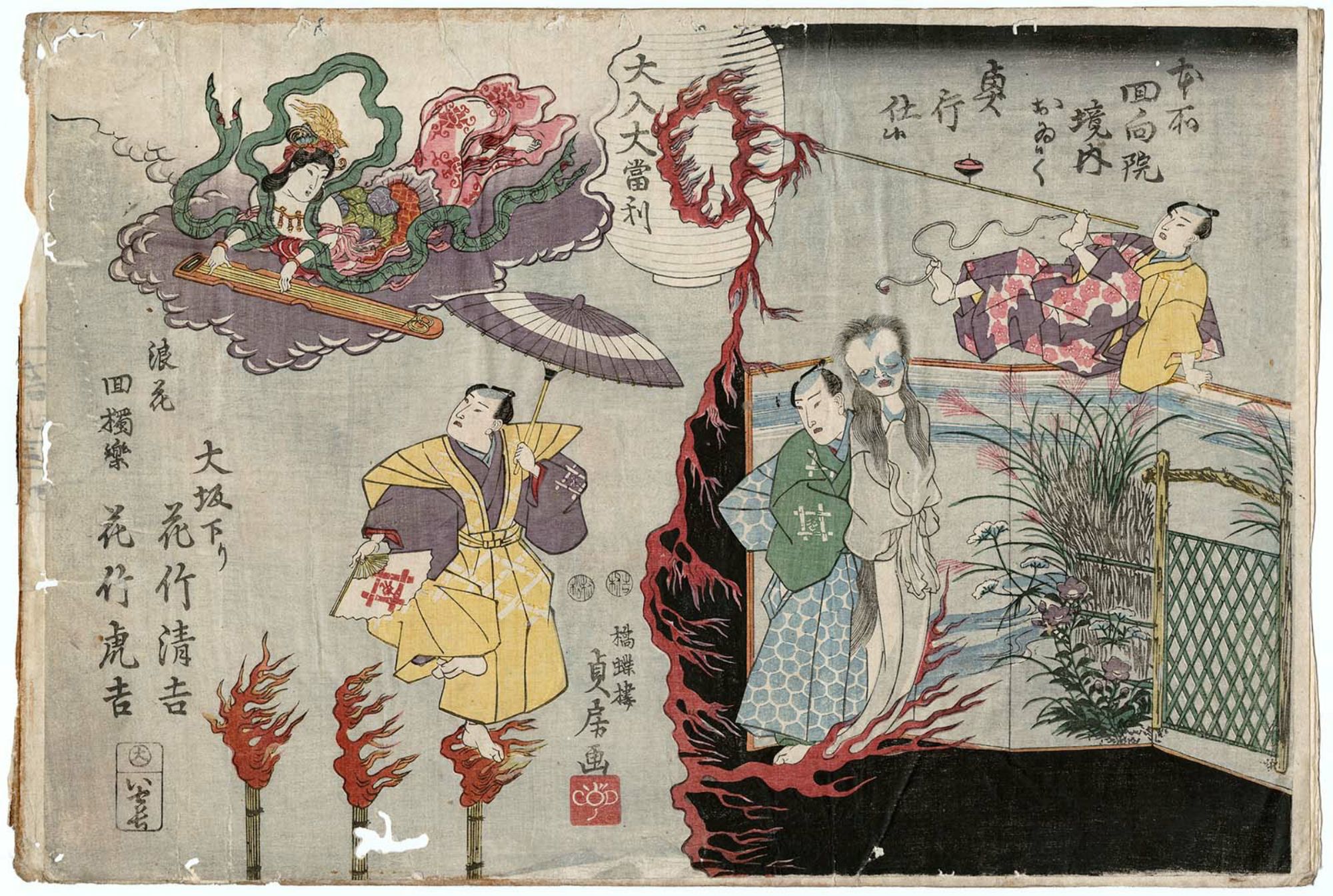
Acrobats
1847-52
Woodblock print (nishiki-e); ink and color on paper
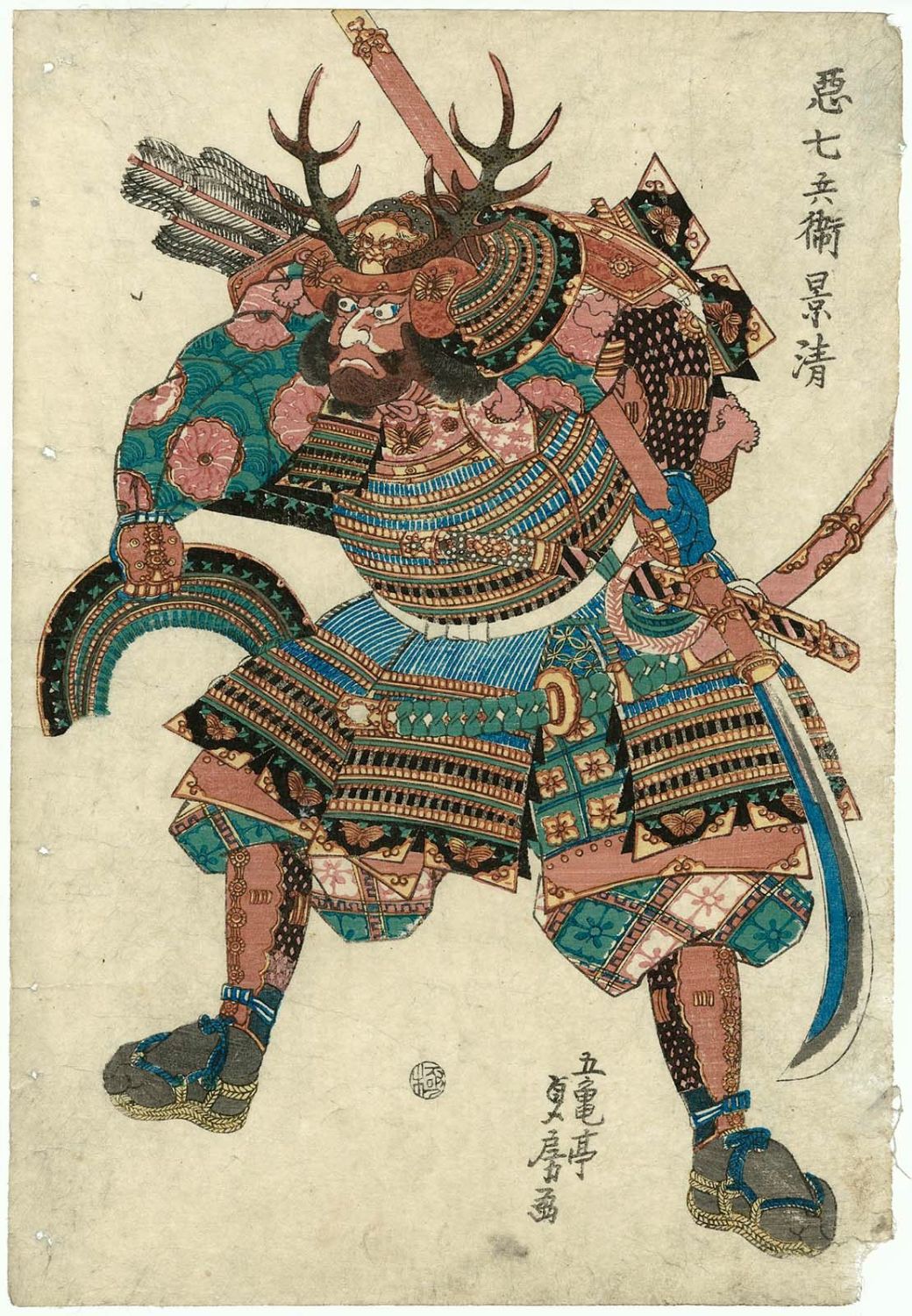
Akushichibyōe Kagekiyo
悪七兵衛景清
1830
Woodblock print (nishiki-e); ink and color on paper
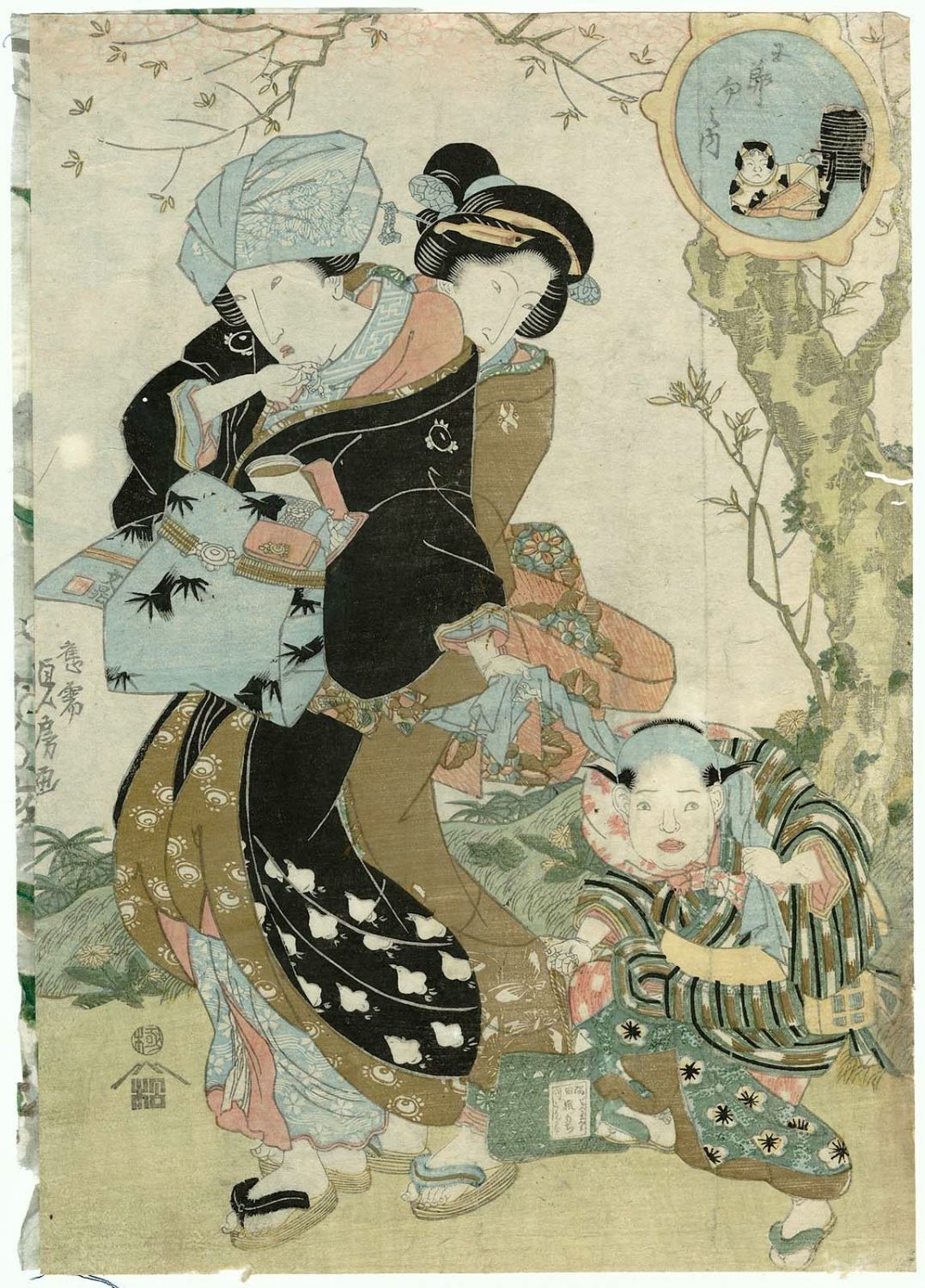
Third month, Go Sekku no uchi
五節句之内 三月
Edo period, c. 1830s-1840s
Woodblock print (nishiki-e); ink and color on paper
The Buddha of Sake Drinking (Sakenomi Nyorai)
酒呑如来
1847-52
Woodblock print (nishiki-e); ink and color on paper
Frequently Asked Questions
Musashibō Benkei (武蔵坊弁慶) was created by Utagawa Sadafusa (歌川貞房) in 1830.