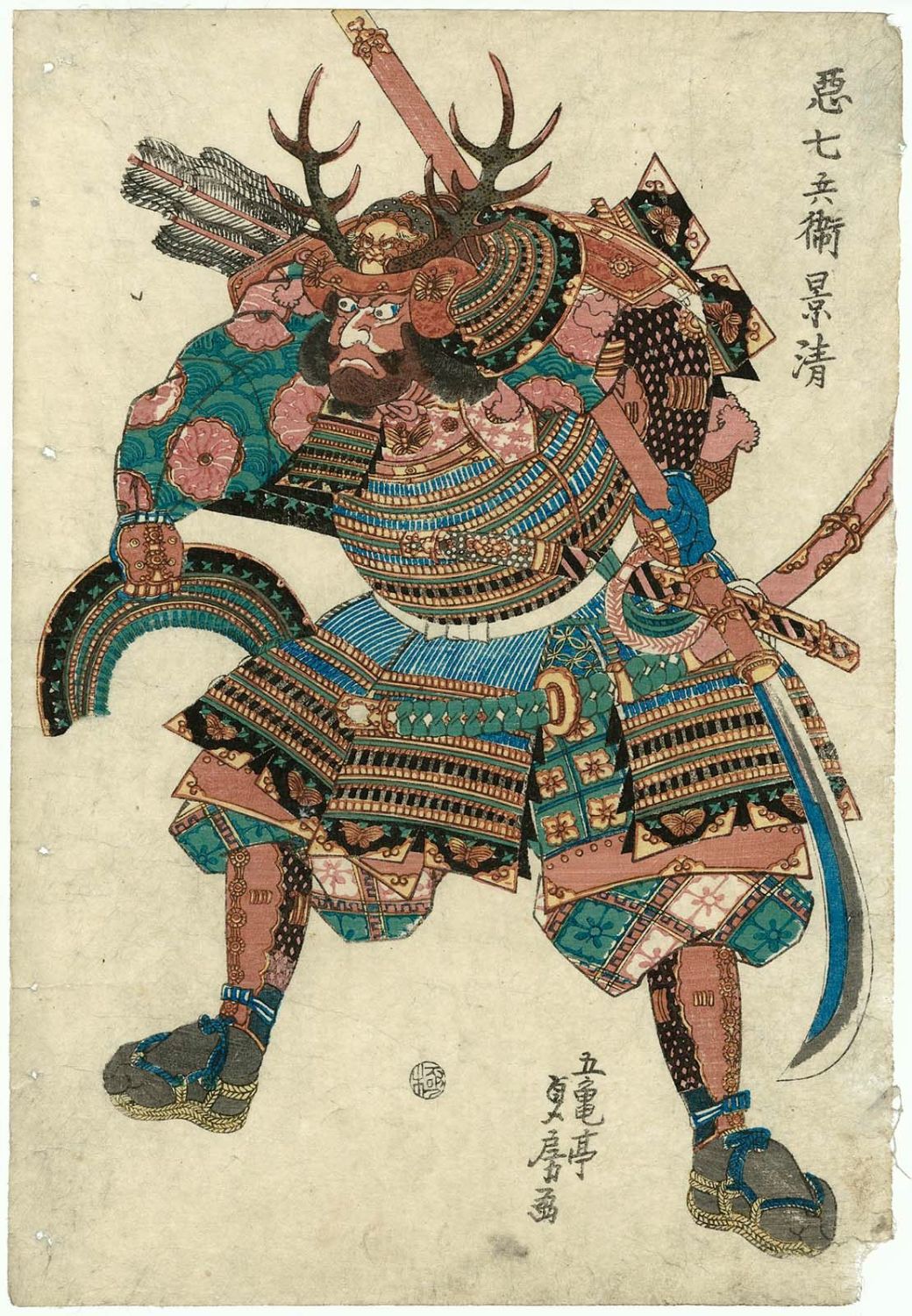
Akushichibyōe Kagekiyo
悪七兵衛景清
- Date:
- 1830
- Medium:
- Woodblock print (nishiki-e); ink and color on paper
- Source:
- Museum of Fine Arts, Boston
Description
Utagawa Sadafusa portrays the celebrated Taira warrior Akushichibyōe Kagekiyo in this 1830 woodblock print held by the Museum of Fine Arts Boston. Kagekiyo, also known as Taira no Kagekiyo, was one of the major fighting men of the Heike clan during the Genpei War of 1180-1185, the civil conflict that destroyed the Taira and brought the Minamoto to power. His epithet Akushichibyōe (literally 'evil seventh' Hyōe, a court rank) reflects the medieval characterization of Kagekiyo as a particularly fierce and indomitable warrior, and after the final Taira defeat at the battle of Dan-no-ura he became, in legend, a sort of unrepentant ronin who survived in hiding and continued to plot against the Minamoto victors. The figure of Kagekiyo became central to the medieval no play that bears his name, in which he appears as a blind beggar haunted by his lost glory, and his story was reworked across kabuki adaptations through the Edo period. The Kagekiyo subject became one of the standard musha-e (warrior print) topics across the Utagawa school in the early nineteenth century, with multiple designers including Kuniyoshi, Kunisada, and their pupils contributing prints of the warrior in various dramatic moments. Sadafusa's 1830 print belongs to the early-career musha-e production through which a Utagawa-school designer of his generation participated in the broader expansion of the warrior-print genre. The print is held in the William Sturgis Bigelow collection at the MFA Boston, alongside several other 1830 prints by Sadafusa.
More Prints by Utagawa Sadafusa
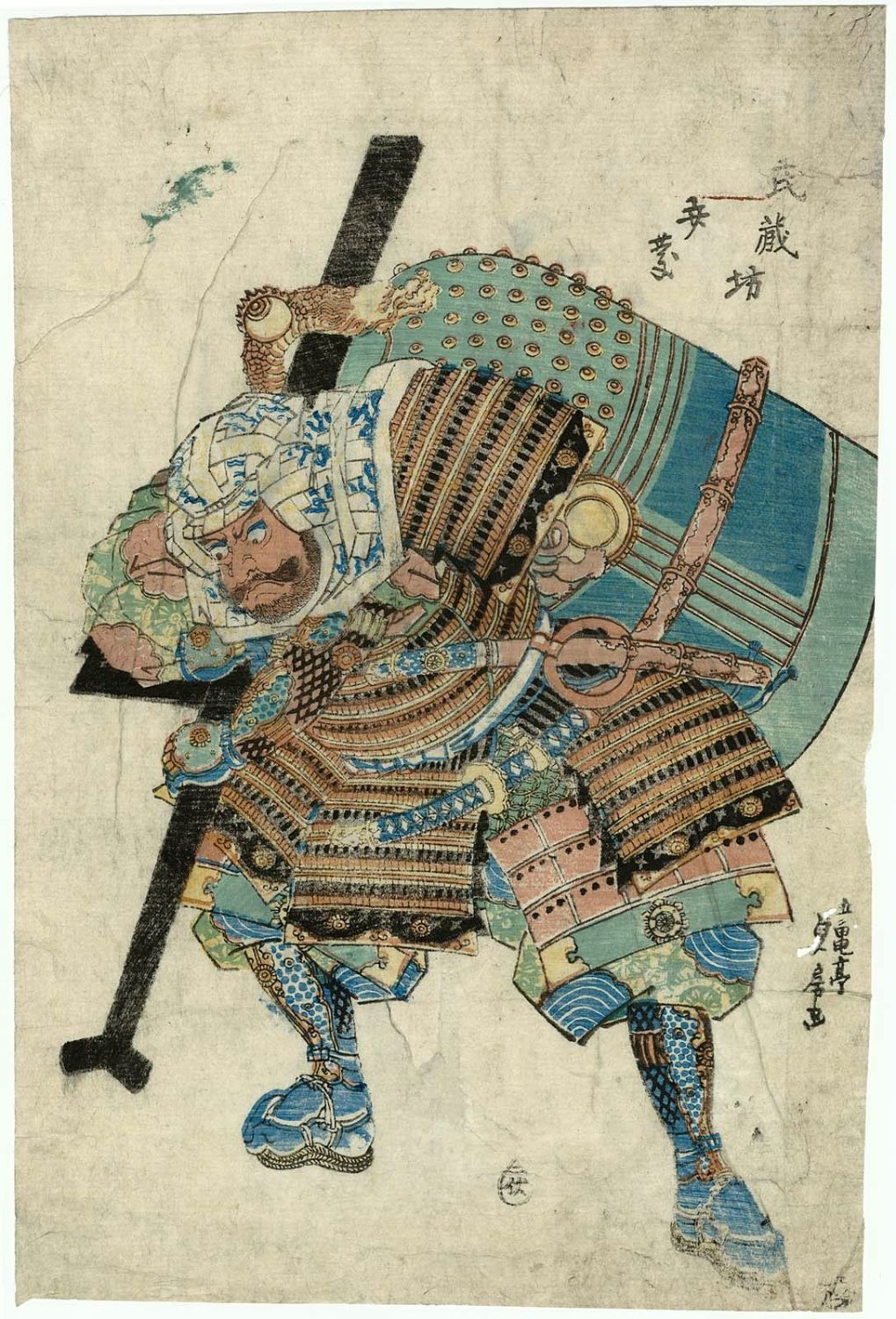
Musashibō Benkei
武蔵坊弁慶
1830
Woodblock print (nishiki-e); ink and color on paper
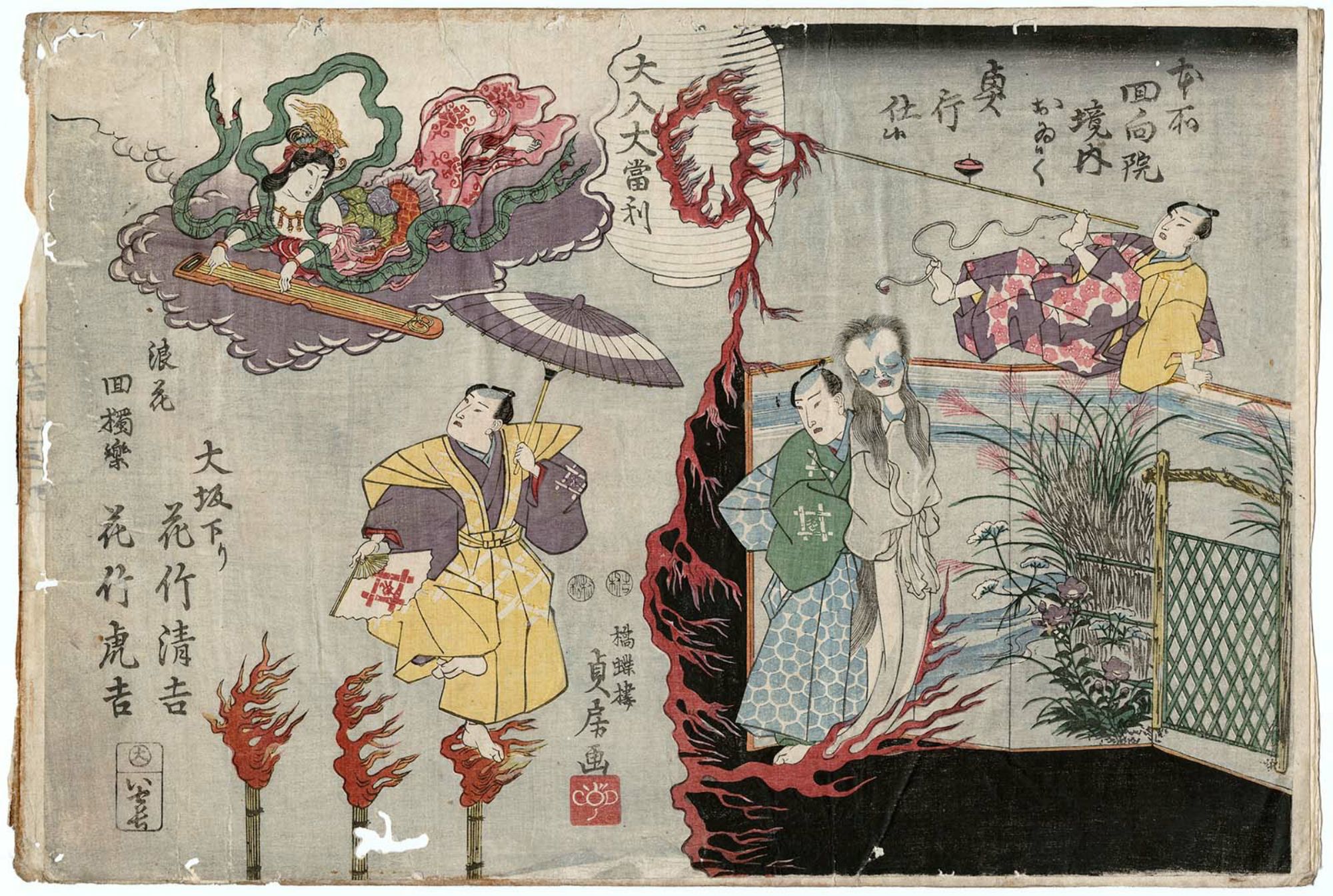
Acrobats
1847-52
Woodblock print (nishiki-e); ink and color on paper
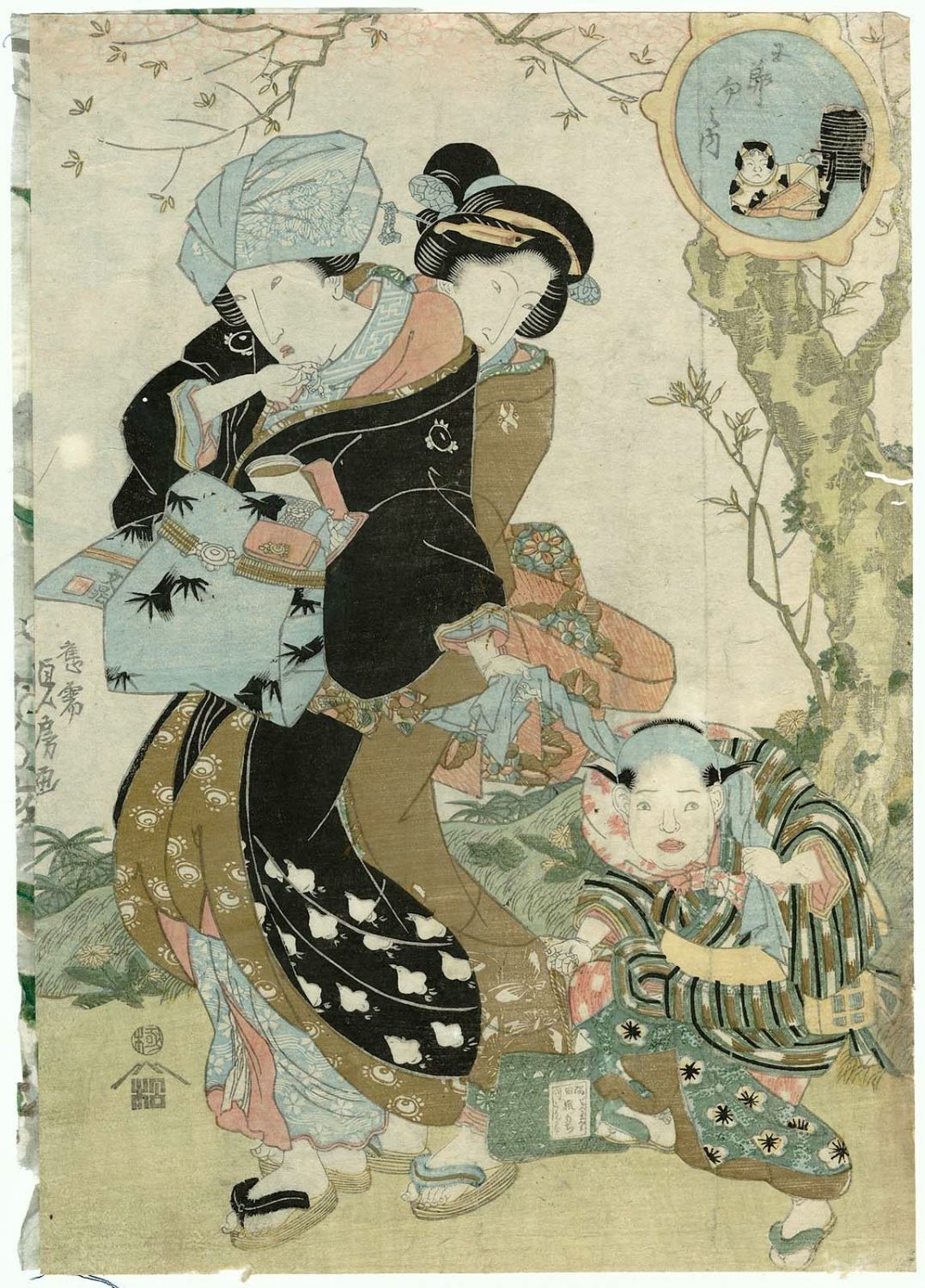
Third month, Go Sekku no uchi
五節句之内 三月
Edo period, c. 1830s-1840s
Woodblock print (nishiki-e); ink and color on paper
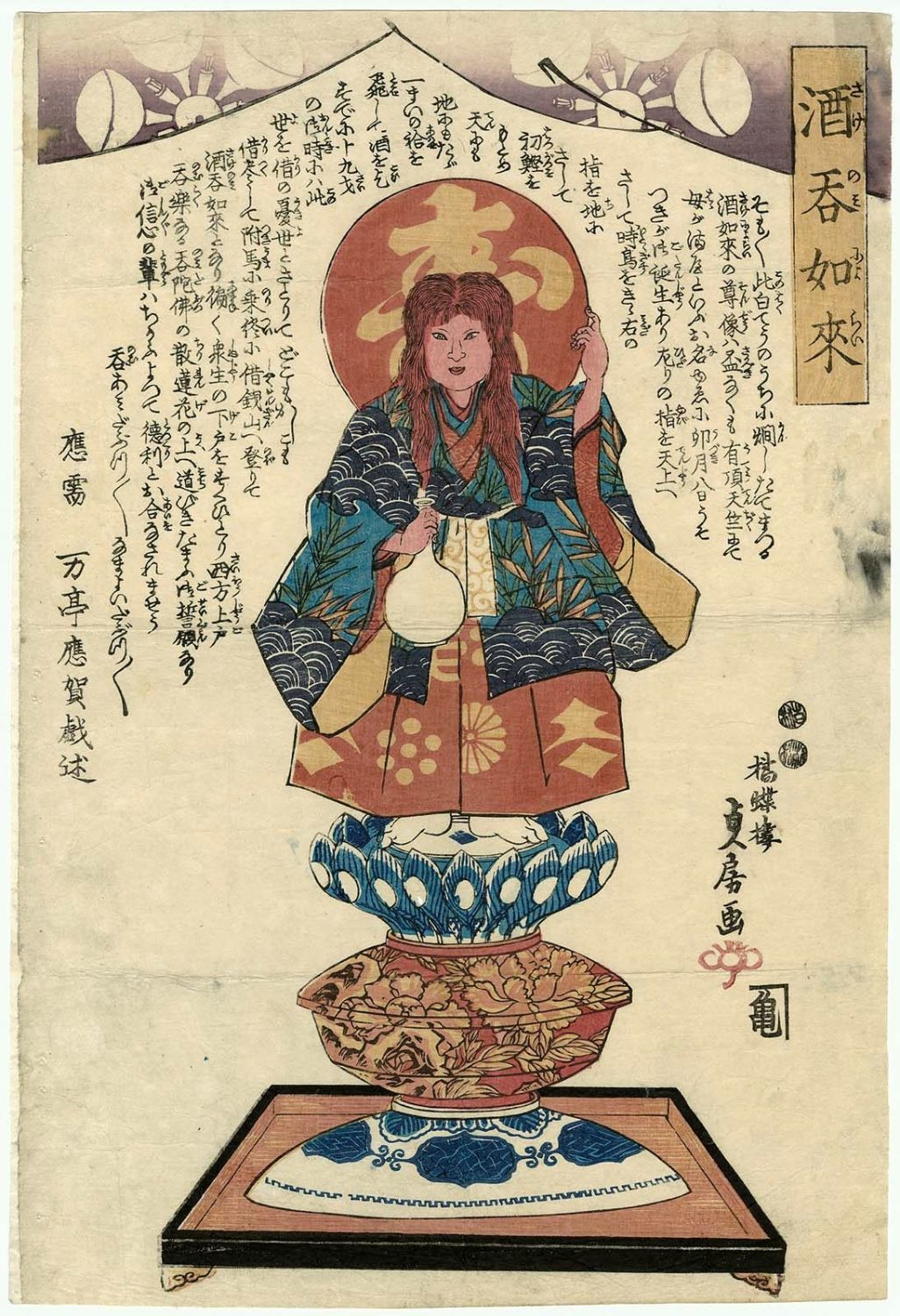
The Buddha of Sake Drinking (Sakenomi Nyorai)
酒呑如来
1847-52
Woodblock print (nishiki-e); ink and color on paper
Frequently Asked Questions
Akushichibyōe Kagekiyo (悪七兵衛景清) was created by Utagawa Sadafusa (歌川貞房) in 1830.