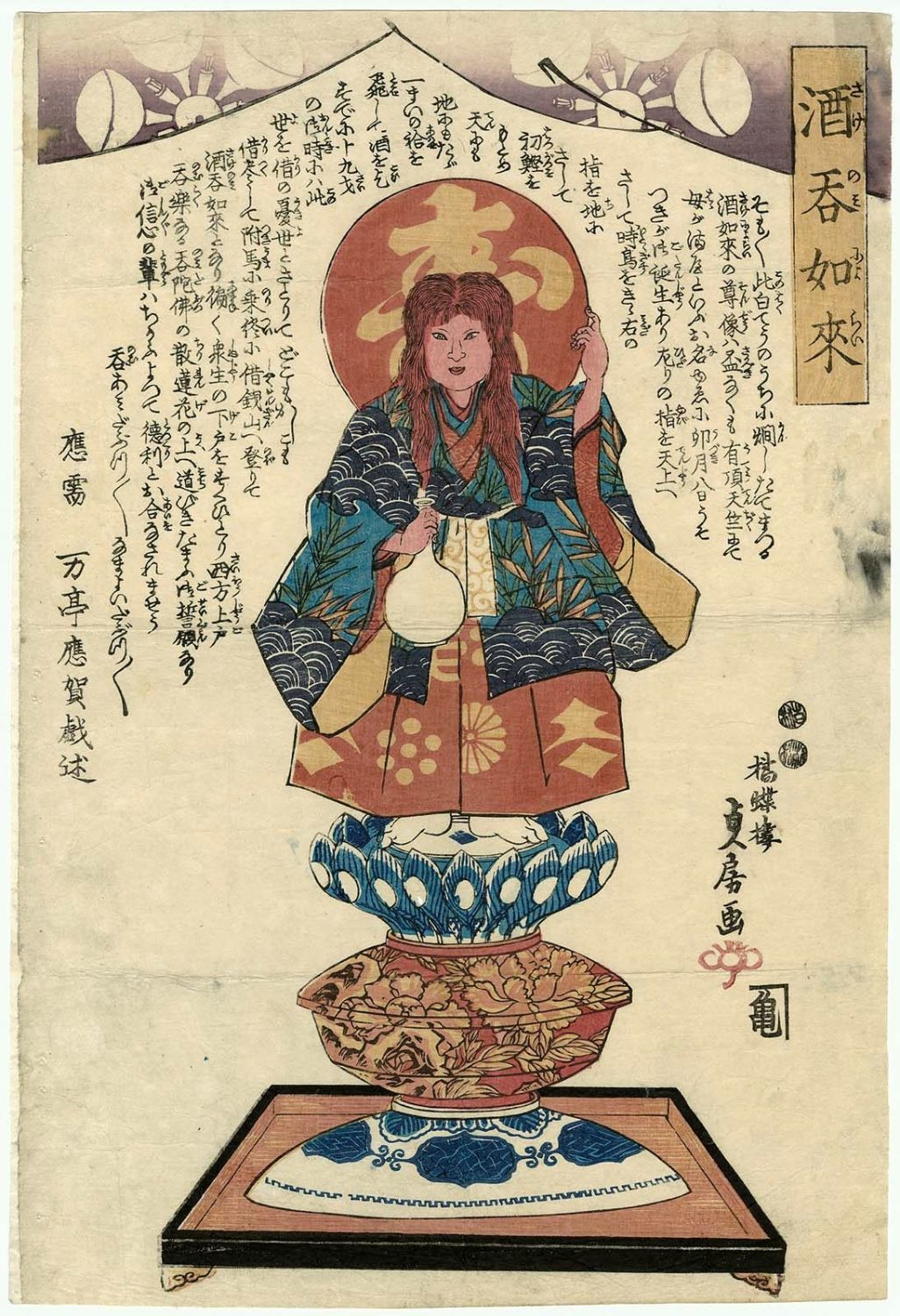
The Buddha of Sake Drinking (Sakenomi Nyorai)
酒呑如来
- Date:
- 1847-52
- Medium:
- Woodblock print (nishiki-e); ink and color on paper
- Source:
- Museum of Fine Arts, Boston
Description
This woodblock print by Utagawa Sadafusa, held by the Museum of Fine Arts Boston and dated to approximately 1847-1852, depicts a satirical-religious subject identified in the title as Sakenomi Nyorai, 'the Buddha of Sake Drinking.' The image belongs to a recurring genre of late-Edo ukiyo-e in which the iconography of Buddhist deities was wittily adapted to mundane and often comic subjects from contemporary urban life, producing what scholars call mitate Buddhist prints. In this idiom, the formal compositional conventions of a nyorai (a fully enlightened buddha figure), with its serene seated pose, lotus throne, and aureole, were redeployed to portray the dedicated drinker, gourmand, fashionable woman, or kabuki actor as the central object of devotion in a mock-religious composition. The substitution was both irreverent and affectionate, expressing the Edo townsman's cheerful comfort with the appropriation of religious imagery for everyday humor while simultaneously elevating the drinking culture of the chōnin class to the dignity of religious iconography. Sadafusa's Sakenomi Nyorai contributes to this strand of late-Edo print humor, dated by the museum to the late 1840s or early 1850s, the same period as several of his calendrical and acrobat prints. The MFA Boston holding is part of the William Sturgis Bigelow collection, and the print represents the comic-religious strand of Sadafusa's mature practice alongside his more conventional yakusha-e, bijin-ga, and musha-e production.
More Prints by Utagawa Sadafusa
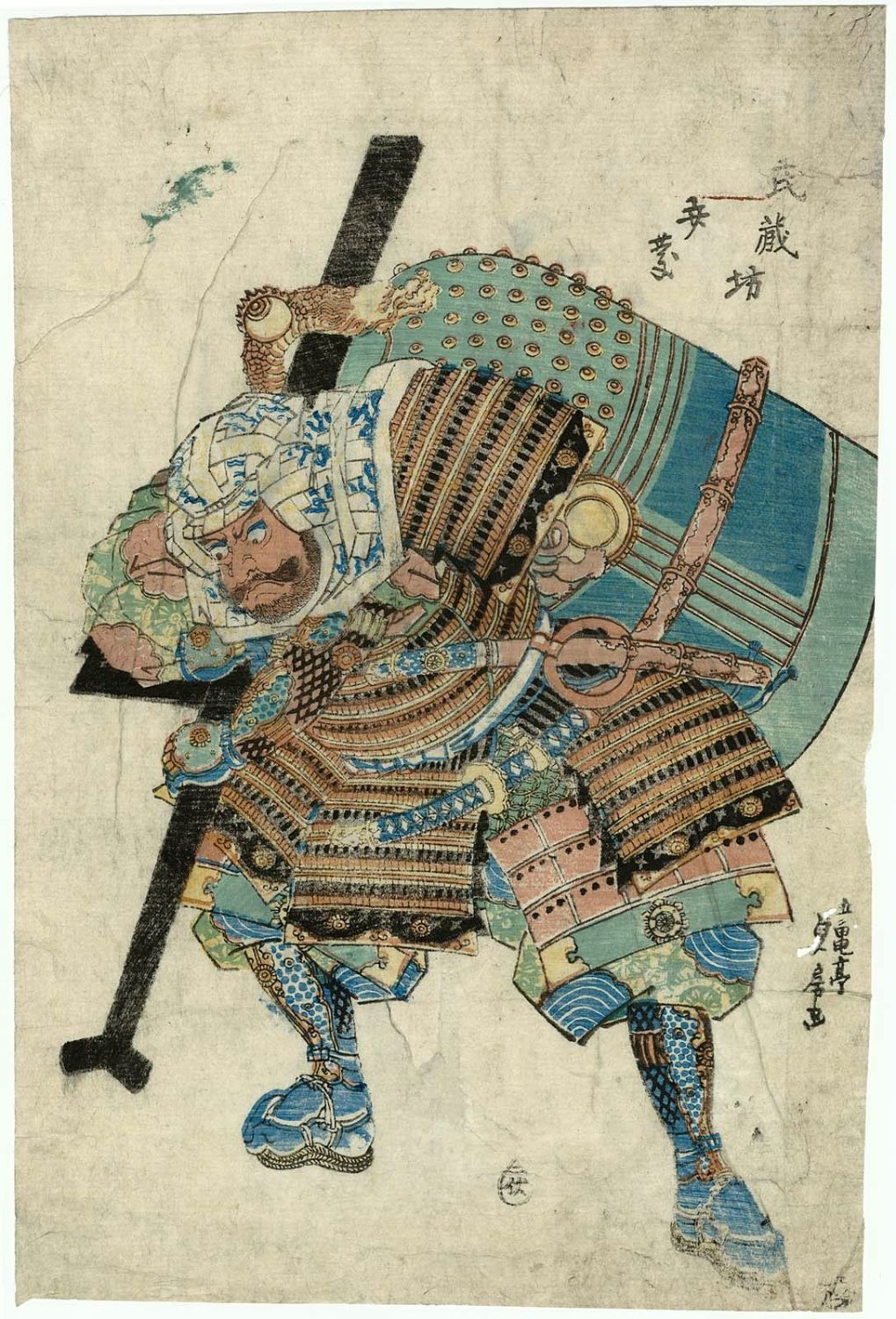
Musashibō Benkei
武蔵坊弁慶
1830
Woodblock print (nishiki-e); ink and color on paper
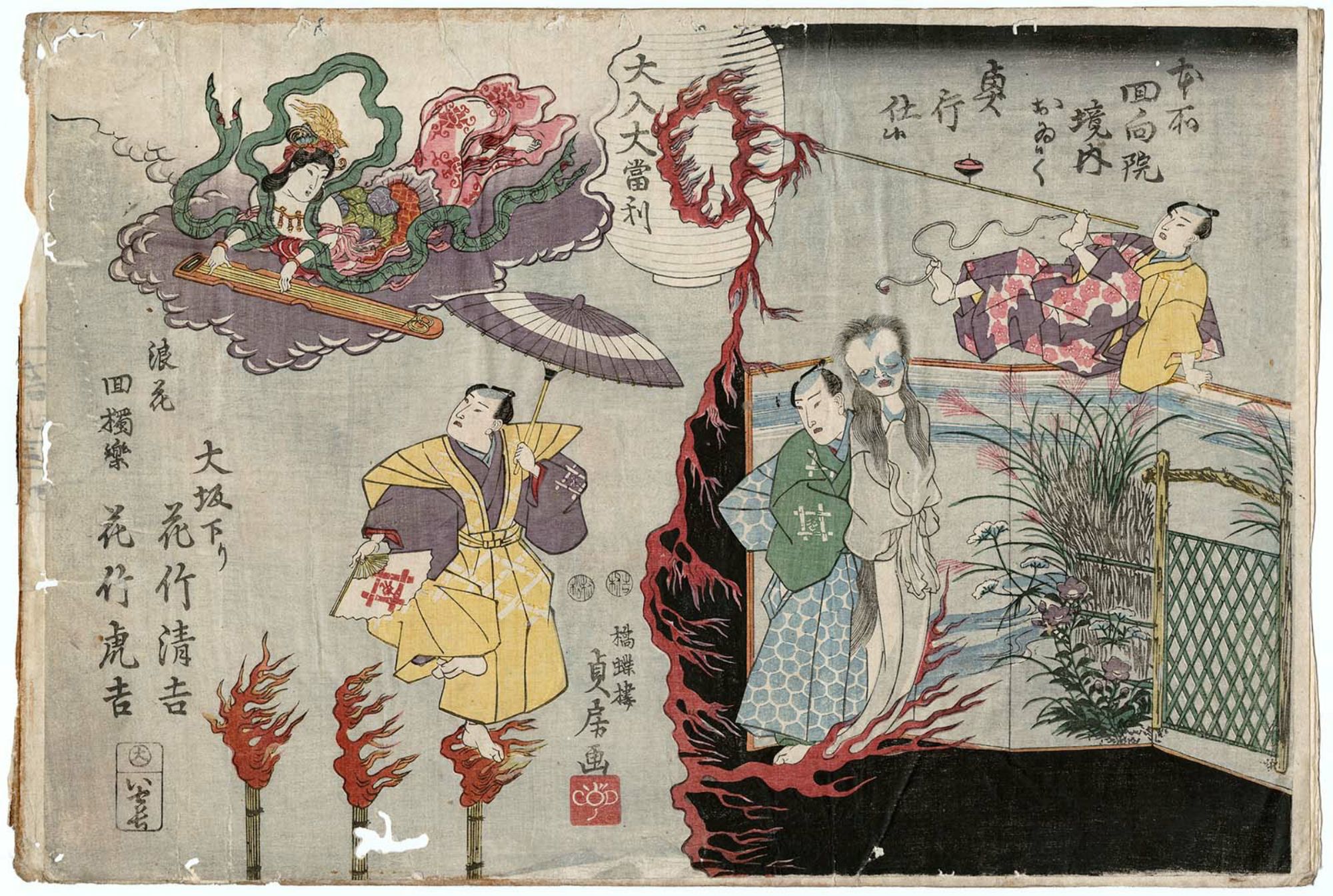
Acrobats
1847-52
Woodblock print (nishiki-e); ink and color on paper
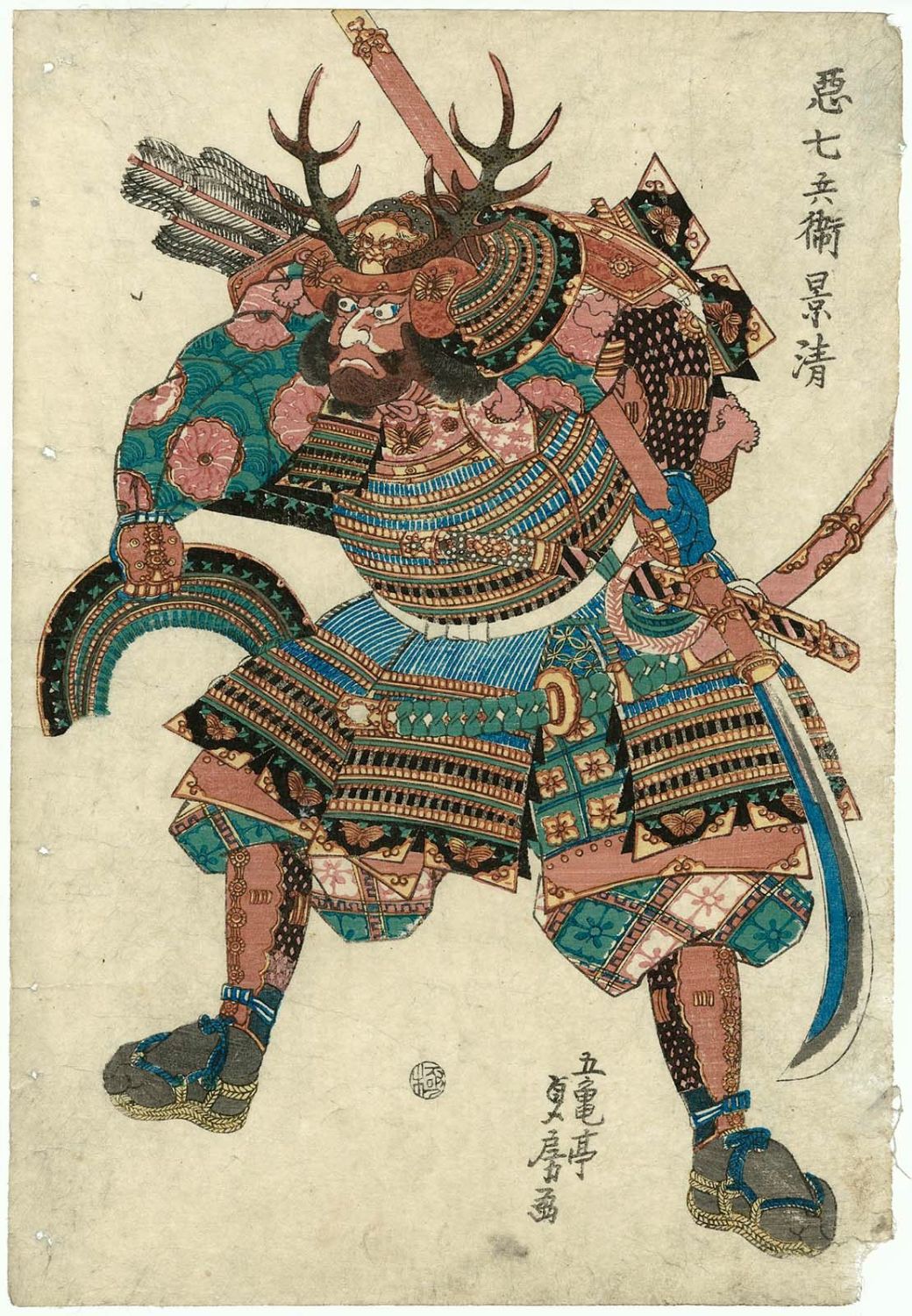
Akushichibyōe Kagekiyo
悪七兵衛景清
1830
Woodblock print (nishiki-e); ink and color on paper
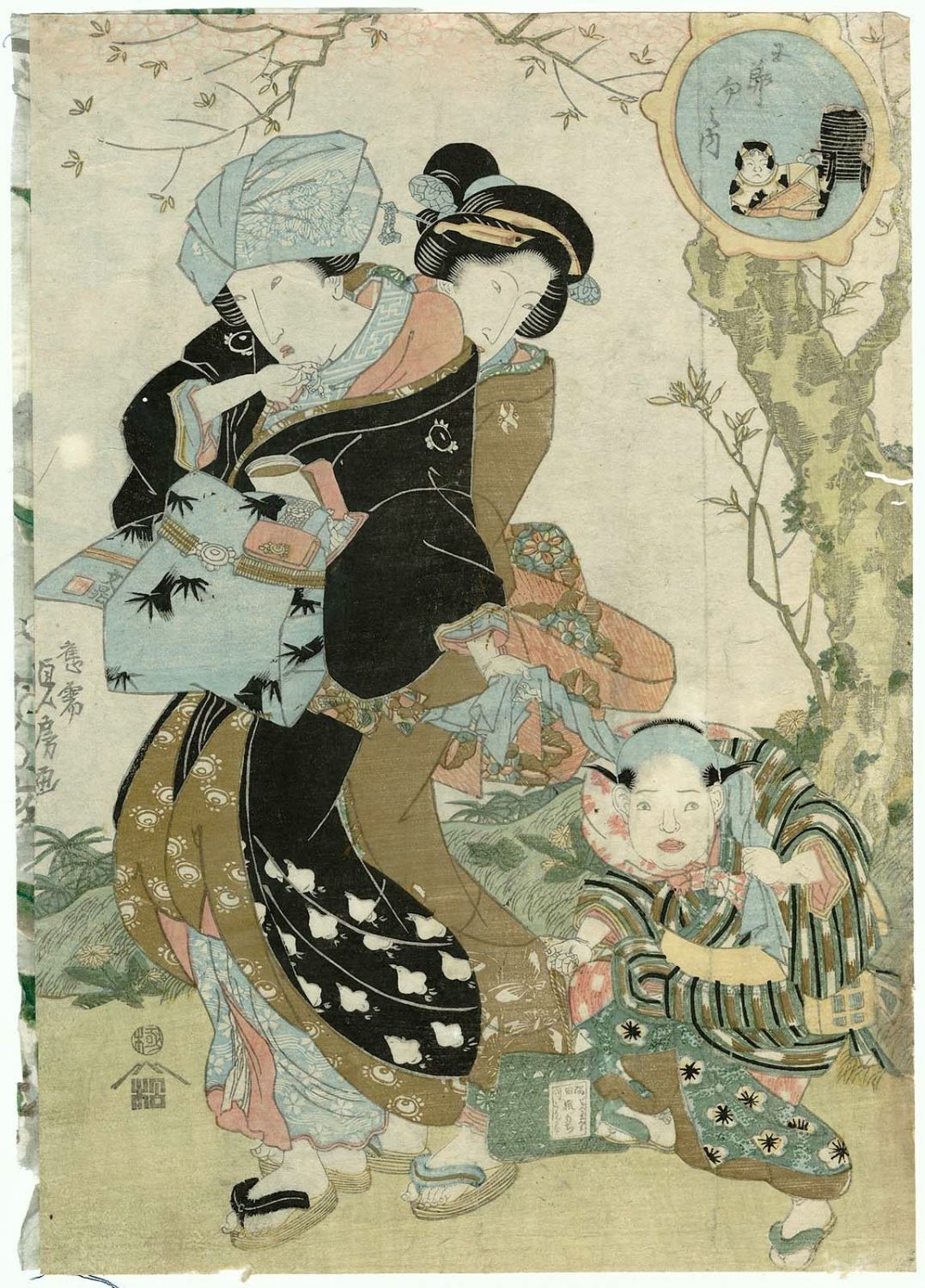
Third month, Go Sekku no uchi
五節句之内 三月
Edo period, c. 1830s-1840s
Woodblock print (nishiki-e); ink and color on paper
Frequently Asked Questions
The Buddha of Sake Drinking (Sakenomi Nyorai) (酒呑如来) was created by Utagawa Sadafusa (歌川貞房) in 1847-52.