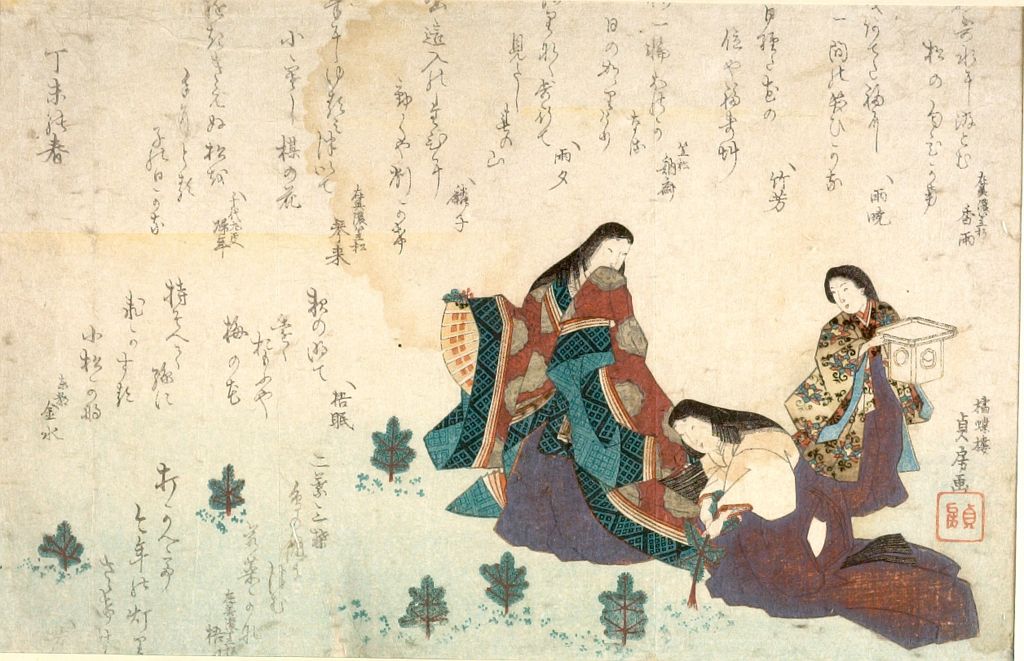
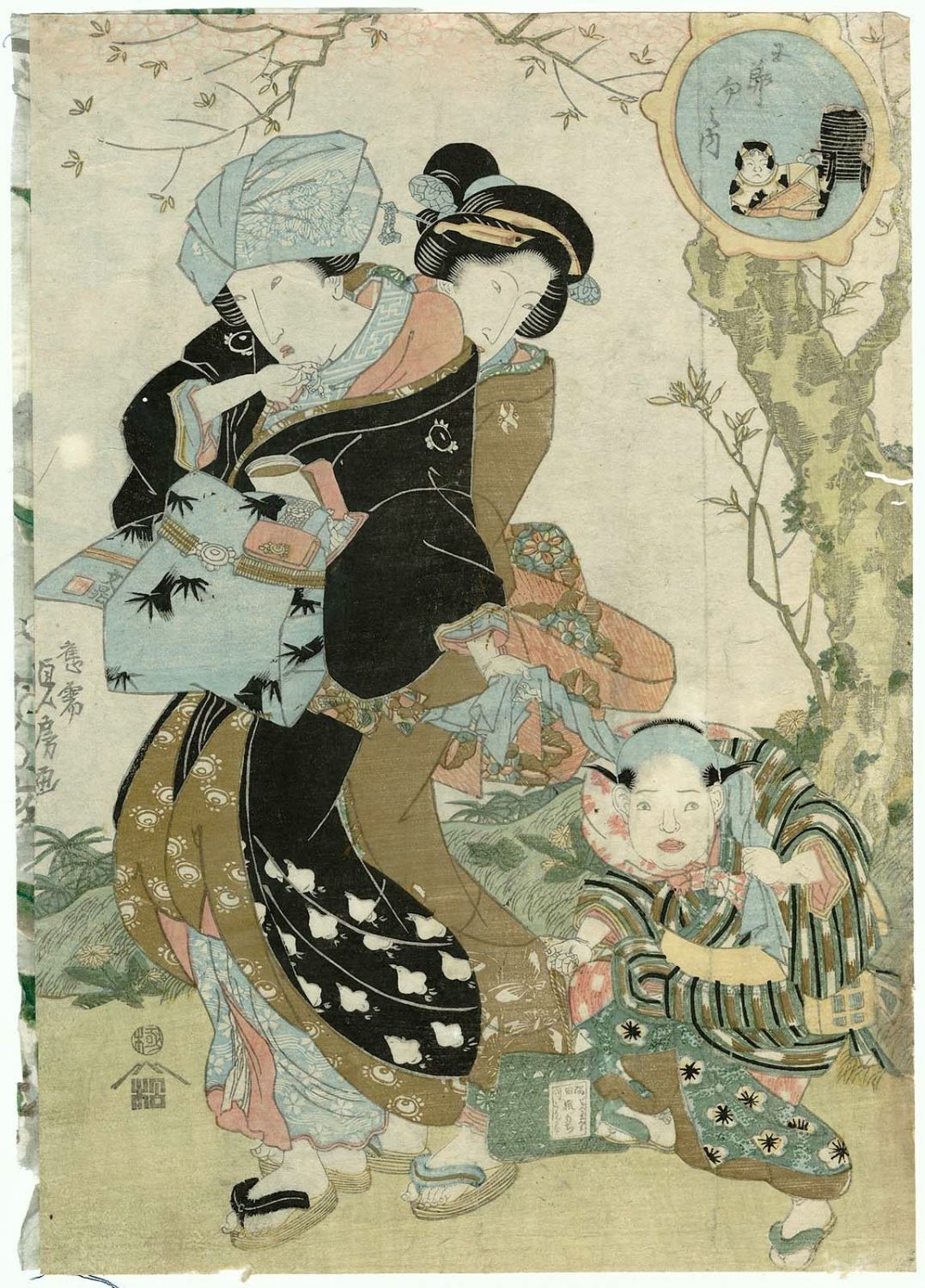
Princess and Attendants Gathering Young Pines
- Date:
- Edo period, 1847
- Medium:
- Woodblock print (nishiki-e); ink and color on paper
- Source:
- Harvard Art Museums
Description
Utagawa Sadafusa's 1847 woodblock print Princess and Attendants Gathering Young Pines, held by the Harvard Art Museums, depicts an elegant aristocratic scene of pine-gathering, the traditional New Year observance known as ne no hi no asobi (Day of the Rat excursion) or matsubiki (pine-pulling). The custom, descended from Heian-period courtly practice and recorded in classical literature such as the Genji monogatari, involved gathering small pine saplings on the first Day of the Rat of the new year, an act intended to confer longevity on the participants since the pine, evergreen and long-lived, symbolized endurance and prosperity. The princess and her attendants depicted by Sadafusa are dressed in the elaborate twelve-layered jūnihitoe court costumes of Heian aristocratic women, signaling the print's setting in the classical imperial court rather than in Sadafusa's own Edo. Such Heian-court bijin-ga compositions formed a distinct strand of late-Edo Utagawa-school production, satisfying a sustained market for prints that drew on the classical literary heritage while displaying the elaborate decorative textiles of imperial-court costume. The print is signed with both the Sadafusa and Gohyōtei art names, the latter being the auxiliary studio name the artist adopted in the Utagawa-school convention. Held by the Harvard Art Museums under the William S. and John T. Spaulding collection or the comparable Harvard Edo print holdings, the print is dated firmly to 1847 and represents Sadafusa's mature engagement with the classical-bijin idiom in his second decade of independent practice.
More Prints by Utagawa Sadafusa
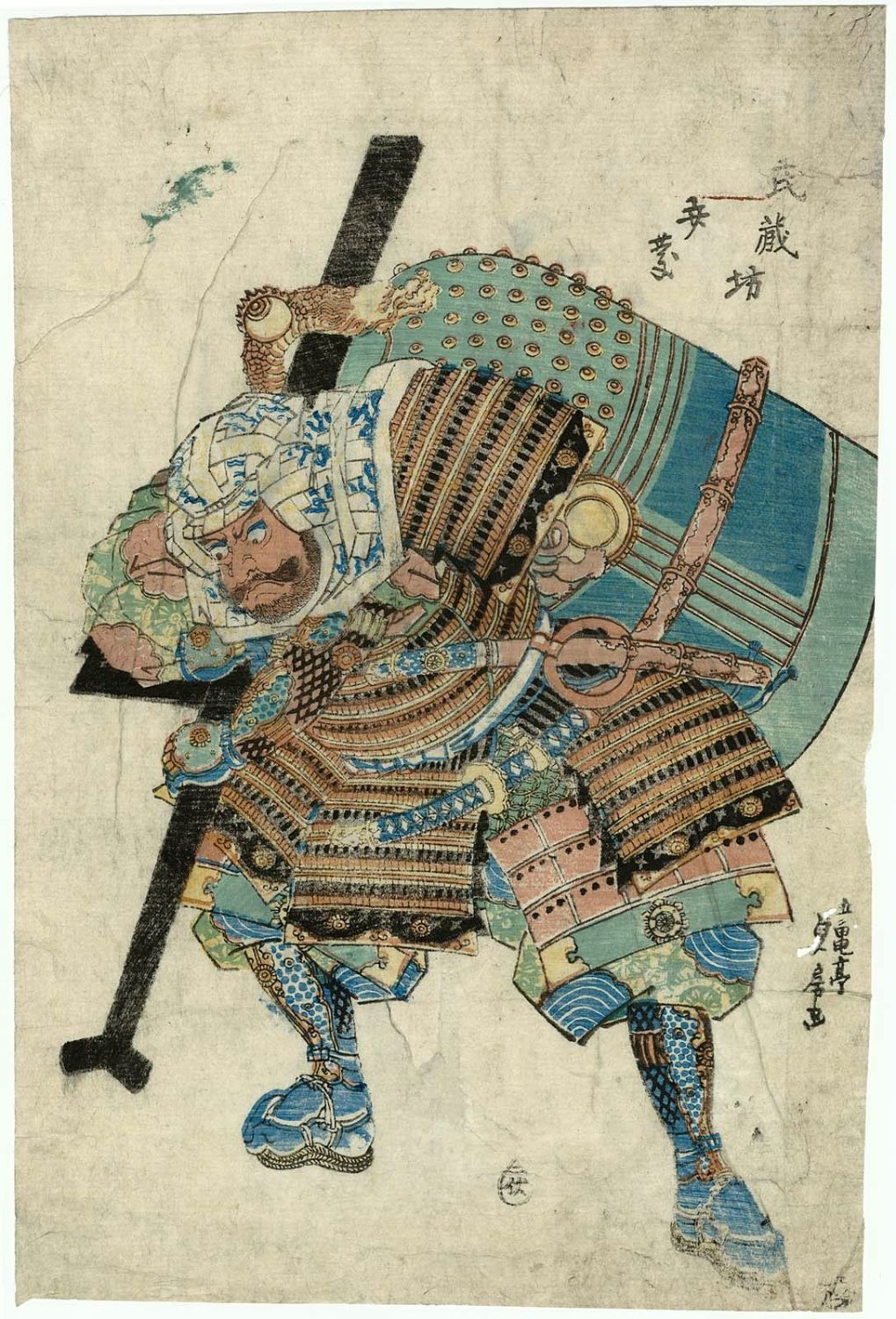
Musashibō Benkei
武蔵坊弁慶
1830
Woodblock print (nishiki-e); ink and color on paper
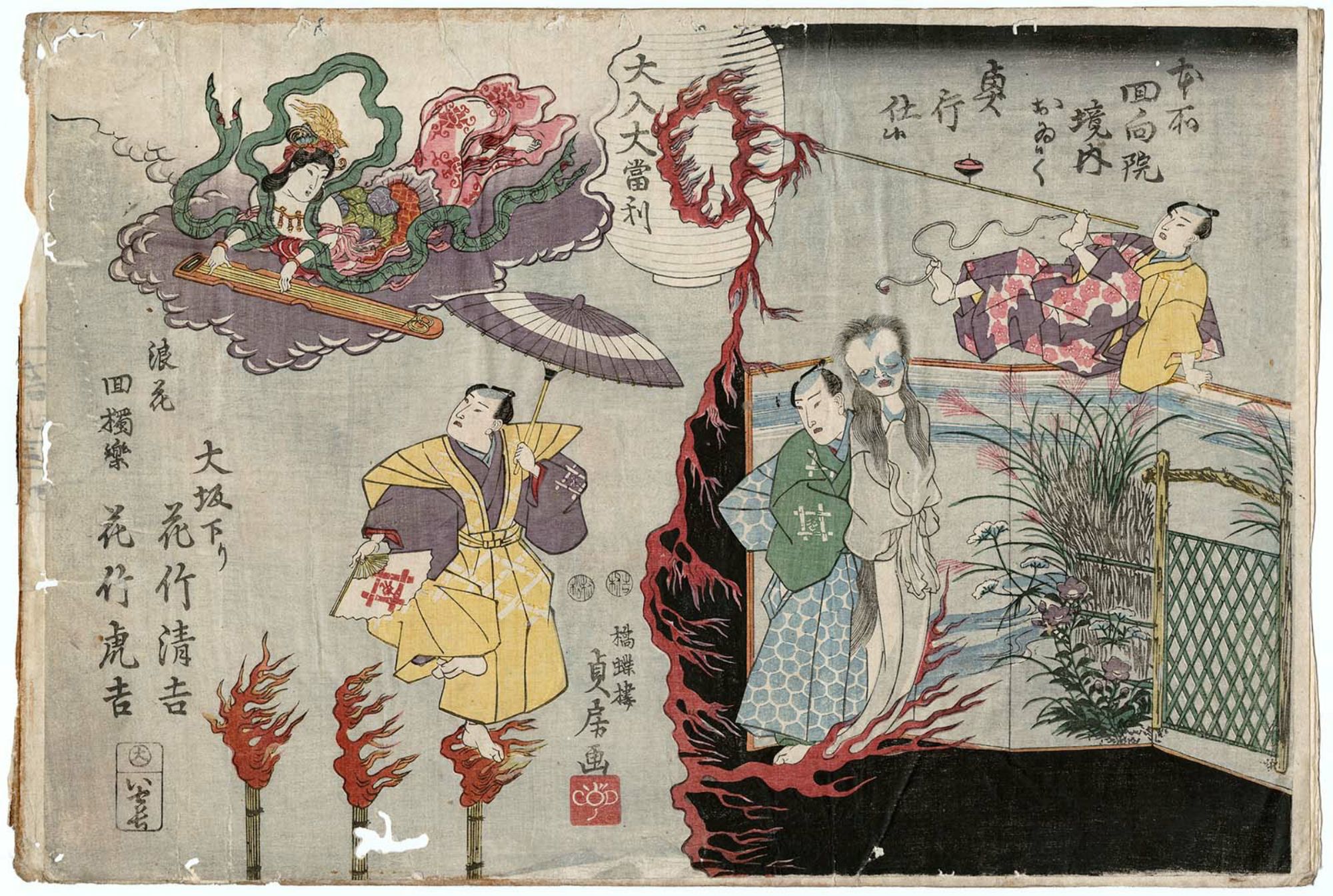
Acrobats
1847-52
Woodblock print (nishiki-e); ink and color on paper
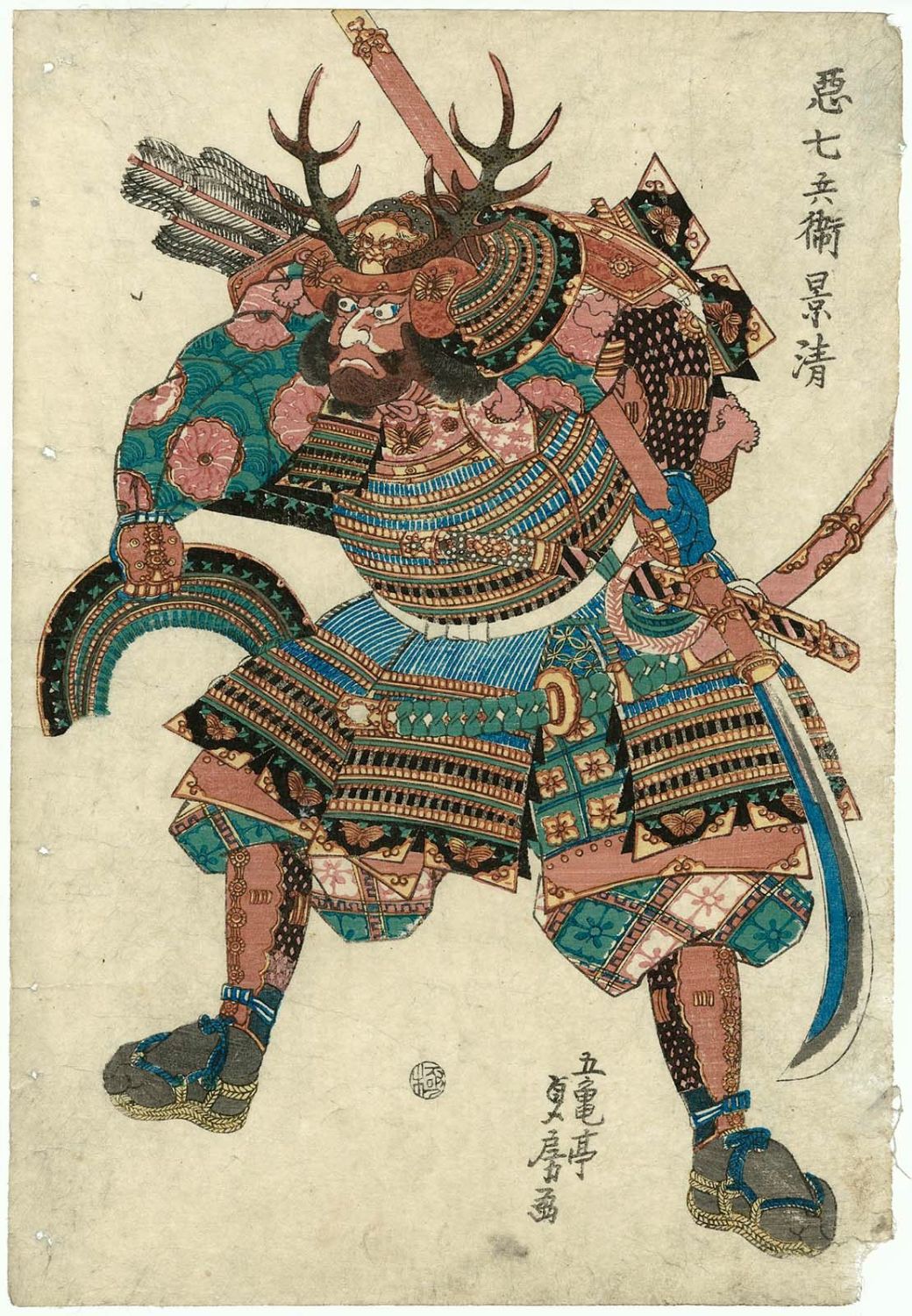
Akushichibyōe Kagekiyo
悪七兵衛景清
1830
Woodblock print (nishiki-e); ink and color on paper
Third month, Go Sekku no uchi
五節句之内 三月
Edo period, c. 1830s-1840s
Woodblock print (nishiki-e); ink and color on paper
Frequently Asked Questions
Princess and Attendants Gathering Young Pines was created by Utagawa Sadafusa (歌川貞房) in Edo period, 1847.