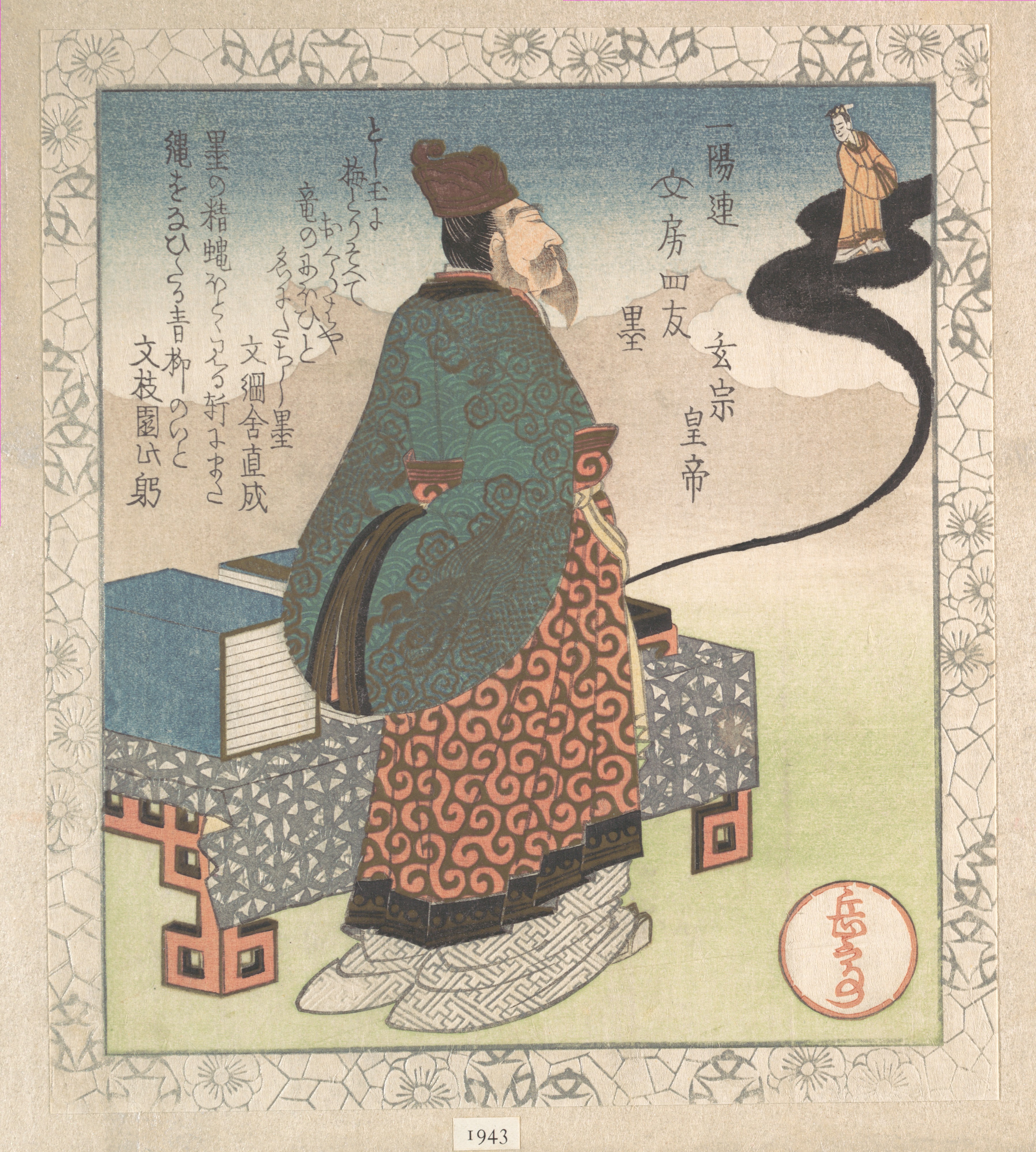
Emperor Xuanzong (Japanese: Gensō) and Daoist Magician Lo Gongyuan Arising from an Inkstone; “Ink” (Sumi), from Four Friends of the Writing Table for the Ichiyō Poetry Circle (Ichiyō-ren Bunbō shiyū) From the Spring Rain Collection (Harusame shū), vol. 1
- Date:
- ca. 1827
- Medium:
- Woodblock print (surimono); ink and color on paper
- Source:
- Metropolitan Museum of Art
Description
Yashima Gakutei created this richly imagined surimono in 1817 as part of Four Friends of the Writing Table for the Ichiyō Poetry Circle (Ichiyō-ren Bunbō shiyū), a series that personified the brush, inkstone, paper, and ink. The print appears in the Spring Rain Collection (Harusame shū), volume 1, and is preserved by the Metropolitan Museum of Art.
The composition shows the Chinese Tang emperor Xuanzong, known in Japan as Gensō, together with the Daoist magician Lo Gongyuan, the pair conjured upward as if rising from an inkstone in a swirl of mist. The fantastical staging dramatizes the theme of "Ink" (Sumi), one of the four scholarly friends celebrated in the series. The emperor's robes are rendered with patterned brocades and metallic pigments, while Lo Gongyuan's flowing sleeves and the wisps of vapor connecting the two figures emphasize the supernatural moment of materialization.
Gakutei trained in the Hokusai school after studying with Totoya Hokkei, and he draws on Katsushika Hokusai's example of fusing Chinese historical and Daoist subjects with the meticulous craft of Japanese printmaking. The Ichiyō poetry circle, a kyōka group, commissioned this series, and the surimono format allowed for the lavish use of mica, gauffrage, and burnished metallic inks visible across the Metropolitan's impression.
Such privately printed surimono were exchanged among club members at New Year and on special occasions, often paired with verses written by the patrons themselves. Gakutei's choice to literalize the writing-table accessories as eminent historical and legendary personages flatters the literary pretensions of the club while displaying his command of classical East Asian iconography. The print exemplifies how Yashima Gakutei applied Hokusai school design vocabulary to the demanding intellectual play of the surimono tradition.
More Prints by Yashima Gakutei


More Spring Prints

Frequently Asked Questions
Emperor Xuanzong (Japanese: Gensō) and Daoist Magician Lo Gongyuan Arising from an Inkstone; “Ink” (Sumi), from Four Friends of the Writing Table for the Ichiyō Poetry Circle (Ichiyō-ren Bunbō shiyū) From the Spring Rain Collection (Harusame shū), vol. 1 was created by Yashima Gakutei (八島岳亭) in ca. 1827.
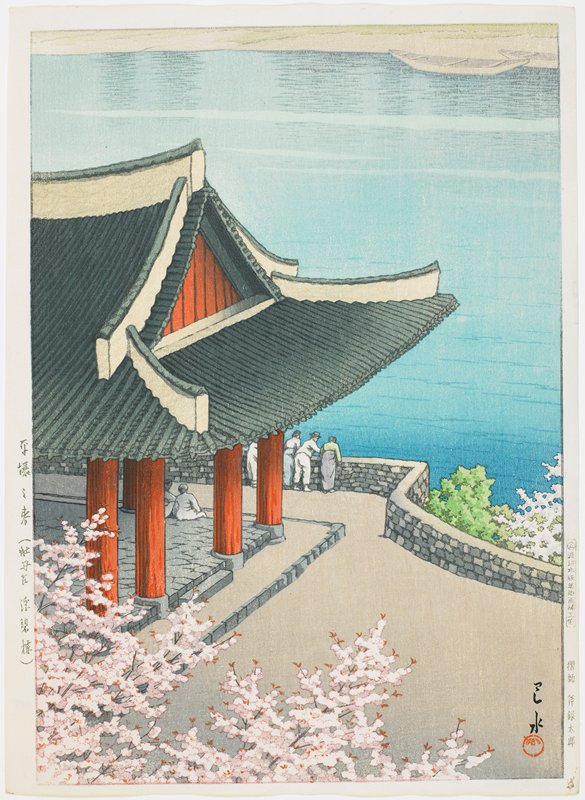
Emperor Xuanzong (Japanese: Gensō) and Daoist Magician Lo Gongyuan Arising from an Inkstone; “Ink” (Sumi), from Four Friends of the Writing Table for the Ichiyō Poetry Circle (Ichiyō-ren Bunbō shiyū) From the Spring Rain Collection (Harusame shū), vol. 1 depicts spring and rain.