Matsushima (松島)
17 prints by 10 artists
About Matsushima
Matsushima is a coastal district in Miyagi Prefecture in the Tohoku region of northeastern Honshu, situated on Matsushima Bay where approximately 260 small pine-covered islands rise from shallow water along the Pacific coast. The bay has been celebrated since at least the medieval period as one of the three most scenic views in Japan, the Nihon Sankei, alongside Amanohashidate on the Sea of Japan coast and Itsukushima (Miyajima) in the Inland Sea, with the designation traditionally attributed to the Edo-period Confucian scholar Hayashi Razan in his Nihon Kokuji Shoki of 1643. The pines for which the bay is named cling to the eroded rock formations of the islands, producing the distinctive silhouettes that have become the defining motif of the region, with successive generations of Pacific storms and tsunamis (including the 2011 Tohoku tsunami which reached the bay but was significantly buffered by the islands) shaping the rocks into their characteristic forms. The Zen monastery of Zuiganji, founded in 828 by Jikaku Daishi Ennin and dramatically rebuilt in 1609 by the Sendai daimyo Date Masamune as the principal funerary temple of his line, stands on the mainland shore facing the bay as one of the great Rinzai institutions of northeastern Japan, with the small island of Godaido (also called Godaido Island) and its small Buddhist temple linked to the shore by a bridge directly offshore from the mainland approach. The Godaido temple is named for the Five Wisdom Kings (Godai Myoo) enshrined within and is one of the most recognizable single buildings in the bay. The poet Matsuo Basho visited Matsushima in 1689 on the journey recorded in his Oku no Hosomichi (The Narrow Road to the Deep North) and famously left no formal poem about the bay because, as legend has it, the scene exceeded his ability to compose, though the haiku attributed to him on the subject (Matsushima ah, ah Matsushima ah, Matsushima ah) is now considered apocryphal. For Japanese printmaking Matsushima belongs to the established roster of Japanese landscape meisho. Utagawa Hiroshige treated Matsushima in his Famous Views of the Sixty-Odd Provinces (Rokujuyoshu meisho zue, 1853-1856), in which a sheet of Mutsu Province depicts the bay with the pine islands and the surrounding shore, and in other landscape sets. Hokusai included the bay in his printed book sets of famous views. The shin-hanga revival of the early twentieth century returned to Matsushima repeatedly. Kawase Hasui produced numerous Matsushima compositions including dawn, sunset, snow, and rain views of the islands and the Godaido temple, with his Matsushima in Morning Mist, Snow at Matsushima, and Evening Glow at Matsushima counted among the most successful of his Tohoku landscape sheets. Yoshida Hiroshi and Tsuchiya Koitsu contributed further compositions, and the postwar Tohoku sosaku-hanga circle treated the bay across various seasons. The visual character of Matsushima in prints is built on the silhouettes of the pine-topped rock islands against bay water, the reflections in the shallow tide, the temple buildings of Godaido and Zuiganji along the shore, the small fishing craft and oyster cultivation rafts in the bay, the seasonal phenomena including snow on the pines and the diffused atmospheric conditions of the Tohoku coast, and the dawn and evening light effects that the shin-hanga artists especially exploited. Contemporary visitors approach Matsushima from Sendai via the JR Senseki Line in approximately forty minutes, with sightseeing boats from the harbor circulating among the principal islands and walking routes connecting the major temple sites along the shore.
Prints Depicting Matsushima (17)

Futago Islands, Matsushima (Matsushima Futagojima), from the series “Collection of Scenic Views of Japan, Eastern Japan Edition (Nihon fukei shu higashi Nihon hen)"
Matsushima Futagojima
December 1933
Color woodblock print
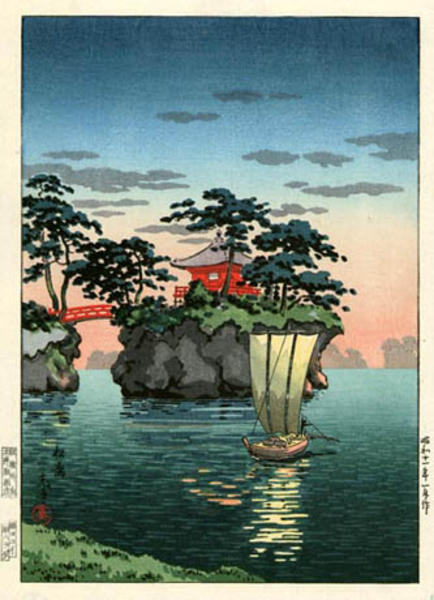
Godaido Shrine, Matsushima
Woodblock print
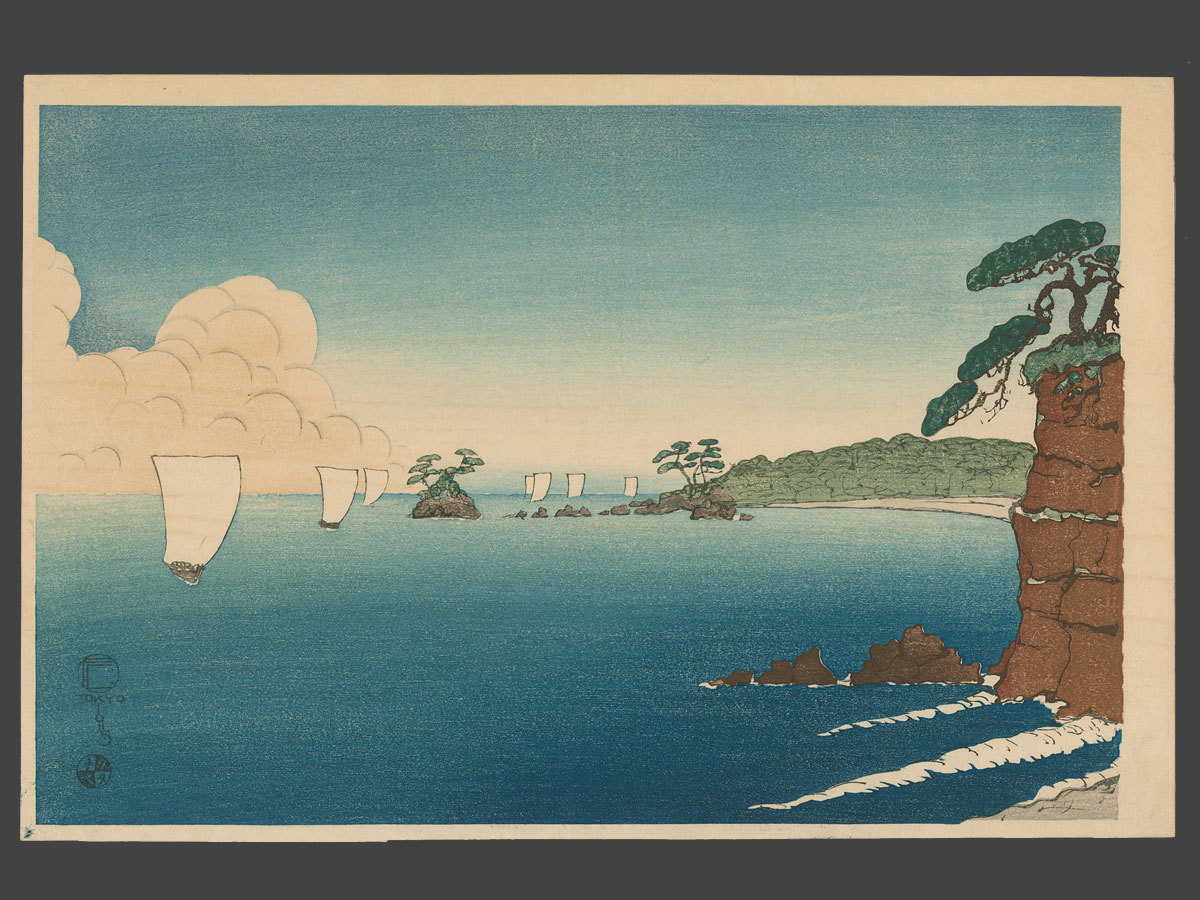
Islands at Matsushima
1915
Woodblock print
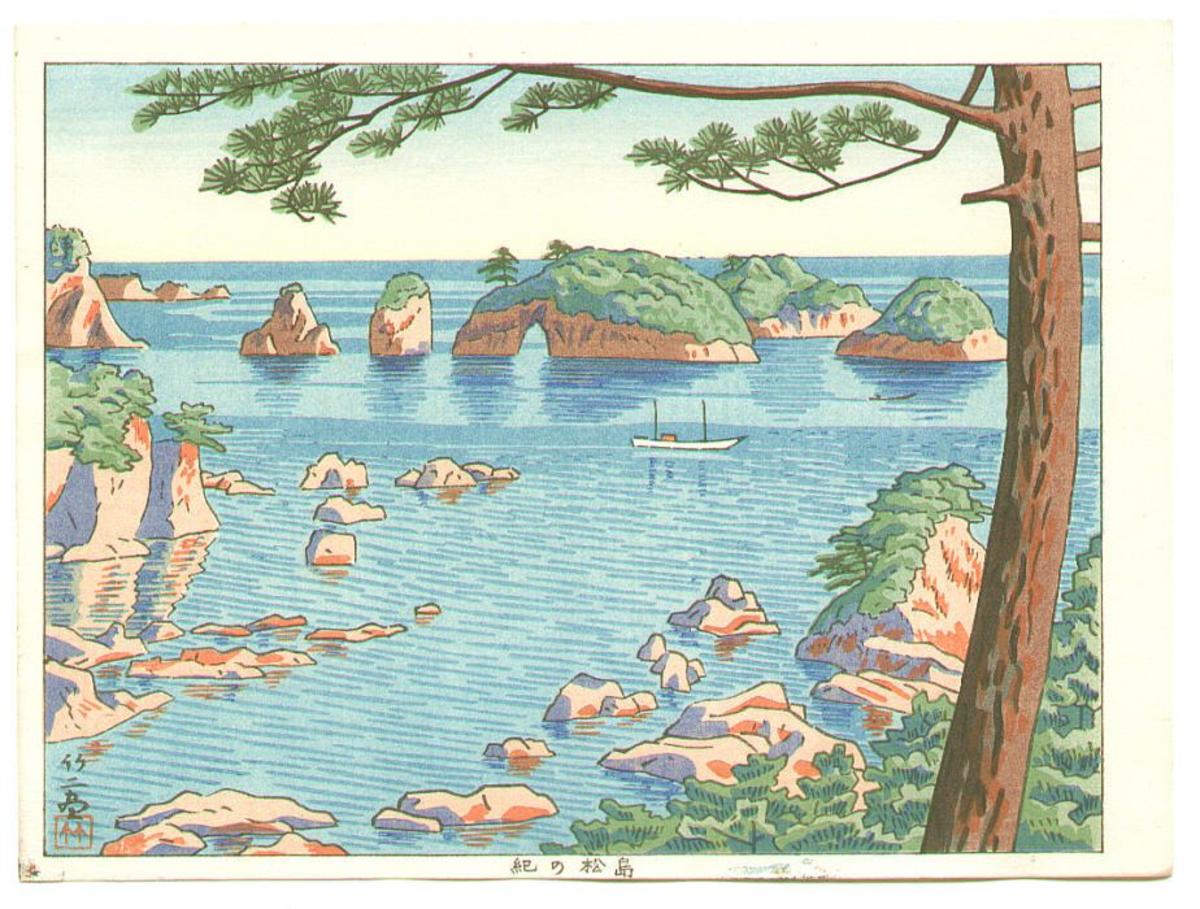
Ki no Matsushima Islands
Woodblock print

Landscape at Matsushima
Woodblock print

Matsushima in Moonlight (Tsuki no Matsushima)
1919
Color woodblock print
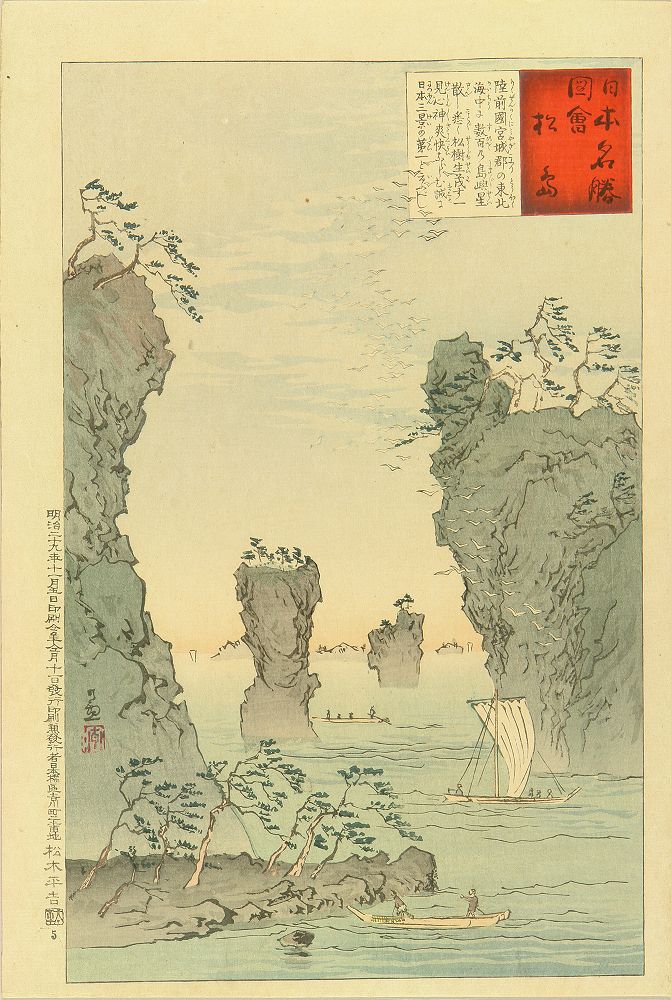
Matsushima, from
Woodblock print
Matsushima, from the series Famous Sights of Japan (Nihon meishō zue)
1896 (Meiji 29)
Woodblock print (nishiki-e); ink and color on paper
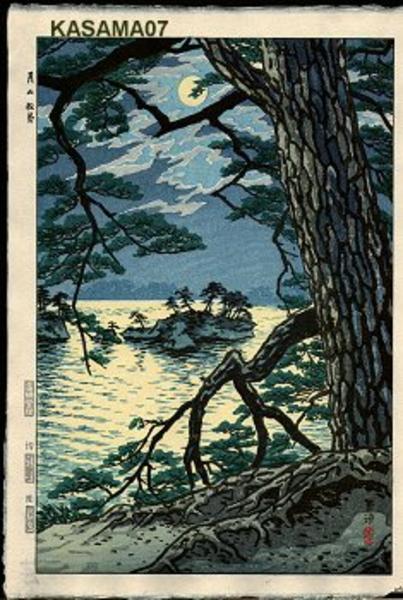
Moon at Matsushima
Woodblock print

Moon over Matsushima
松島の月
1957
Woodblock print
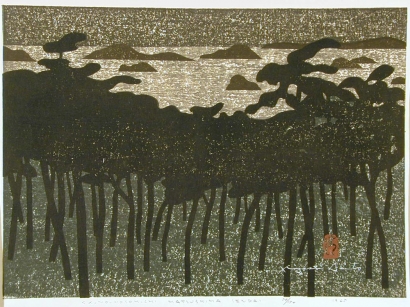
Okuno Hosomichi Matsushima Sendai
Woodblock print
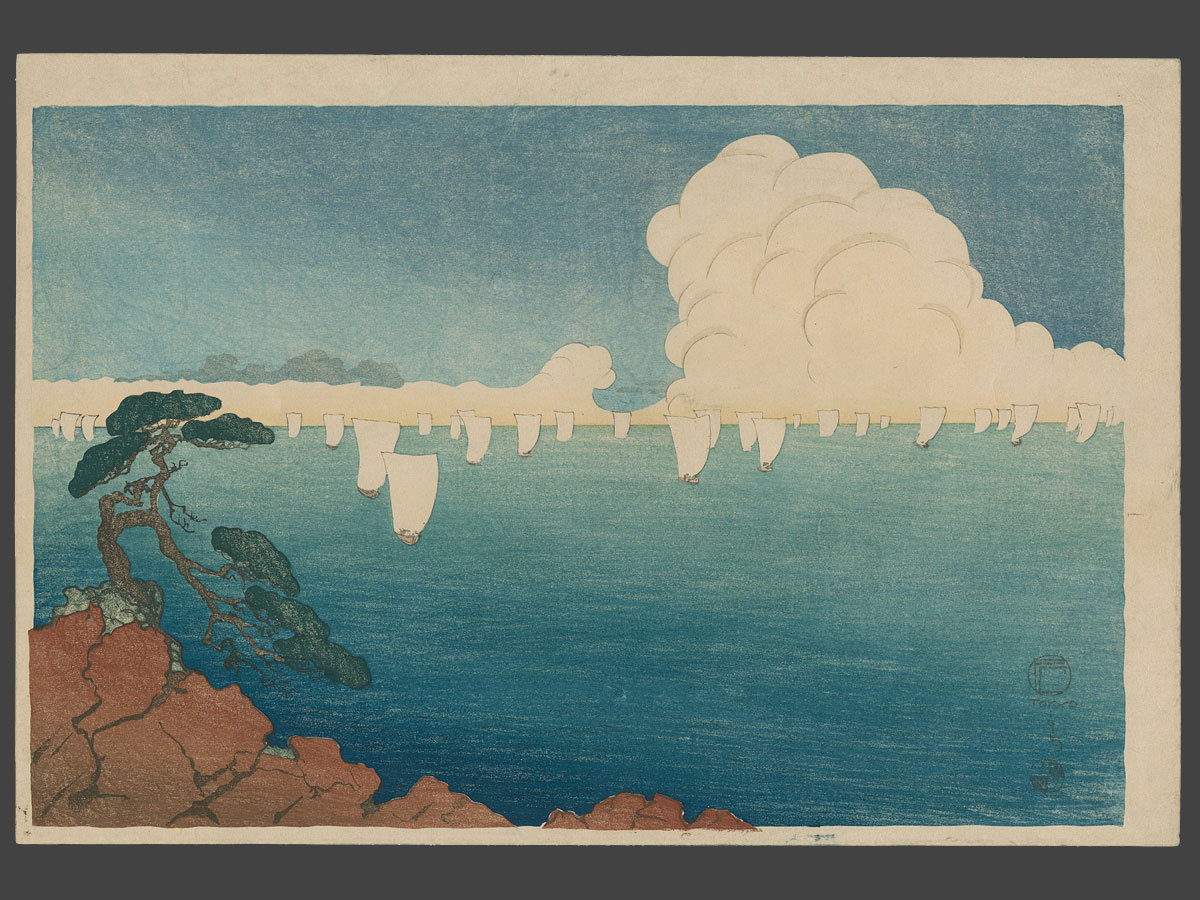
Sailboats at Matsushima
1915
Woodblock print
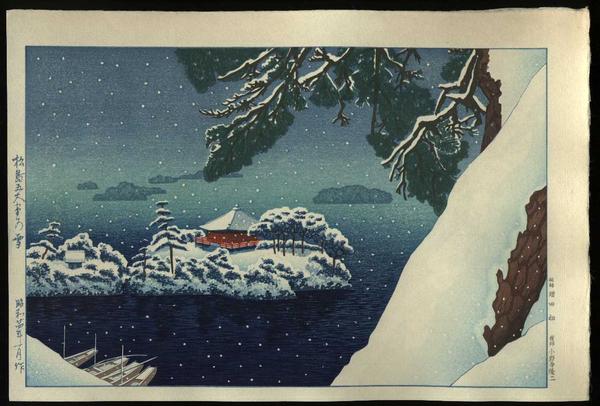
Snow in Matsushima — Matsushima Godaido no Yuki
Woodblock print
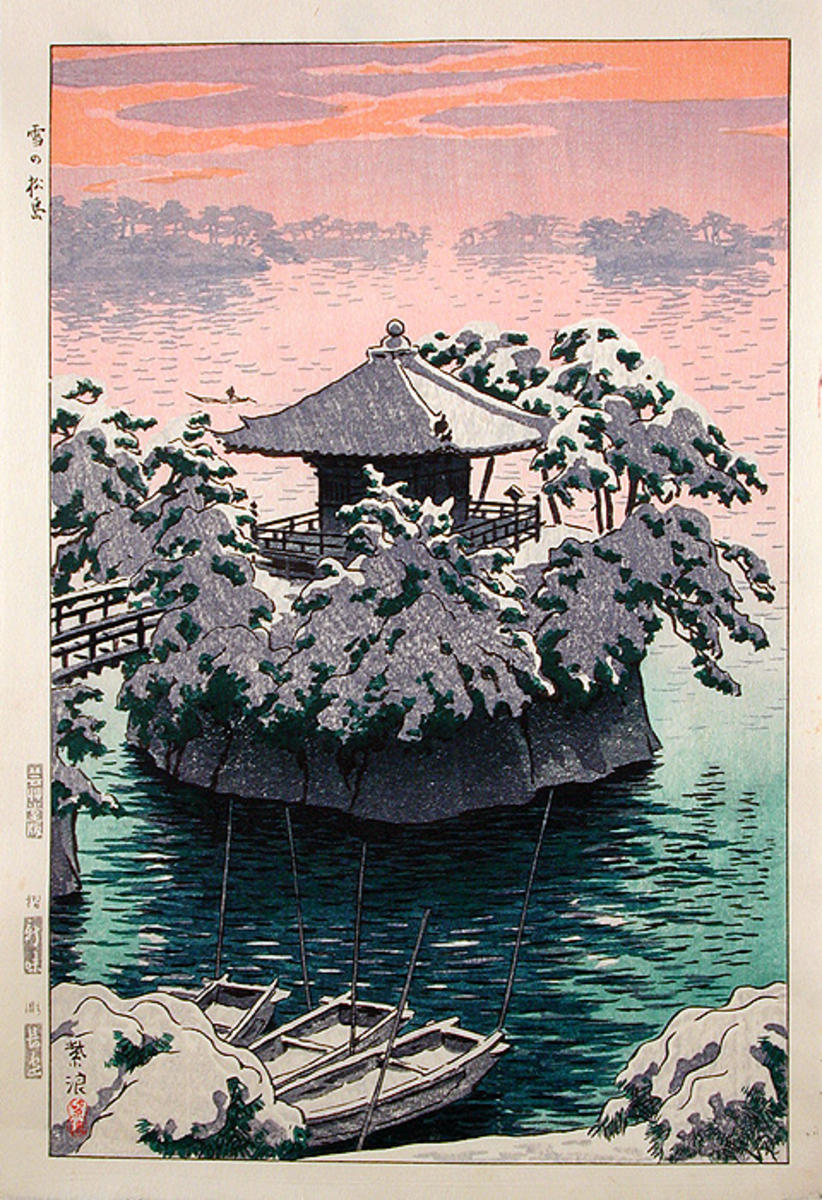
Snow In Matsushima, Matsujima
Woodblock print
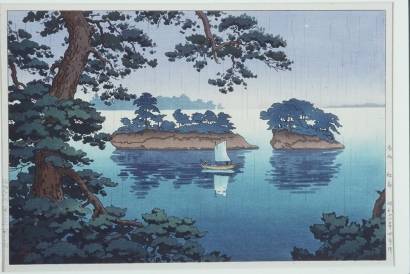
Spring Rain at Matsushima
Woodblock print

Two Mechanics of the Warship Matsushima …
August 1895
Woodblock print (nishiki-e), ink and color on paper

Zaimoku Isalnd, Matsushima, from the series "Collection of Scenic Views of Japan, Eastern Japan Edition" (Nihon fukei shu higashi Nihon hen, Matsushima Zaimokuto)
May 1933
Color woodblock print
Artists Who Depicted Matsushima (10)



Frequently Asked Questions
Matsushima is a coastal district in Miyagi Prefecture in the Tohoku region of northeastern Honshu, situated on Matsushima Bay where approximately 260 small pine-covered islands rise from shallow water along the Pacific coast. The bay has been celebrated since at least the medieval period as one of the three most scenic views in Japan, the Nihon Sankei, alongside Amanohashidate on the Sea of Japan coast and Itsukushima (Miyajima) in the Inland Sea, with the designation traditionally attributed to the Edo-period Confucian scholar Hayashi Razan in his Nihon Kokuji Shoki of 1643. The pines for which the bay is named cling to the eroded rock formations of the islands, producing the distinctive silhouettes that have become the defining motif of the region, with successive generations of Pacific storms and tsunamis (including the 2011 Tohoku tsunami which reached the bay but was significantly buffered by the islands) shaping the rocks into their characteristic forms. The Zen monastery of Zuiganji, founded in 828 by Jikaku Daishi Ennin and dramatically rebuilt in 1609 by the Sendai daimyo Date Masamune as the principal funerary temple of his line, stands on the mainland shore facing the bay as one of the great Rinzai institutions of northeastern Japan, with the small island of Godaido (also called Godaido Island) and its small Buddhist temple linked to the shore by a bridge directly offshore from the mainland approach. The Godaido temple is named for the Five Wisdom Kings (Godai Myoo) enshrined within and is one of the most recognizable single buildings in the bay. The poet Matsuo Basho visited Matsushima in 1689 on the journey recorded in his Oku no Hosomichi (The Narrow Road to the Deep North) and famously left no formal poem about the bay because, as legend has it, the scene exceeded his ability to compose, though the haiku attributed to him on the subject (Matsushima ah, ah Matsushima ah, Matsushima ah) is now considered apocryphal. For Japanese printmaking Matsushima belongs to the established roster of Japanese landscape meisho. Utagawa Hiroshige treated Matsushima in his Famous Views of the Sixty-Odd Provinces (Rokujuyoshu meisho zue, 1853-1856), in which a sheet of Mutsu Province depicts the bay with the pine islands and the surrounding shore, and in other landscape sets. Hokusai included the bay in his printed book sets of famous views. The shin-hanga revival of the early twentieth century returned to Matsushima repeatedly. Kawase Hasui produced numerous Matsushima compositions including dawn, sunset, snow, and rain views of the islands and the Godaido temple, with his Matsushima in Morning Mist, Snow at Matsushima, and Evening Glow at Matsushima counted among the most successful of his Tohoku landscape sheets. Yoshida Hiroshi and Tsuchiya Koitsu contributed further compositions, and the postwar Tohoku sosaku-hanga circle treated the bay across various seasons. The visual character of Matsushima in prints is built on the silhouettes of the pine-topped rock islands against bay water, the reflections in the shallow tide, the temple buildings of Godaido and Zuiganji along the shore, the small fishing craft and oyster cultivation rafts in the bay, the seasonal phenomena including snow on the pines and the diffused atmospheric conditions of the Tohoku coast, and the dawn and evening light effects that the shin-hanga artists especially exploited. Contemporary visitors approach Matsushima from Sendai via the JR Senseki Line in approximately forty minutes, with sightseeing boats from the harbor circulating among the principal islands and walking routes connecting the major temple sites along the shore.
Hanga catalogues 17 prints depicting Matsushima (松島), by 10 different artists.
Fritz Capelari, Gihachiro Okuyama, and Kawase Hasui are among the 10 artists who depicted Matsushima in our collection.
Want to rate prints from Matsushima?
Sign up to start rating