Miyajima (宮島)
18 prints by 7 artists
About Miyajima
Miyajima is the popular name of the island of Itsukushima, situated in the Seto Inland Sea off the coast of Hatsukaichi in Hiroshima Prefecture, approximately twenty kilometers southwest of central Hiroshima. The island, whose name means island shrine and whose formal designation is Itsukushima, is celebrated as the location of Itsukushima Shrine, a Shinto complex documented from the late sixth century and rebuilt in its present form on the model of a Heian-period palace by the Taira clan under Taira no Kiyomori in 1168 during the high point of Taira clan ascendancy. The shrine is constructed on stilts directly over a tidal flat on the northern coast of the island, with the buildings linked by long covered corridors that appear to float above the water at high tide and stand on bare sand at low tide, a remarkable architectural integration of building and tidal environment. The great vermilion otorii gate stands in the sea offshore from the main shrine in the principal axis of approach from the water, the present version dating to 1875 and constructed of camphor wood with a wing-shaped corbel structure that allows the gate to stand by gravity alone, with the most recent major restoration completed in 2022 after several years of scaffolding. The island is also celebrated for the Misen mountain forest, with the 535-meter Mount Misen at its center, the wild sika deer that move freely through the shrine precincts and the surrounding paths, and the surrounding sacred geography of pine, maple, and cherry. The shrine and the island were designated a UNESCO World Heritage Site in 1996 and are part of the Setonaikai National Park established in 1934 as the first national park in Japan. Miyajima, like Matsushima and Amanohashidate, is included in the traditional Nihon Sankei, the three most scenic views of Japan. For Japanese printmaking Miyajima appears in the Edo-period meisho-e tradition. Utagawa Hiroshige treated the shrine in his Famous Views of the Sixty-Odd Provinces, in which a sheet of Aki Province depicts Itsukushima with its torii rising from the water, and Hokusai treated the island in passages of his printed-book travel sets. Hasegawa Sadanobu of the Osaka kamigata school produced Kansai and Setouchi sheets that include Miyajima subjects. The shin-hanga revival brought a sustained engagement, with Kawase Hasui producing celebrated views of the torii and the shrine under snow, rain, and twilight conditions, including evening Miyajima sheets in which the dark silhouette of the gate is set against a softly modulated sky and water, and Yoshida Hiroshi, Tsuchiya Koitsu, Asano Takeji, and Tokuriki Tomikichiro contributing further compositions of the torii and the shrine corridors. Yoshida Hiroshi's Miyajima sheets include variant impressions under dawn, day, and evening conditions in his characteristic atmospheric practice. The visual character of Miyajima in prints is built on the vermilion otorii against the surrounding sea, with the alternating tides revealing or concealing the gate's base in differing compositions, the silhouette of the shrine corridors and the Noh stage above water at high tide, the wooded slopes of Mount Misen behind, the small craft on the water, the dark figures of deer or shrine attendants, and the seasonal phenomena of cherry blossom and autumn maple. Contemporary visitors reach the island via the JR Sanyo Line to Miyajimaguchi Station and the short ten-minute ferry crossing, with the shrine and the surrounding mountain trails including the Misen summit ascent open year-round, and the new Miyajima rope-way providing access to the upper slopes of Mount Misen.
Prints Depicting Miyajima (18)

A Corridor at Miyajima (Miyajima no kairo)
Miyajima no kairo
1949
Color woodblock print
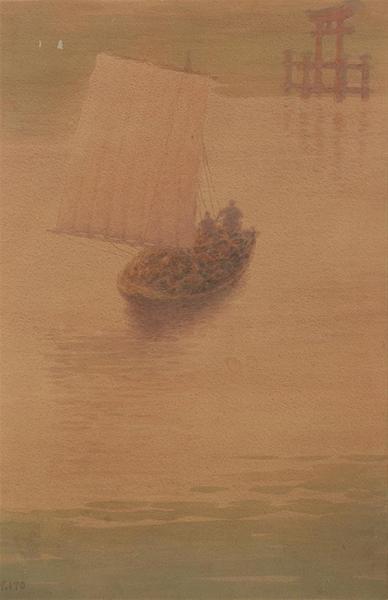
Boatmen at sunset at Miyajima
Woodblock print
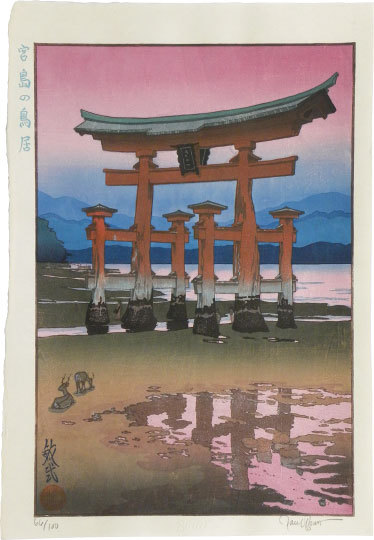
Famous Views of Japan: The Torii Gate at Miyajima (Nihon meisho zu-e: Miyajima no torii)
Woodblock print
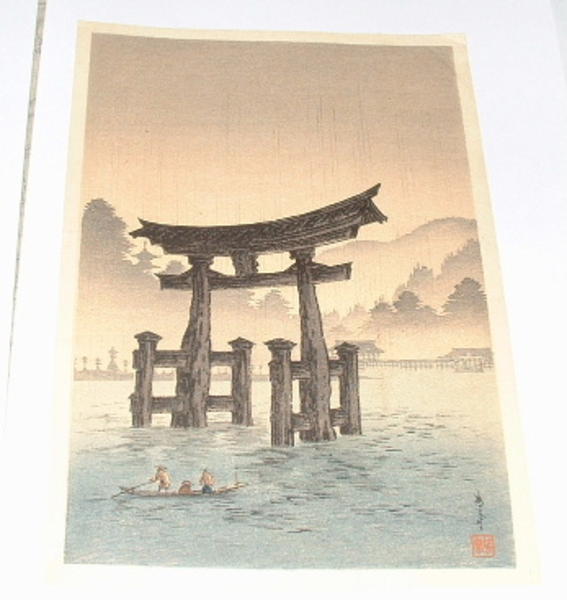
Miyajima
Woodblock print

Miyajima in Snow (Yuki no Miyajima)
Yuki no Miyajima
1929
Color woodblock print; oban

Miyajima in the Mist (Kiri no Miyajima)
1947
Color woodblock print
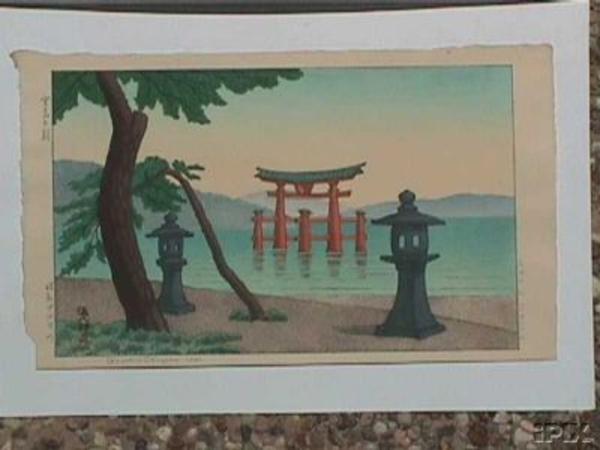
Miyajima in the Morning
Woodblock print

Miyajima in the Rain
1941
Color woodblock print
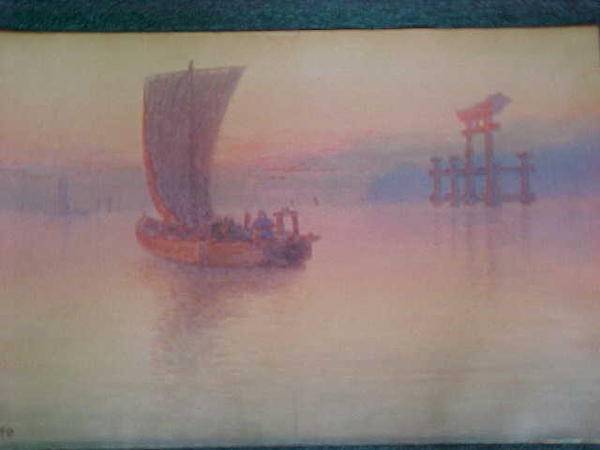
Miyajima Torii and sail boats
Woodblock print
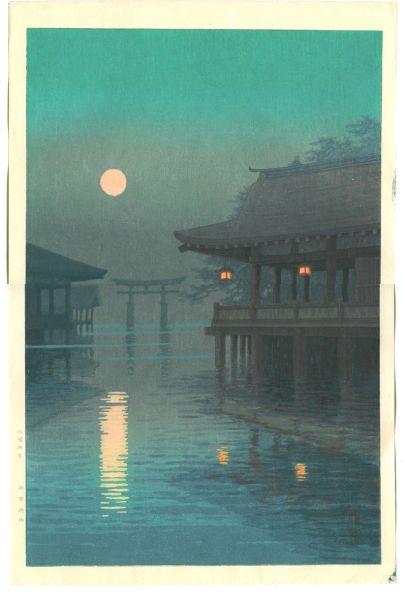
Moon Over Miyajima
Woodblock print

Moonlit Night at Miyajima (Miyajima no tsukiyo)
1947
Color woodblock print
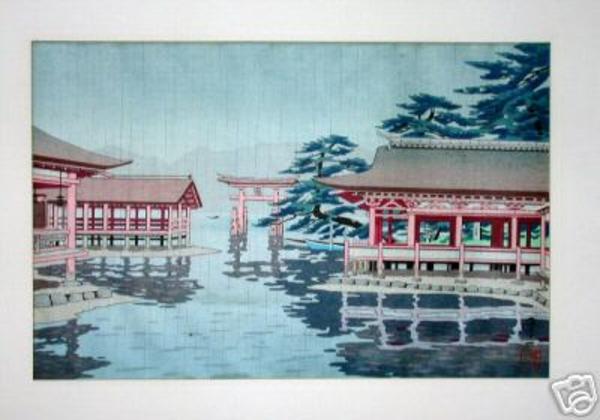
Rain in Miyajima
Woodblock print

Sailboat at Miyajima
Woodblock print
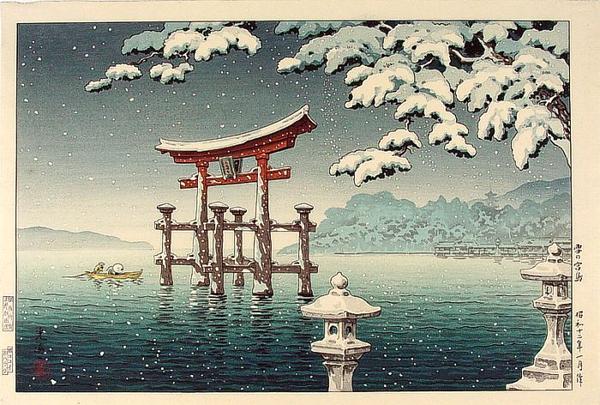
Snow at Miyajima
Woodblock print

Snow at Miyajima Shrine
1930s
Woodblock print, ink and color on paper
![Snow on a Fine Day at Miyajima (Seiten no yuki [Miyajima]), from the series "Souvenirs of Travel, Second Series (Tabi miyage dai nishu)" by Kawase Hasui](https://www.artic.edu/iiif/2/528ee6ba-453a-0502-d9f7-6f5364378a11/full/843,/0/default.jpg)
Snow on a Fine Day at Miyajima (Seiten no yuki [Miyajima]), from the series "Souvenirs of Travel, Second Series (Tabi miyage dai nishu)"
Seiten no yuki [Miyajima]
1921
Color woodblock print; oban
![Starlit Night at Miyajima (Hoshizukiyo [Miyajima]), from the series Souvenirs of Travel, Third Series (Tabi miyage dai sanshu) by Kawase Hasui](https://www.artic.edu/iiif/2/f570c5b4-b857-817b-b674-bf6c8f1576a6/full/843,/0/default.jpg)
Starlit Night at Miyajima (Hoshizukiyo [Miyajima]), from the series Souvenirs of Travel, Third Series (Tabi miyage dai sanshu)
Hoshizukiyo [Miyajima]
1928
Color woodblock print; oban

Summer Moon at Miyajima, from the series "Collection of Views of Japan"
1936
Color woodblock print
Artists Who Depicted Miyajima (7)




Frequently Asked Questions
Miyajima is the popular name of the island of Itsukushima, situated in the Seto Inland Sea off the coast of Hatsukaichi in Hiroshima Prefecture, approximately twenty kilometers southwest of central Hiroshima. The island, whose name means island shrine and whose formal designation is Itsukushima, is celebrated as the location of Itsukushima Shrine, a Shinto complex documented from the late sixth century and rebuilt in its present form on the model of a Heian-period palace by the Taira clan under Taira no Kiyomori in 1168 during the high point of Taira clan ascendancy. The shrine is constructed on stilts directly over a tidal flat on the northern coast of the island, with the buildings linked by long covered corridors that appear to float above the water at high tide and stand on bare sand at low tide, a remarkable architectural integration of building and tidal environment. The great vermilion otorii gate stands in the sea offshore from the main shrine in the principal axis of approach from the water, the present version dating to 1875 and constructed of camphor wood with a wing-shaped corbel structure that allows the gate to stand by gravity alone, with the most recent major restoration completed in 2022 after several years of scaffolding. The island is also celebrated for the Misen mountain forest, with the 535-meter Mount Misen at its center, the wild sika deer that move freely through the shrine precincts and the surrounding paths, and the surrounding sacred geography of pine, maple, and cherry. The shrine and the island were designated a UNESCO World Heritage Site in 1996 and are part of the Setonaikai National Park established in 1934 as the first national park in Japan. Miyajima, like Matsushima and Amanohashidate, is included in the traditional Nihon Sankei, the three most scenic views of Japan. For Japanese printmaking Miyajima appears in the Edo-period meisho-e tradition. Utagawa Hiroshige treated the shrine in his Famous Views of the Sixty-Odd Provinces, in which a sheet of Aki Province depicts Itsukushima with its torii rising from the water, and Hokusai treated the island in passages of his printed-book travel sets. Hasegawa Sadanobu of the Osaka kamigata school produced Kansai and Setouchi sheets that include Miyajima subjects. The shin-hanga revival brought a sustained engagement, with Kawase Hasui producing celebrated views of the torii and the shrine under snow, rain, and twilight conditions, including evening Miyajima sheets in which the dark silhouette of the gate is set against a softly modulated sky and water, and Yoshida Hiroshi, Tsuchiya Koitsu, Asano Takeji, and Tokuriki Tomikichiro contributing further compositions of the torii and the shrine corridors. Yoshida Hiroshi's Miyajima sheets include variant impressions under dawn, day, and evening conditions in his characteristic atmospheric practice. The visual character of Miyajima in prints is built on the vermilion otorii against the surrounding sea, with the alternating tides revealing or concealing the gate's base in differing compositions, the silhouette of the shrine corridors and the Noh stage above water at high tide, the wooded slopes of Mount Misen behind, the small craft on the water, the dark figures of deer or shrine attendants, and the seasonal phenomena of cherry blossom and autumn maple. Contemporary visitors reach the island via the JR Sanyo Line to Miyajimaguchi Station and the short ten-minute ferry crossing, with the shrine and the surrounding mountain trails including the Misen summit ascent open year-round, and the new Miyajima rope-way providing access to the upper slopes of Mount Misen.
Hanga catalogues 18 prints depicting Miyajima (宮島), by 7 different artists.
Gihachiro Okuyama, Kawase Hasui, and Okumura Koichi are among the 7 artists who depicted Miyajima in our collection.
Want to rate prints from Miyajima?
Sign up to start rating